 LDRS
LDRSConcerns have been raised about the potential impact of the recent Killin oil spill on the proposed Glen Lednock Wind Farm.
In January 2026, Perth and Kinross Planning and Placemaking Committee unanimously agreed to object to the application, prompting a public inquiry.
Campaigners now fear there is a major risk of pollution if the wind farm project goes ahead.
Low Carbon submitted plans to the Scottish Government’s Energy Consents Unit to erect up to 19 wind turbines, reaching up to 200m in height on land 2.8km north of St Fillans and 8km north-west of Comrie.
PKC joined NatureScot in objecting to the application due to the significant adverse effects on the special landscape qualities of both the Loch Lomond and Trossachs National Park and the Loch Rannoch and Glen Lyon National Scenic Area.
Comrie-based Save Glen Lednock submitted its objection last July and described the proposal as a “destructive industrial project”.
Following the recent fuel spill in Killin, which led to water being polluted in the River Dochart and Loch Tay, the group fears sensitive rivers could be at risk of contamination during the construction of the proposed wind farm.
Last month, Killin residents were left without water for several days when the local water supply was contaminated by diesel after an alleged attempted fuel theft at the village petrol station.
Martin Downing of the Save Glen Lednock group said: “Although it has not been fully ascertained how the Killin incident occurred, construction activities were underway at the Lix Toll petrol station, a few hundred metres from the River Dochart.
“This puts the major risk of pollution from the proposed Glen Lednock Wind Farm into perspective. The new eight-mile access road for the wind farm would, in places, run within metres of the River Lednock.”
He said guidance from the Scottish Environment Protection Agency (SEPA) required a 50-metre buffer between a watercourse and wind farm infrastructure.
Low Carbon has said: “Any predicted environmental effects arising from the proposed development will be mitigated as far as reasonably possible. Where necessary, additional specific mitigation measures will be committed to further reduce adverse effects during the construction, operational and decommissioning phases of the development.”
Referring to Low Carbon’s Environmental Impact Assessment Report (EIAR) Mr Downing raised concern about where the new six-metre-wide road would run.
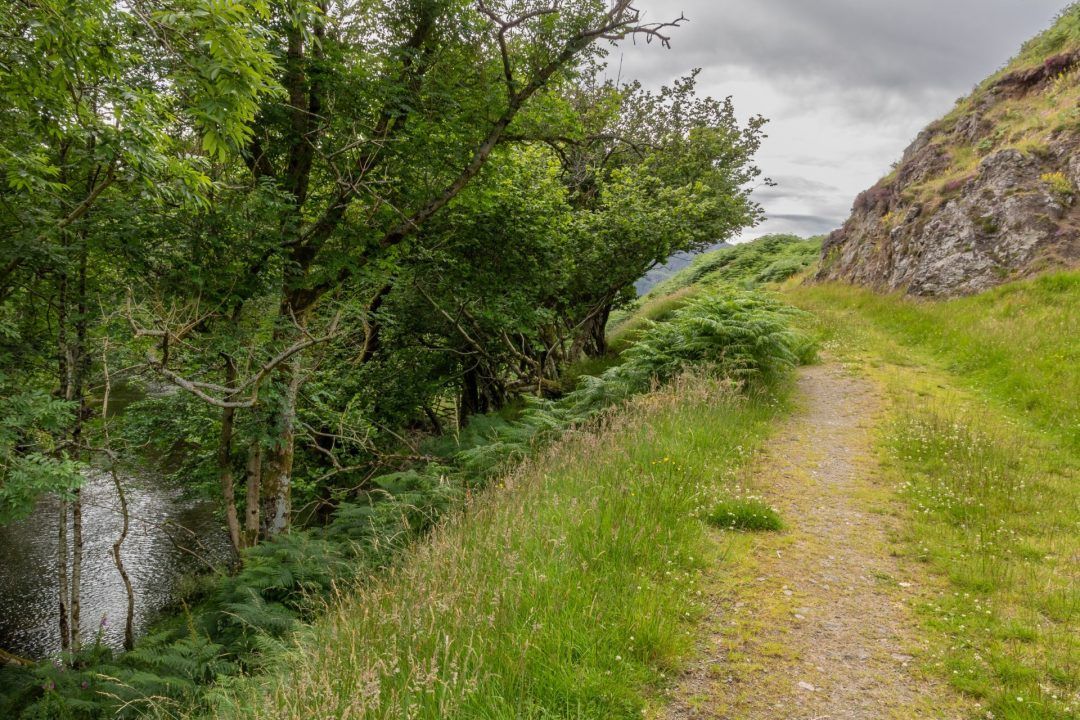
He said: “This is a particular concern where it would be immediately above the river on a steep slope, requiring significant earthworks, as in the case of the currently scenic path between Carroglen and Funtulich.
“Further risk at this location would be posed by the planned siting of a quarry – known as a ‘borrow pit’ – directly above the river. This is a totally unsuitable location, with a significant risk of sediment run-off and pollution. More borrow pits would be located above the Allt Mathaig burn, higher up the glen, and there is a similar risk of pollution from these.
“Taking into account the size and weight of the components which would be transported to the construction sites over a period of at least two years, there would also be a significant risk of road instability and heavy vehicles running off the road in poor weather conditions.”
The final decision on the wind farms rests with the Scottish Government.
Follow STV News on WhatsApp
Scan the QR code on your mobile device for all the latest news from around the country