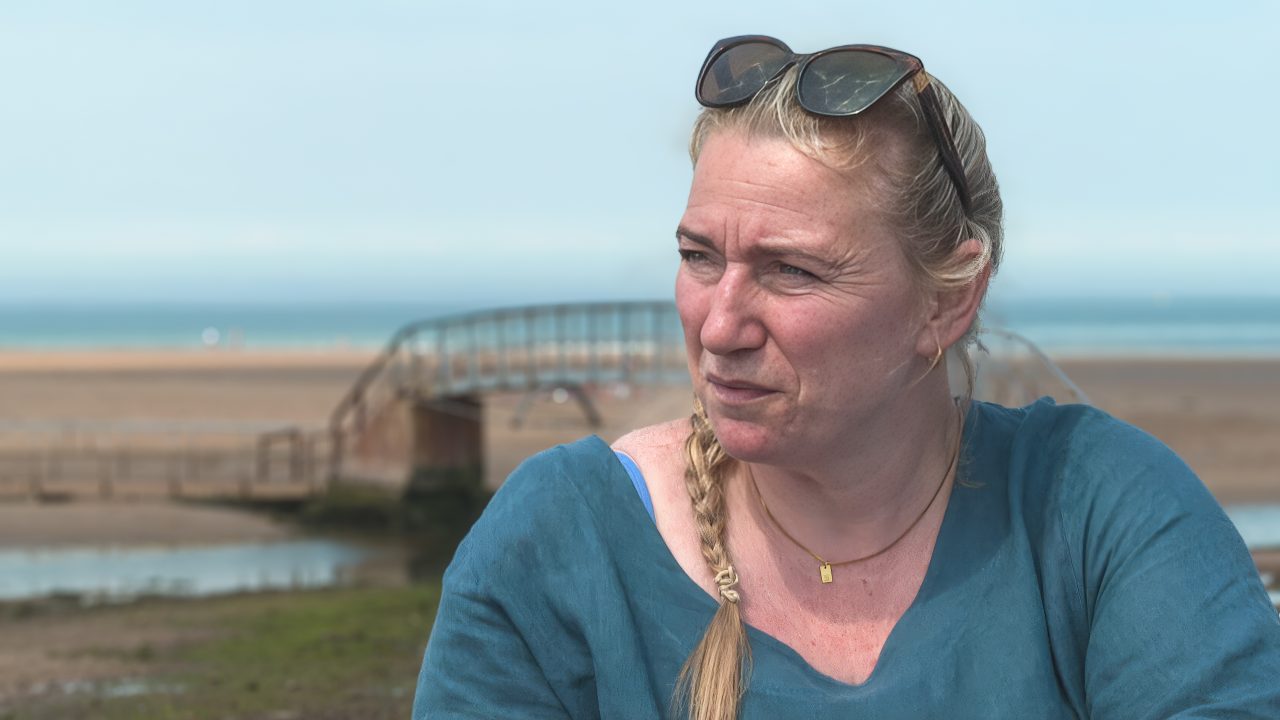
A wild swimmer who was struck down by a parasitic infection after swimming in contaminated water has called for year-round monitoring to protect beachgoers.
Shelley Sim, an East Lothian-based carer, has backed calls for stronger protections after analysis found Portobello Beach recorded E.coli levels ten times above the safe limit.
Campaigners say water quality should be monitored more regularly outside the bathing season, after pollution warnings were issued for a number of Scottish beaches.
Shelley used to swim almost every single day, year-round, before becoming seriously ill after a dip in open water in September 2023.
After being unwell at home for several days, she was told by her GP to urgently get to hospital. She was admitted to the infectious diseases unit, suffering from severe dehydration and unable to keep food or drink down, and spent five days in the hospital recovering.
She told STV News: “I couldn’t eat or drink anything at all because my body would just reject it. I couldn’t keep anything down.
“When I eventually got admitted to hospital, I was severely dehydrated.
“The scariest part was that they didn’t know what was wrong. Having to sit and wait while they did all these tests.”
 Shelley Sim/Facebook
It took several weeks of appointments to reach a final diagnosis of cryptosporidium, a diarrheal disease and parasite contracted through human or animal waste in contaminated water, which Shelley contracted while swimming.
“I was just grateful in a way that it happened to me because I was healthy enough to get through it,” she said.
“Young children and anyone who is immunocompromised can’t fight it as easily.”
With sunnier skies comes the urge to head to the coast, but over the past month, water pollution has prompted warnings against swimming and paddling at beaches including Kinghorn, Saltcoats and Portobello, which recently tested 10 times over the safe limit for E. coli.
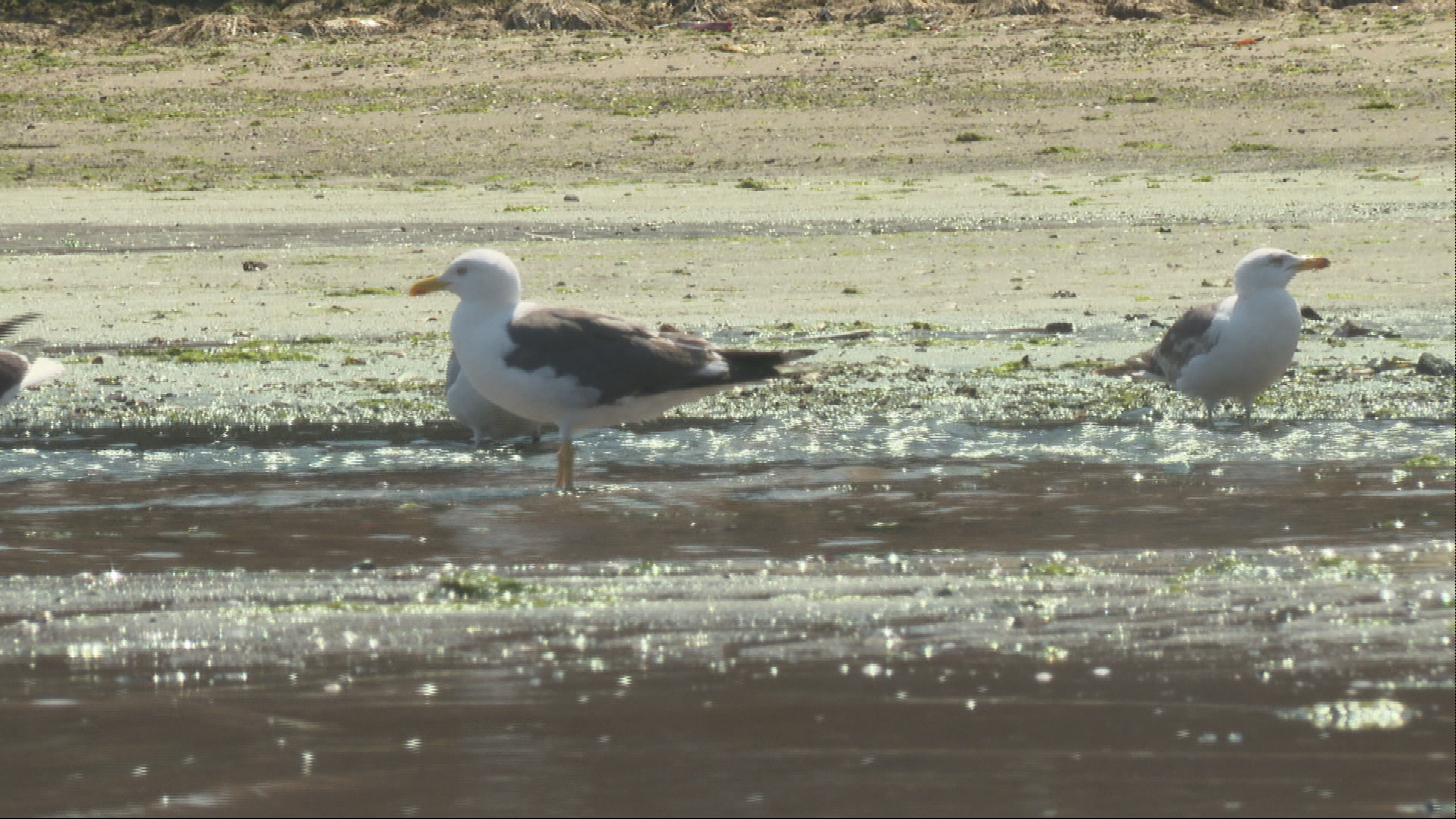
According to SEPA, a DNA analysis of the recent incident at Portobello showed the pollution was likely due to gull fouling.
While SEPA says 82% of bathing beaches across Scotland are rated excellent or good, some swimmers say questions remain about what happens at the sites that fall outside of that majority.
Experts argue pollution incidents may be more widespread than routine sampling suggests.
 STV News
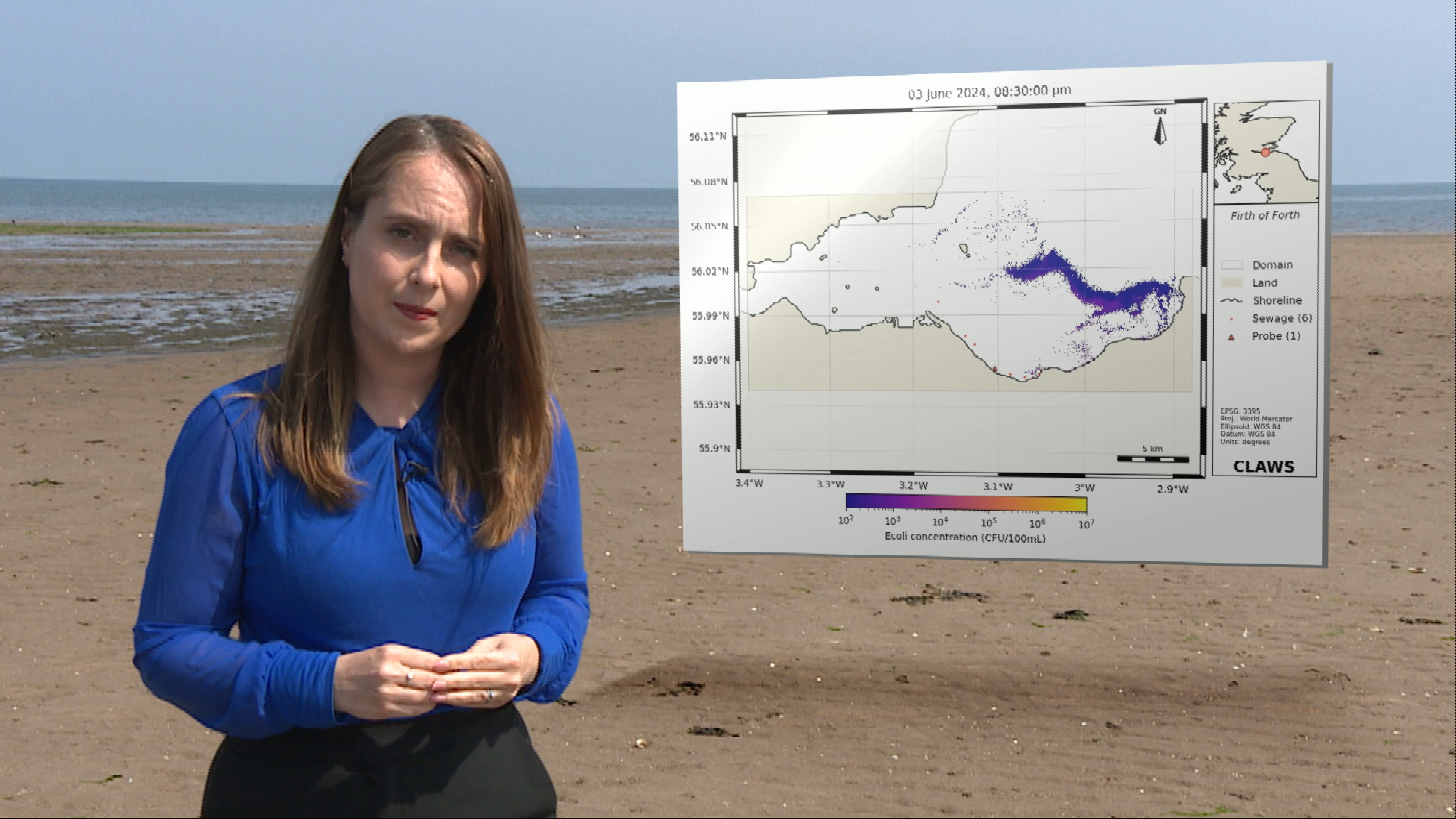
Marine expert Dr Tom Scanlon has used advanced computer modelling to demonstrate the behaviour of a sewage spill, showing that rather than staying close to the discharge pipes, pollution can actually travel for miles in moving plumes or hot spots for up to two and a half days before breaking down.
Because pollution levels can vary significantly over short distances, routine water sampling at individual, stationary sites cannot always capture the full extent of a contamination event.
Just how comfortable beachgoers feel about taking a dip varies wildly.
One woman at Belhaven Bay says that an experience she had ten years ago put her off swimming in the sea.
“When I came out, my legs were stained green,” she said. “I went home and had a bath, and I could smell sewage coming off my legs.
“So I would maybe go for a paddle at most in this water now.”
Another beachgoer warned people often forget about invisible chemical pollution.
“The water can be clear as glass,” he said. “Just because there’s nothing floating in it doesn’t mean it’s 100% clean.”
 STV News
But another local swimmer remained unfazed.
“I think it’s safe enough,” he added. “I’ve been swimming here all my life, so I’ve never really minded about going in at all.”
For Shelley, her approach to her sport completely changed following her ordeal.
While she has since returned to the sea as part of the wild swimming group, the Salty Sisters in Dunbar, she is now far more cautious.
“It took me a good nine weeks before I even thought about getting back in the water,” she said.
“Considering I’d been swimming every day for a couple of years before that, those nine weeks felt like a lifetime.
“There was always the rule – don’t swim 48 hours after heavy rainfall. I’d heard it, but I didn’t quite understand why. Obviously, now I know why.”
Shelley is among those campaigning for year-round monitoring of bathing waters.
She believes the UK needs to look toward international examples to better protect public health.
 STV News
“The whole UK is an island. We are all surrounded by water, and it should be a lot easier for us to be able to keep it clean,” she said.
“You’ve got places like Copenhagen, where they have invested in good sewer systems. They look after the water and keep people educated about what they can do.
“Something as simple as year-round testing and a light system would make all the difference.
“If we had things like that, that would be so much easier for people’s health.”
A spokesperson for the Scottish Environment Protection Agency (SEPA) said: “In 2025, Scotland had the highest ever number of bathing waters rated ‘Excellent’ for water quality; 50 compared with 17 a decade ago, with 97% of sites now achieving sufficient or better quality.
“We monitor water quality during the bathing season and pre-season period (May 15 to September 15) and provide information so that people can make informed choices about using the water. If elevated results are identified, we promptly investigate and, if necessary, take action to deal with any pollution incident. DNA analysis of the elevated Portobello result showed it was likely due to gull fouling.
“SEPA’s bathing water classifications follow the method set out in the Bathing Waters (Scotland) Regulations 2008. Using a four-year rolling dataset ensures results are robust and representative. This approach gives a clearer indication of overall water quality, rather than short-term variations that can be caused by factors such as heavy rainfall.
“Our Scottish climate impacts water quality, due to heavy rain washing contaminants off both rural and urban land, together with overflows from sewage systems in affected areas. At many bathing waters there is a risk that water pollution may occur after heavy rain. Bathing is not advised during or one to two days after heavy rain due to health risks from water pollution.
“At selected bathing waters, typically those where water quality is most likely to be impacted by rainfall, we make daily bathing water quality predictions online, which are also accessible from electronic information signs at the beach locations.”
Follow STV News on WhatsApp
Scan the QR code on your mobile device for all the latest news from around the country