
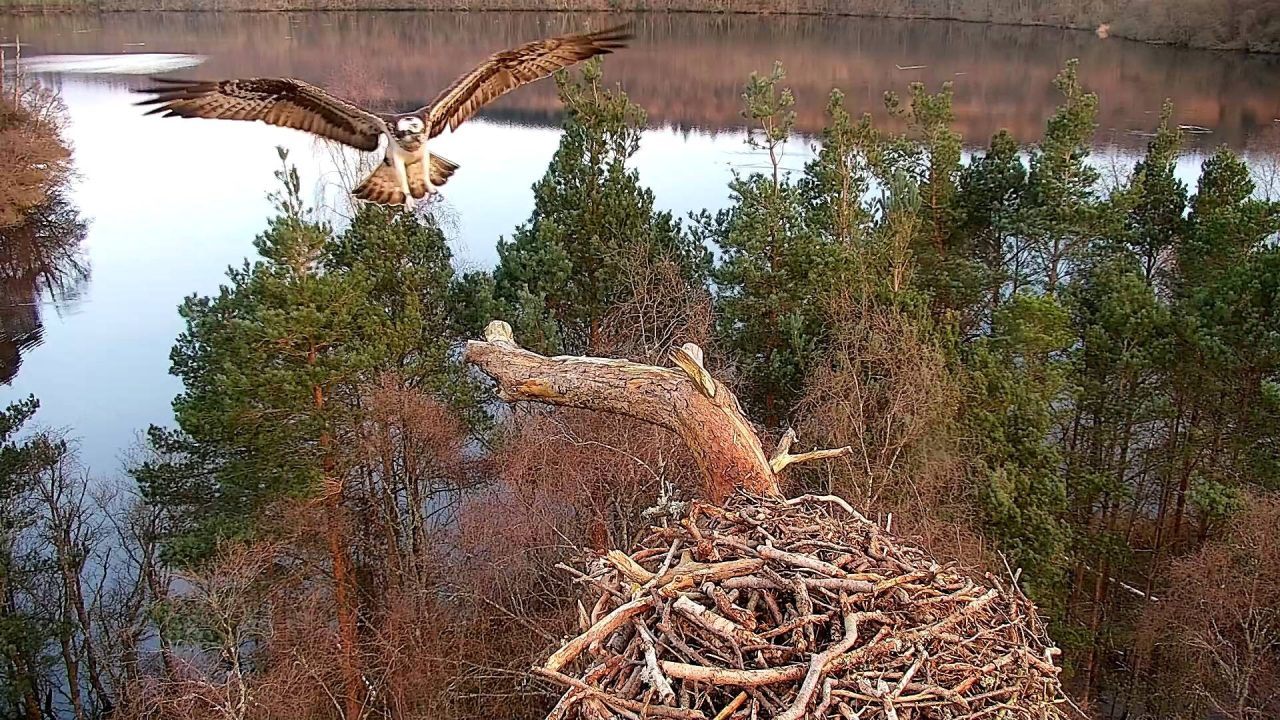
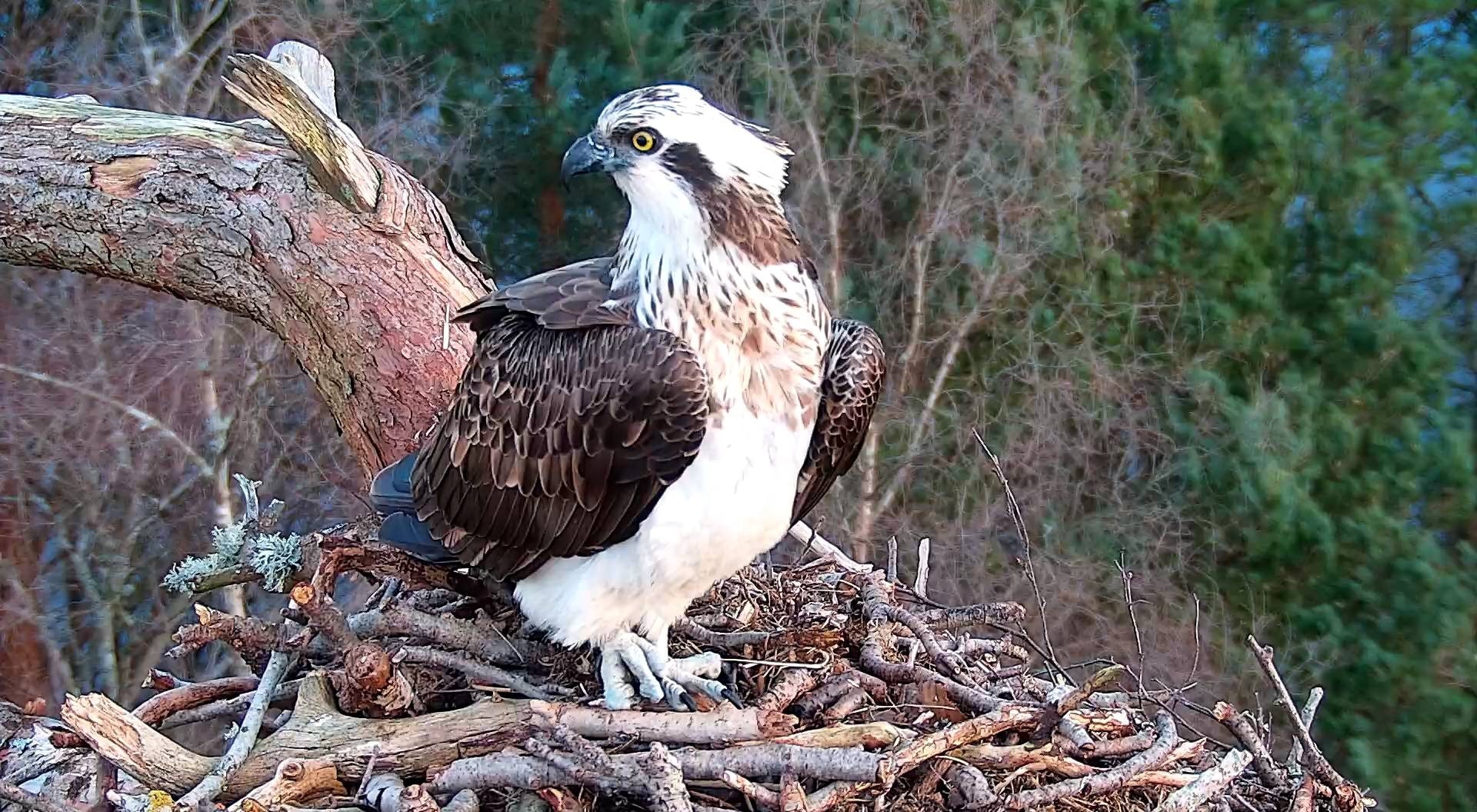
The first osprey of the season has arrived at the Loch of the Lowes Wildlife Reserve.
The female bird, known as NC0, travelled thousands of miles north from her wintering grounds before landing at around 6pm on Wednesday.
She spent some time conducting nest repairs and scouting the territory over the loch before settling down to roost.
NC0 has been a familiar face at Loch of the Lowes in recent years. From 2020 to 2024, she bred with the previous resident male, LM12, who died of natural causes in 2024.
The female osprey was the first to land last year but it is believed she was displaced several weeks later by a series of new birds aiming to take over the nest.
After various combinations and breeding attempts, another female known as LF25 laid two eggs on May 4 and May 7. Neither egg survived to hatch, although this is not uncommon for a first-time breeding pair.
 Scottish Wildlife Trust
Sara Rasmussen, Perthshire Ranger for the Scottish Wildlife Trust, said: “The arrival of the ospreys is always one of the most exciting moments of the year at Loch of the Lowes, so we’re delighted that the first bird has touched down. The fact that it’s NC0, who has such a rich history with the site, makes it even more special. We’re now eagerly awaiting potential partners and rivals so we can see how the competition for the nest will unfold this year.
“The last few years have been a whirlwind of ups and downs for the ospreys, but we were encouraged by last year’s pair getting to a point where they laid eggs together. While it was disappointing that they never hatched, even getting that far is an achievement for a new pair, so we’re confident that this ever-popular territory will continue to provide a safe space for ospreys and a wildlife spectacle for our visitors.”
During the early 20th century ospreys became extinct in the UK, however, they naturally recolonised in Scotland in the 1950s and their numbers have grown steadily since.
The latest estimates suggest there are around 300 breeding pairs across the UK. Most of these birds migrate to West Africa but some overwinter in Spain and Portugal.
Follow STV News on WhatsApp
Scan the QR code on your mobile device for all the latest news from around the country