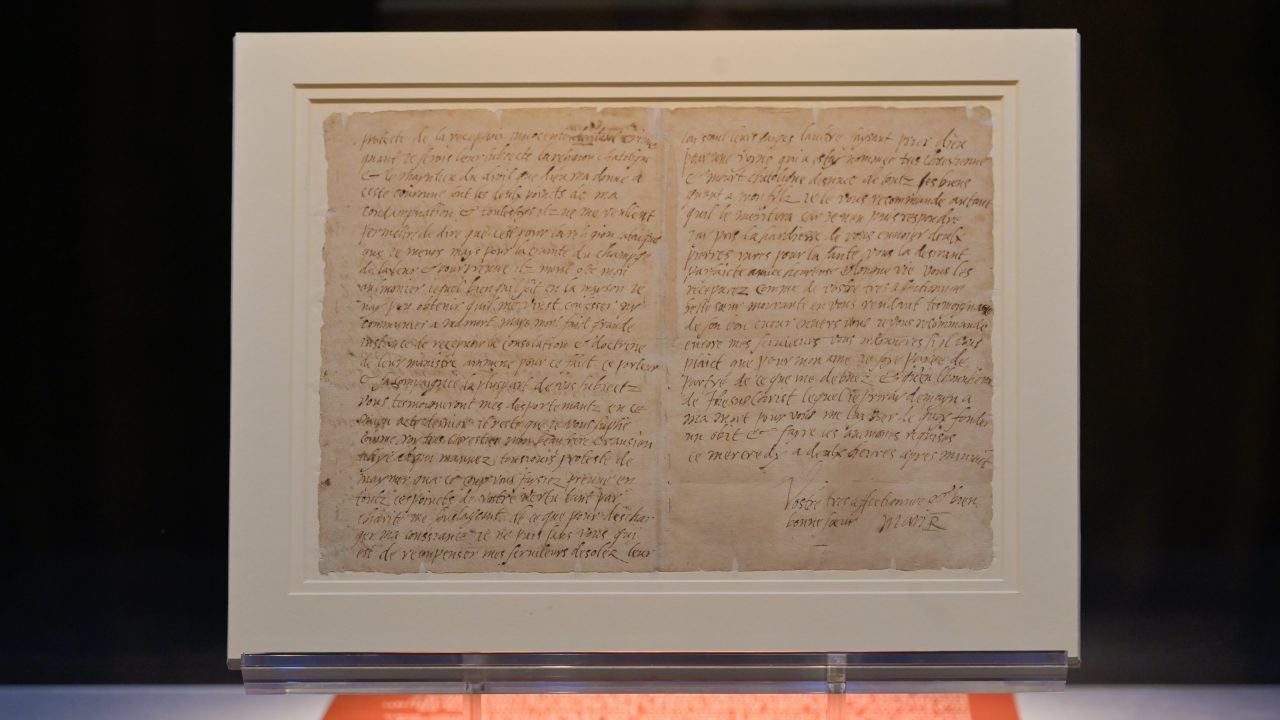
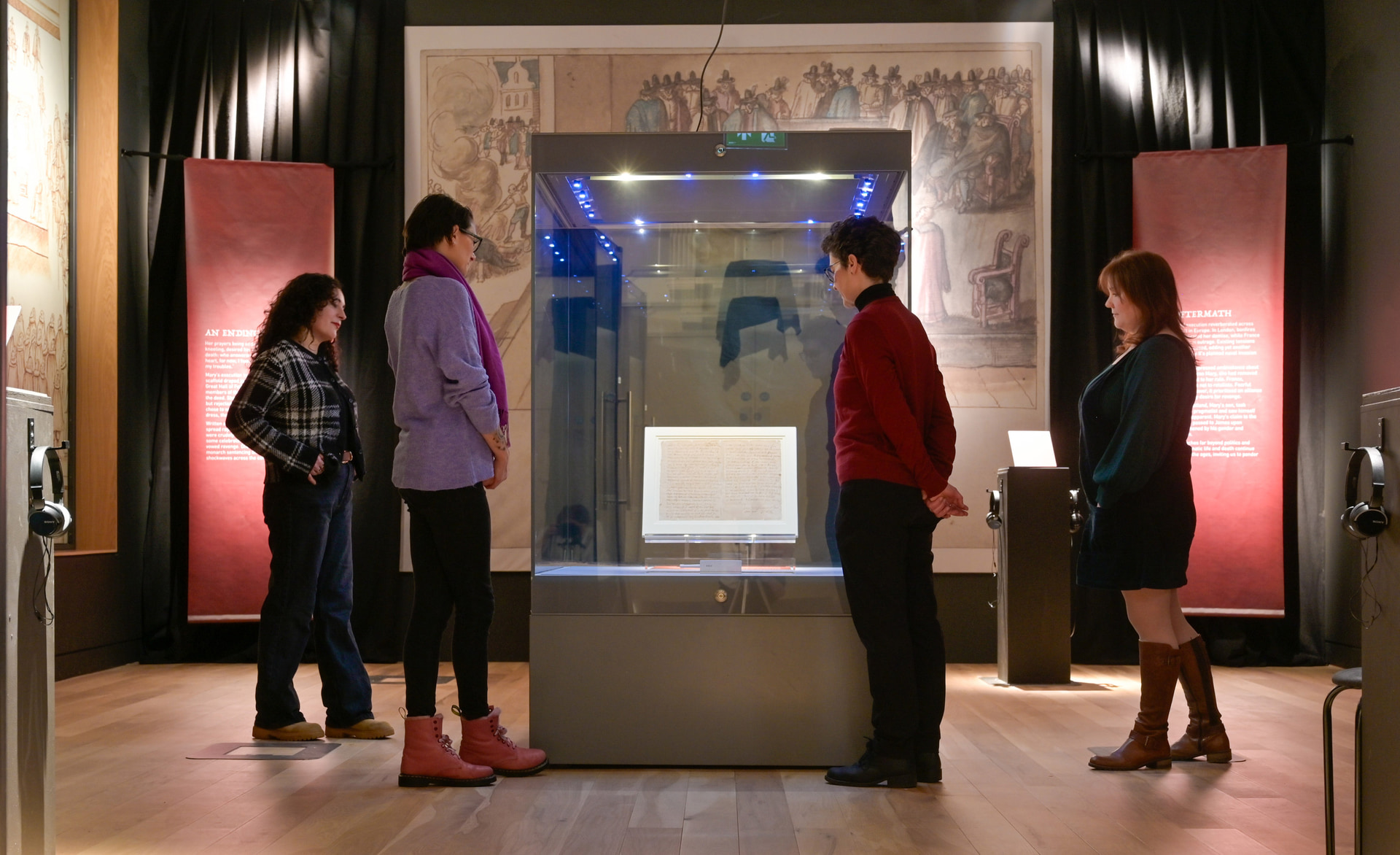
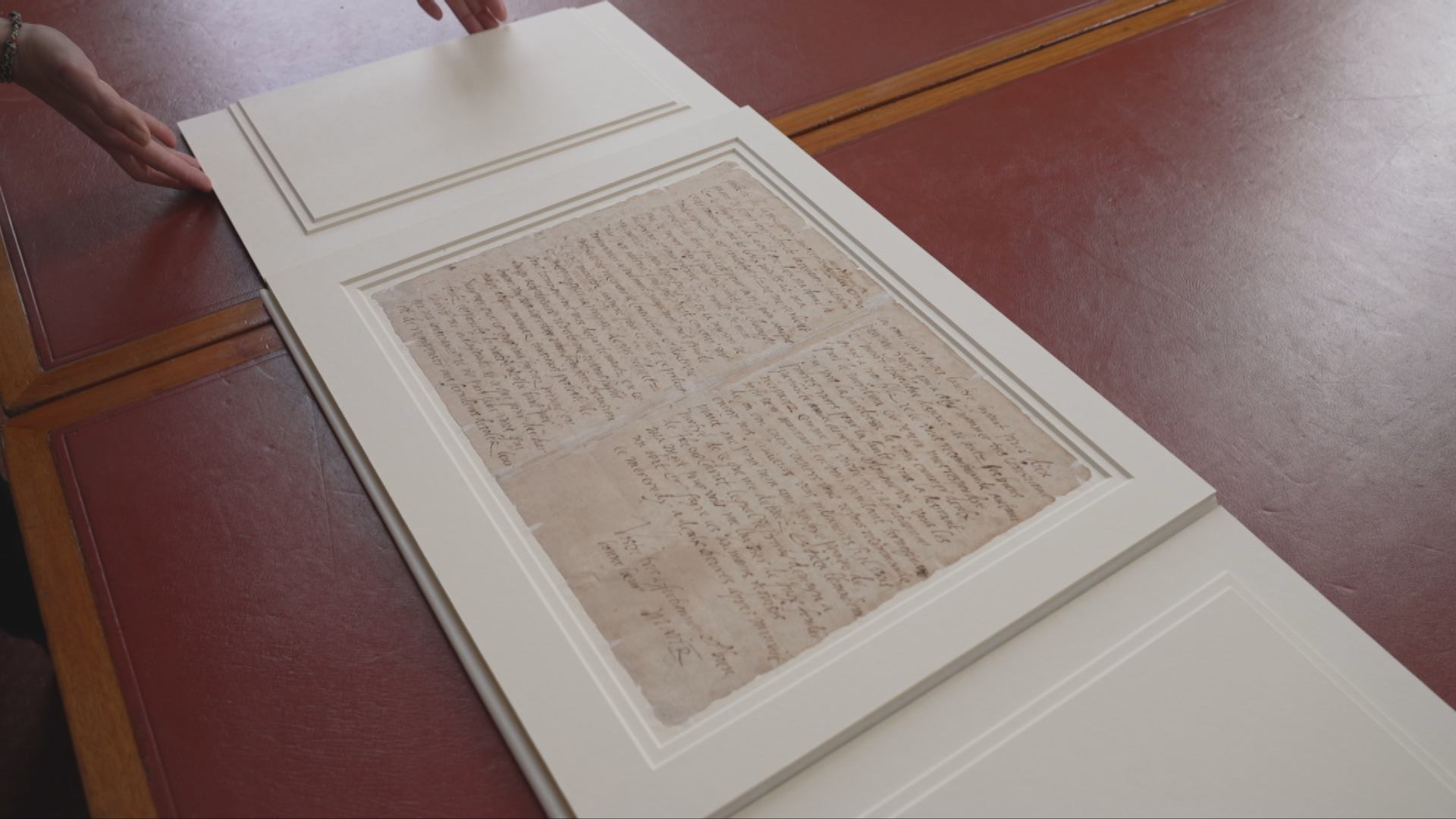
The last letter ever written by Mary, Queen of Scots has gone on display at Perth Museum.
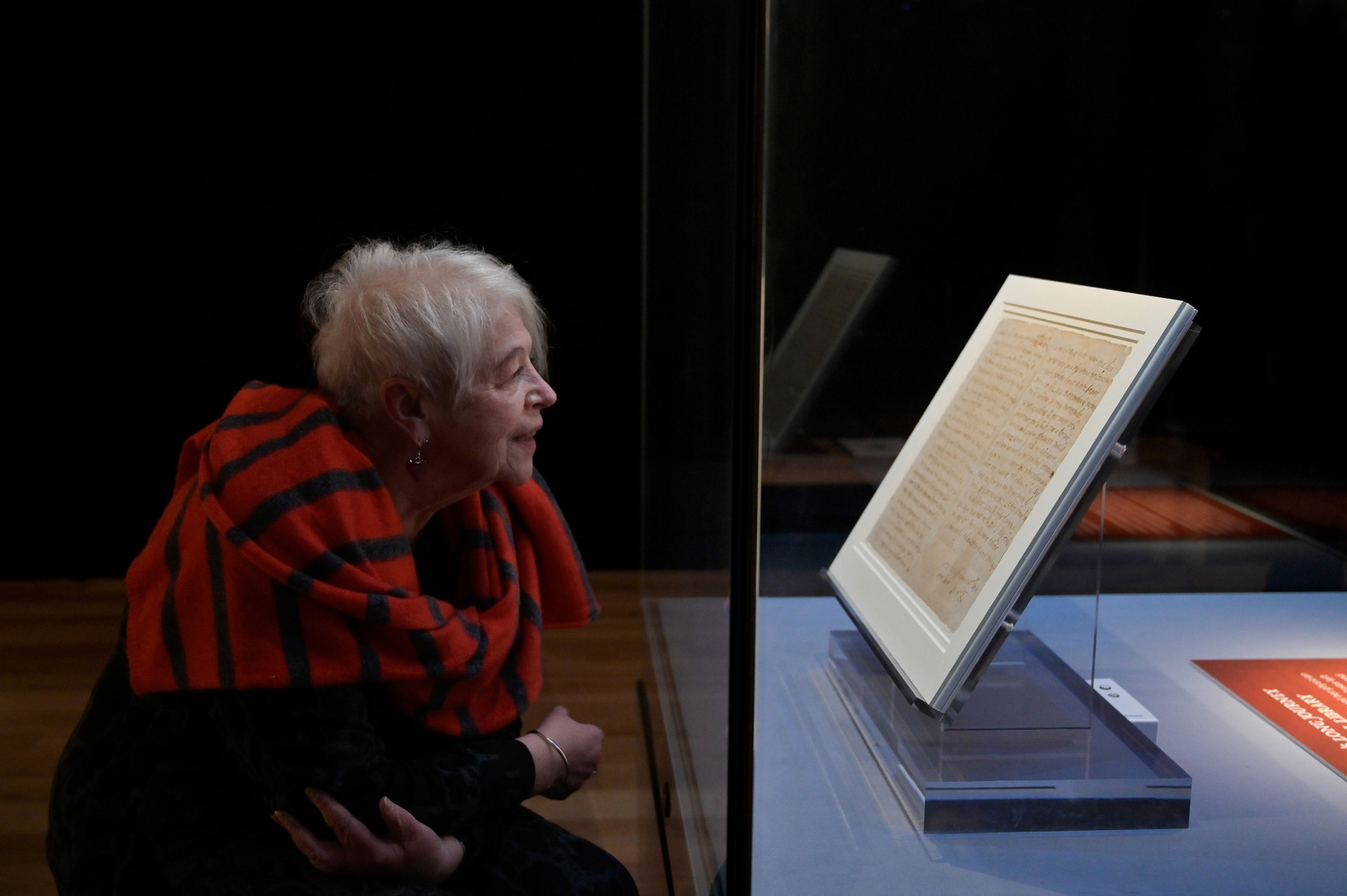
The historic document has left the vaults of the National Library of Scotland and travelled up to Perthshire for its three-month display – its longest public showing in over 20 years.
Penned in her cell, just hours before her beheading, the letter offers a rare insight on how one of Scotland’s most famous figures felt hours before her execution.
“Tonight after dinner I am to be executed like a criminal – at eight in the morning,” it reads.
Culture Perth and Kinross chief executive Helen Smout said the team are “delighted” to be hosting the exhibition.
“This exhibition looks at the enduring legacy of Mary, Queen of Scots, and her story, and how that’s been partly used by artists, writers and musicians in their work.”
 Julie Howden/CPK
Julie Howden/CPK
Mary’s turbulent, tragic life and execution in 1587 at the hands of her cousin Queen Elizabeth the first, has fascinated audiences for nearly 450 years.
She’s remembered for their rivalry and her 19-year imprisonment.
In her last letter, written to her brother-in-law Henry III, she claimed she was being persecuted for her Catholic faith and right to the English Crown.
“The Catholic faith and the assertion of my God-given right to the English crown are the two issues on which I am condemned, and yet I am not allowed to say that it is for the Catholic religion that I die.”
Along with the letter is a rare manuscript version of Burns’ poem Lament of Mary, Queen of Scots on the Approach of Spring, and work from Liz Lochhead, which will be free to see by visitors at Perth Museum and the AK Bell Library in Perth.
Helen said: “Robert Burns was fascinated by her story – it was something that resonated with him. Being able to see his handwriting, his words, how he approached it, is really wonderful – especially with Burns’ Night around the corner. It’s rare and so important.
“We know he liked a strong woman in history. That romanticising of the story helps form part of that mythology we see around Mary. We start to understand such an enduring legacy.”
Mary is understood to have written the letter in her prison cell at Fotheringhay Castle, Northamptonshire at 2am on Wednesday, February 8 1587.
Her execution took place just six hours later.
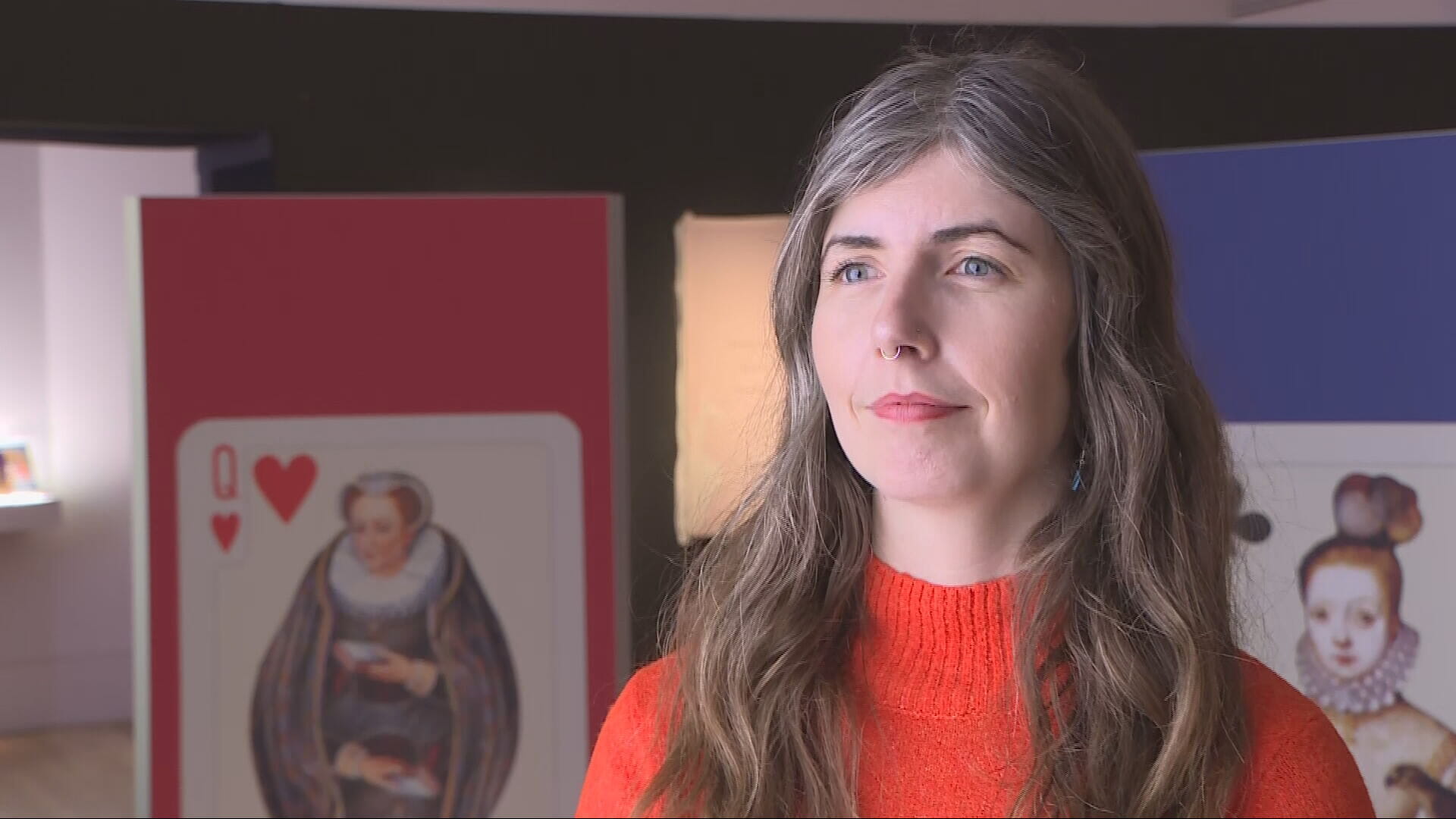
Ashleigh Hibbins, head of audiences and learning for Perth and Kinross, says visitors can gain insight into Mary’s character by looking at her handwriting.
“The handwriting is so steady and neat – she had a practical, real presence of mind,” she said.
“She was asking her brother-in-law, King Henry III, to make sure her servants are paid after she passes on and that her estates were looked after. She has no time to manage her affairs herself.
“She has this real sense of poise about her – she understands her legacy and that its importance would continue upon death.
“She felt strongly she was dying as an innocent, as a martyr. She has a real strength of mind even in her darkest moments.”
 STV News
National Library of Scotland’s head of archives Chris Cassells says Mary’s letter reveals she is “completely firm in her convictions.”
He added: “She believes herself to be dying a Catholic martyr. It’s her convictions that allow her to write in a calm and composed manner.
“She’s beginning to construct the story of Mary – where she is setting the record straight and getting her side of the story across Europe.”
He explained that the letter prompts questions about modern issues including sectarianism, gender and Scottish politics.
“She’s a hugely divisive figure, generating stories and myths from the get-go,” he said.
“In the period following the execution, you have two very different notions of what’s just happened. In Catholic Europe, the rightful queen has been put to death. In the Protestant countries, the Reformation has been saved.
“In the 18th-century Jacobite risings, Mary became a byword for Jacobite sympathiser. By the end of the 18th century, the beginning of Romanticism and the Enlightenment – she is cast as this romantic, tragic, doomed heroine.”
 STV News
The letter’s journey to the National Library of Scotland is a story in its own right.
It was originally entrusted to Mary’s doctor to deliver to King Henry III of France, a journey that took 11 months. Once in France, it circulated through royal archives and reached the Scots College in Paris.
When the College was later dissolved during the French Revolution, its archives were dispersed and many items were lost, but this letter survived. It then passed through a series of private owners over the following centuries.
In the 19th, century the letter returned to Britain and was acquired by Alfred Morrison, a well-known English collector. After his death in 1917, his widow planned to auction it at Sotheby’s.
Concerned that it might be bought abroad, a group of subscribers combined funds and negotiated a private sale before the auction. The letter was secured for the nation, although no national library yet existed to house it.
In 1923 the letter was placed with the Faculty of Advocates in Edinburgh. When the National Library of Scotland was founded in 1925, it then became part of its manuscript collections, where it has remained since.
Chris added: “It’s been through so many hands and across the Channel numerous times. It’s very light sensitive, which is why it’s in quite a dark space. But for being over 400 years old, it’s in remarkably good condition.”
Displays at the AK Bell Library and Perth Museum are open for three months and are free to view.
Follow STV News on WhatsApp
Scan the QR code on your mobile device for all the latest news from around the country