
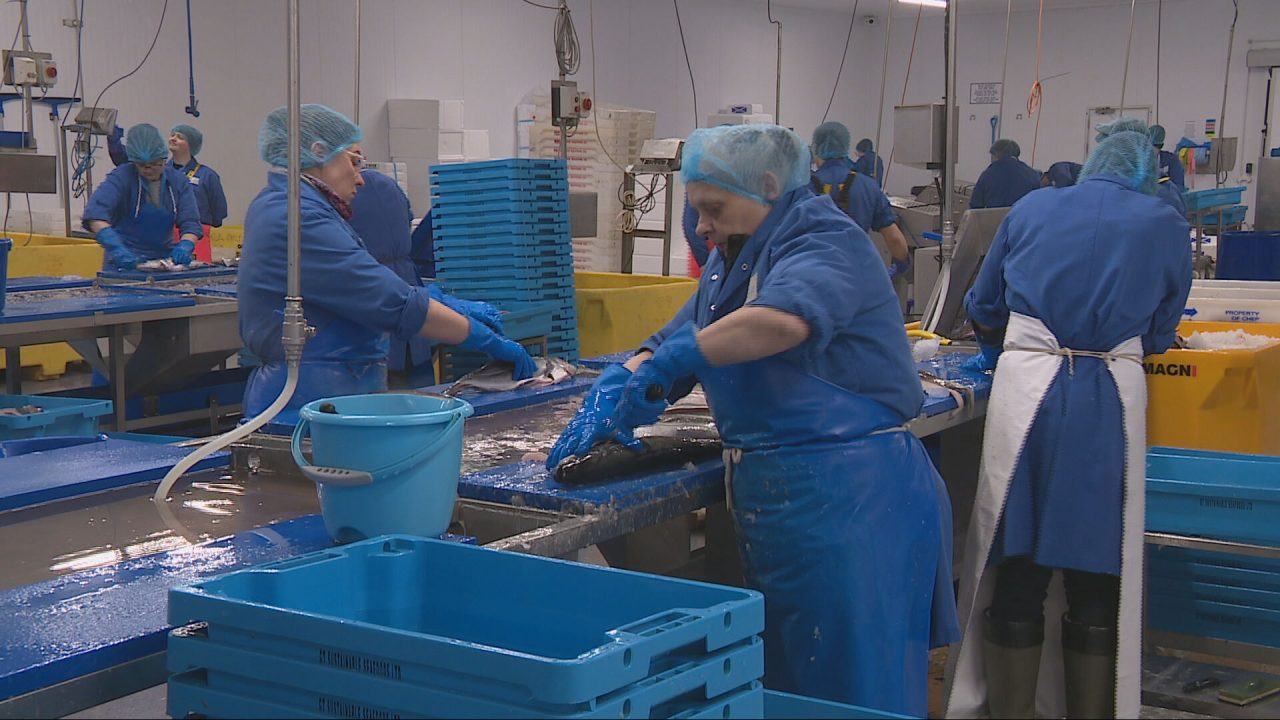
Scottish fish processors are raising concerns about new paperwork required to export their products to the European Union, warning it could put jobs and millions of pounds at risk.
The so-called “catch passport” system has now come into force as part of a post-Brexit deal agreed last year.
However, industry representatives say some of the requirements are unworkable and are already causing problems.
The fish processing sector employs more than 6,000 people in Scotland and is worth millions of pounds.
Around 80% of the fish caught in the North Sea is exported to the EU, making access to European markets critical for the industry.
Graeme Tallis from GT Sustainable Seafoods said the new rules threaten an already pressured sector.
He said: “The EU is a massive consumer of fish that we don’t eat here. At the end of the day it comes down to jobs and money – and it’s the jobs that could be affected that I’m concerned about. It’s tight enough as it is in the industry.
“We got the 12-year deal. At that time we were informed that the paperwork would ease – it would be easier to put your goods into the EU.
“But crikey, it’s almost doubled the paperwork. Certainly, if there were any problems after Brexit the fish were rejected or stopped, so it’s a bit of a worry.
“The EU and UK are not aligned in the paperwork, this is last minute now and we’re still not 100% sure if we’re correct.”
The UK Government says the plans have been widely consulted on and that exporters can complete catch passports using the information available at the time the paperwork is created.
But those assurances have not allayed fears within the industry.
Jimmy Buchan from the Scottish Seafood Association said past experience has shown how damaging errors can be.
He said: “Our members are really concerned because we are now sending fish into a system that has not really been tried and tested.
“In previous years, they have proved that if all the Ts are not stroked and all the dots are not in the right place, then the fish will be rejected on a simple error. That can cause a processor hundreds of thousands of pounds.
“And it not only gets rejected, it gets destroyed.”
The new paperwork comes as the industry is already facing a challenging year. There are ongoing concerns about a deal allowing EU boats another 12 years of access to UK waters, while quotas for key fish stocks such as cod and coley have also been reduced.
The catch passport system came into force over the weekend, with processors saying they are already seeing issues.
The industry is warning that a lot depends on the system working smoothly, with millions of pounds “at stake”.
Follow STV News on WhatsApp
Scan the QR code on your mobile device for all the latest news from around the country