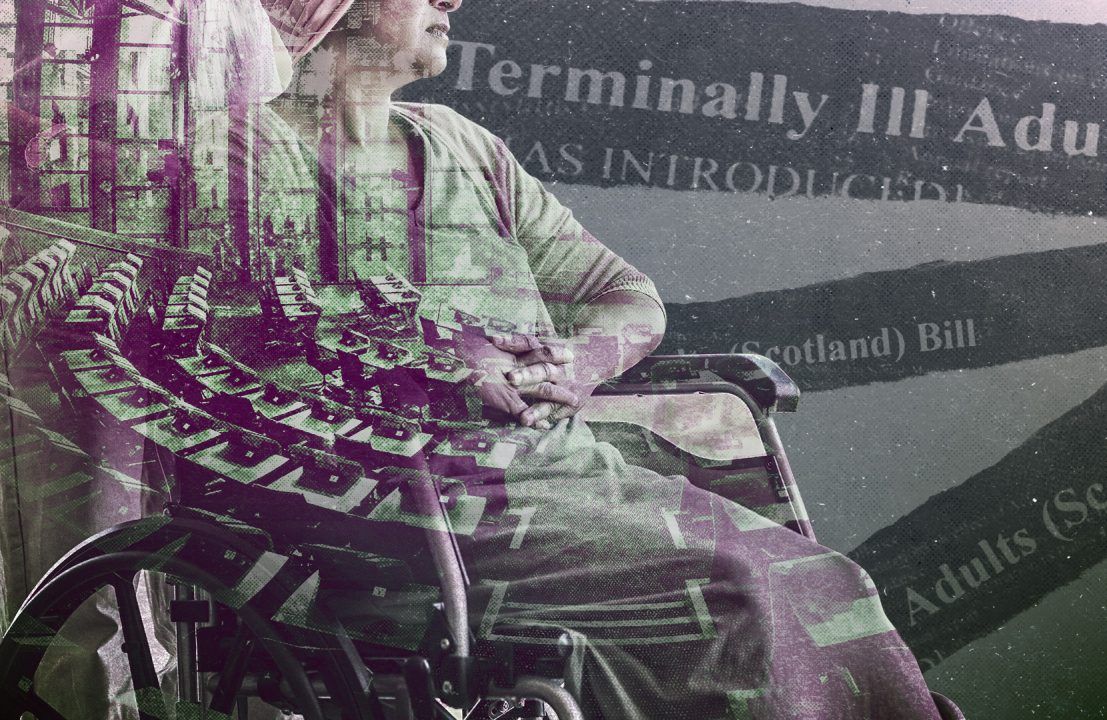
MSPs are set to vote on whether to legalise assisted dying in Scotland after one of the most emotionally and morally-charged debates to come before the Scottish Parliament.
The historic vote on Liam McArthur’s Assisted Dying for Terminally Ill Adults (Scotland) Bill is scheduled to take place at around 10pm on Tuesday night.
Members will be asked if terminally ill adults with decision-making capacity – and six months or less to live – should be allowed to seek medical help to die.
It is the furthest any attempt to legalise assisted dying has progressed at Holyrood.
Previous moves by the late Margo MacDonald and Scottish Green co-leader Patrick Harvie failed, while former Lib Dem MSP Jeremy Purvis did not receive enough support to introduce a similar Bill in 2004.
The Scottish Parliament has scrutinised hundreds of amendments so far, but doubts continue to grow over the Bill’s projected costs and whether its safeguards go far enough.
MSPs spent dozens of hours debating the Bill late into the night over several days last week, including during a rare sitting on a Friday.
They accepted 175 amendments to the Bill, including one that reduced the period in which a person would be “reasonably expected” to die to six months.
How did we get here?
The Bill was approved in principle by 70 votes to 56 last May. Many MSPs have not shifted their stance since then, but some remain undecided with just hours to go until the crucial final vote.
Some MSPs who previously supported the Bill say they only did so to allow further debate to take place, and are unlikely to vote for it at stage three.
If the Bill passes, it would allow patients to request medical assistance to help end their own life.
MSPs have a free vote and are being asked to “vote with their conscience”, rather than along party lines.
Key Criteria
-
 Two doctors will need to independently certify someone is both terminally ill and has the mental capacity to request an assisted death
 - Only those who have lived in Scotland for at least 12 months will be eligible
- They must be registered with a GP in Scotland
- There must be at least two weeks between a request being made and the necessary medication being provided
- The patient must have the capacity to take the life-ending medication themselves
Some changes to the Bill prompted backlash, with the Royal College of Psychiatrists (RCS) and Royal Pharmaceutical Society saying they now oppose it.
While the RCS said it “remains neutral” on the principle of assisted dying, it added that the removal of a key section of the legislation had “drastically weakened essential safeguards” for psychiatrists and other medical staff.
Meanwhile, deal has been agreed with the UK Government that should enable employment rights to be protected should MSPs pass the legislation.
With employment rights reserved to Westminster, there were fears that if Section 18 had remained in the Bill, it would have been outside Holyrood’s competence.
Scottish Liberal Democrat MSP Liam McArthur, who introduced the Bill, has described the legislation as “bulletproof”.
He said on Friday: “I am clear that we have crafted a Bill that provides compassionate choice for dying people alongside clarity and protections for the professionals who will support them to exercise that choice.
“MSPs need to look terminally ill Scots whose experiences prove beyond all doubt that a change in the law is desperately needed in the eye and pass this Bill.”
Opposing viewpoints
 STV News
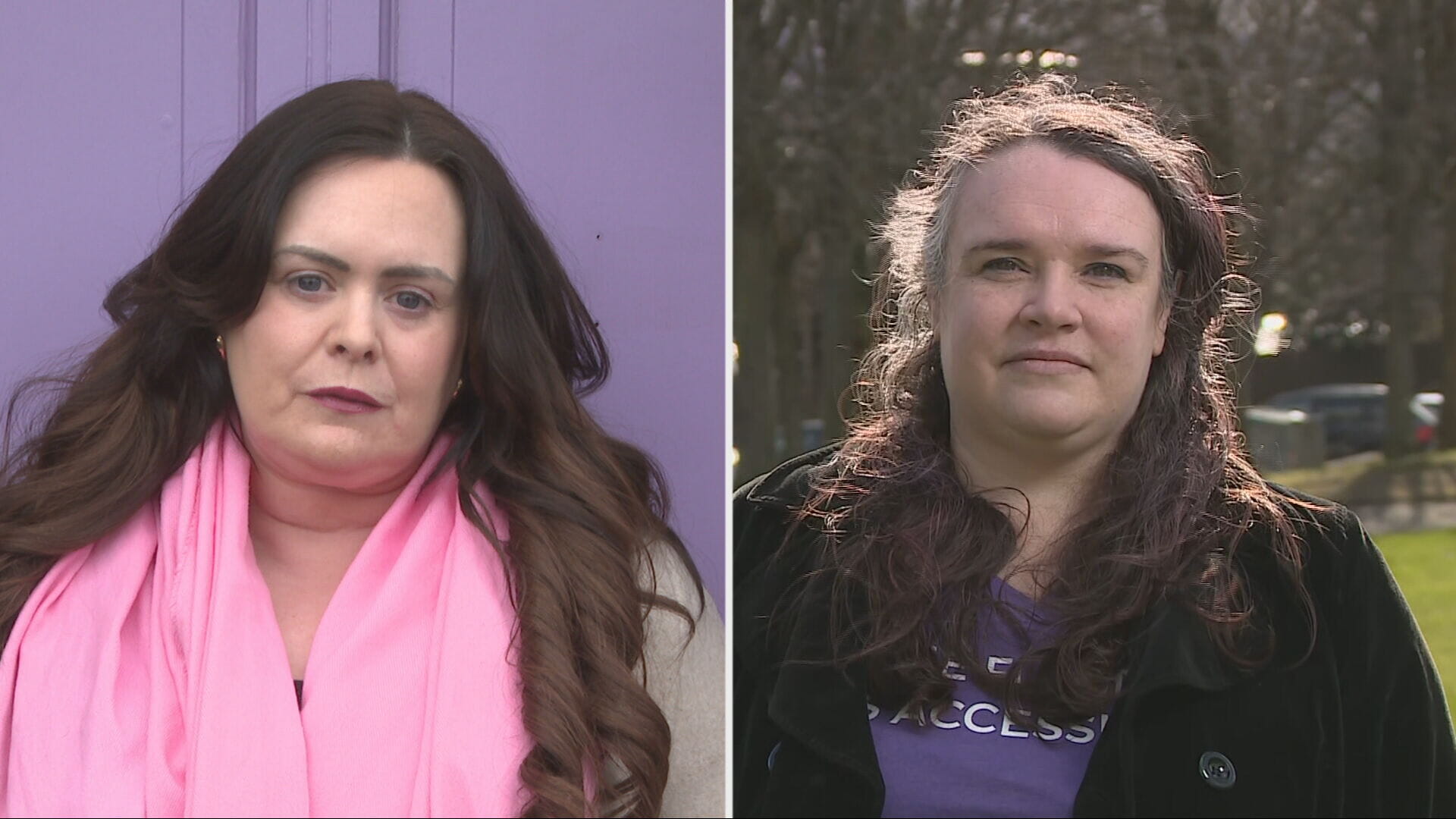
Over the course of their lives, Lisa Fleming and Fiona Robertson have both faced the prospect of their deaths.
They sit on opposite sides of the debate on the issue of assisted dying.
Lisa, who was was initially given six months to live when she was diagnosed with incurable secondary breast cancer in 2017, is supporting the Bill.
Lisa, from Edinburgh, told STV News: “I’ve watched two of my good friends at the end of life, and I’ve seen the pain their bodies were subjected to – pain that numerous pain drivers couldn’t control – hearing them cry and scream. That’s not what I want at the end.
“I want to have some sort of dignity. If you live with an incurable diagnosis, whether it’s cancer or another terminal condition, you lose a lot of dignity through treatment. It strips that away on a daily basis.
“This is about empowering people to have that choice, and I’m really scared it doesn’t go through tomorrow. I would be devastated, to be honest, because that would take away the choice I would have at the end of my life.”
But Fiona, who became disabled after contracting a severe virus, has concerns about the proposed legislation.
She was housebound for almost four years, relying on round‑the‑clock care. At that point in her life, she says she would have considered assisted death.
“Without a shadow of a doubt, I genuinely don’t believe I would be here if it had been available,” said Fiona, who is from Aberdeen. “I had plans myself. If I didn’t start improving by a certain time, then I thought that would be the end of my life.
“It is so common for people to believe that suicide is the natural option once they lose certain abilities in their lives. That’s what I am afraid of, that people won’t give their lives the chance to adapt.
“I still believe it’s something people should have access to, but it’s far too dangerous in the society we live in right now. It’s not individual coercion, it’s coercion on a societal scale.
“We don’t currently assist people to live. That’s what we need to be doing before we start talking about assistance to die.”
What does the Bill say in Scotland?
If the Bill becomes law, it would give people at the advanced stage of a terminal illness the option of requesting help to end their life.
Initially, McArthur’s Bill would apply to those aged 16 or older and who have been resident in Scotland for at least a year.
But the Bill has since been amended to raise the minimum age requirement to 18.
Under the plans, those wanting an assisted death would require assessment of two doctors and would need to undergo a waiting period to reflect on their decision to proceed.
The plans ensure those wanting an assisted death are made aware of all options, including palliative care. Doctors would be able to conscientiously object to being involved in the process.
How does it differ from the proposed legislation in England?
The current bill to legalise assisted dying in England and Wales was passed by the Commons in June last year but has been stalled in the House of Lords for months and is now unlikely to pass.
Assisted suicide is banned in England, Wales and Northern Ireland, with a maximum prison sentence of 14 years.
In Scotland, it is not a specific criminal offence, but assisting the death of someone can leave a person open to being charged with murder or other offences.
Labour MP Kim Leadbeater formally introduced her Terminally Ill Adults (End of Life) Bill to the UK Parliament in October 2024 – applying only to England and Wales.
Last June, MPs supported The Terminally Ill Adults Bill by 314 votes to 291 and it went to the House of Lords for further scrutiny.
However, with only three of 14 days of debate in the Lords remaining, around half of the amendments are yet to be discussed.
Follow STV News on WhatsApp
Scan the QR code on your mobile device for all the latest news from around the country