
One constant all governments have to contend with is how best to spend the little money they have.
Today, the focus in Westminster has been on welfare spending, after Reform UK unveiled its welfare pledges – if it wins the next election. (Reform was top of the polls for fifteen months until Labour bobbed back into the lead after Andy Burnham became Prime Minister.)
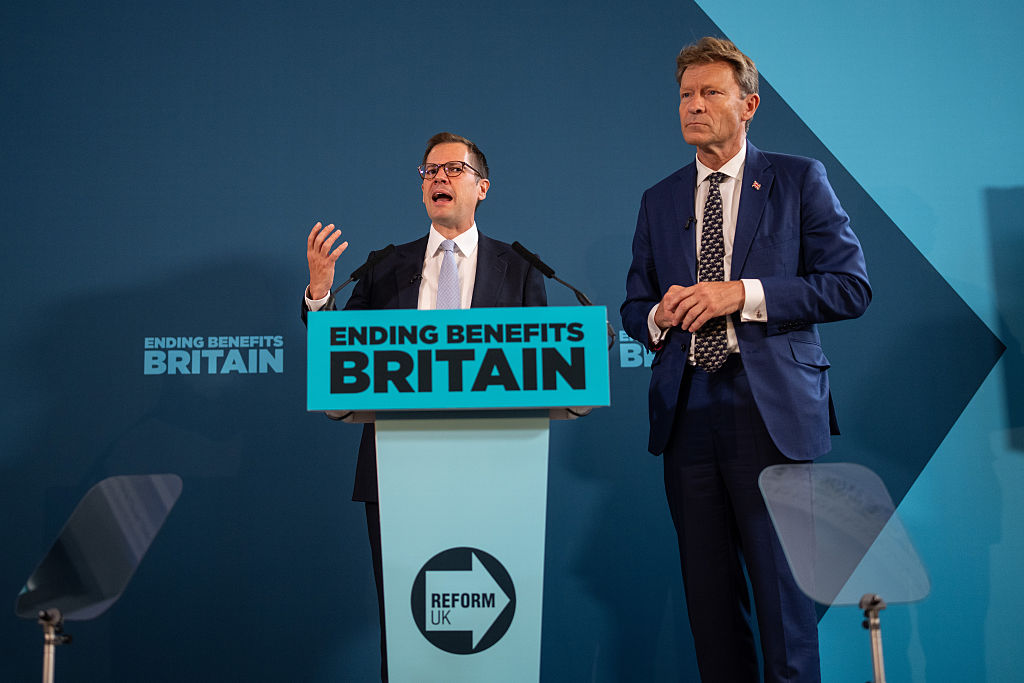
Reform UK’s Robert Jenrick announced that the party wants to stop foreign nationals receiving benefits – including EU citizens with settled status, despite warnings from other parties that this will require a renegotiation of the Brexit deal.
Deputy leader Richard Tice admitted that there is ‘clearly going to be a renegotiation’, but said he is ‘confident’ a Reform government would be able to do this quickly and in the spirit of ‘fairness’.
Fairness was the buzzword today: Reform claims its welfare plans have been designed in the interest of fairness for the British people. Danny Kruger MP, who, like Jenrick, defected to Reform UK from the Conservatives, told the BBC this morning that he would encourage foreign nationals who live and work in the UK to apply for citizenship if they want to avoid being hit by these measures.
Other proposals include a new return-to-work programme that would see employers covering their employees while they are off on sick leave.
The pro-business party was keen to state that businesses would not face additional costs as a result of this pledge, and that costs would be offset by reductions in employer national insurance contribution payments. Reform also wants to reinstate the two-child benefit cap. (Two of its MPs, Suella Braverman and Robert Jenrick, voted to repeal it earlier this year in the second reading of the bill; they claimed afterwards they had accidentally ended up in the wrong division lobby.)
And Jenrick announced today that his party wants to create a ‘welfare-to-work’ scheme, where those people who are both claiming benefits and fit to work – but not in employment – would have to complete 20 hours of community work each week, using the rest of their time to find employment.
Would much of this affect Scotland? Well, yes: both directly and indirectly. Reform UK say they want to reform the health element of universal credit, which is a reserved benefit – they initially said they wanted to abolish it completely, but rowed back on this overnight – and so this would impact those people in Scotland who claim it.
More generally, if a Reform government got into power, it says it would make changes to the welfare system to ultimately cut funding for welfare. Even if this only directly affects those claimants in England and Wales, a dip in funding for welfare would affect the Barnett consequentials – additional money allocated to the devolved nations – and, ultimately, the amount of cash the Scottish government receives.
Responding to Reform’s plans, Scotland’s Social Justice secretary Shirley-Anne Somerville said: “This is a heinous set of policy proposals that would rip apart the social security safety net in the rest of the UK and drastically impact households in Scotland receiving reserved benefits… Any of us could rely on social security at any time in our lives, and the Scottish government will always defend it. We will continue to protect and champion our dignified, compassionate system and will help people where they need it and when they need it.”
Jenrick said today that the Labour party’s welfare policies had been designed to win back voters – but his own party could have this accusation levelled at it too.
Tice insisted that the pension triple lock (where the state pension is guaranteed to rise each year by the highest of wages, inflation or 2.5%) would be protected, while, during questions from the media, Jenrick stated that ‘nothing that we talk about today is about pensioners’.
It’s worth noting that, on average, almost a quarter of people in Reform UK constituencies are over the age of 65 – while the party is consistently the most popular choice among the over-55s.
Ultimately, this is all hypothetical – there is no guarantee that Reform UK will form the next UK government. But the party has presented some of the most radical plans to overhaul the welfare system of the main parliamentary parties thus far. It’s a thorny area – benefits are easier to dish out than take away – and one that threatened Sir Keir Starmer’s leadership as early as the summer of 2025, when he faced the largest rebellion of his premiership over welfare cuts.
The party of government has since watered down its initial reforms, but many in government are desperate to make savings here, in order to direct more funding to areas like defence and housing.
And it’s a policy area in which the Tories were hoping to win back voter support, with leader Kemi Badenoch and shadow chancellor Mel Stride claiming that Britain’s benefits spending is on course to hit £100 million by 2030, with Scotland facing a £10bn bill by the same point.
Reform UK claims that its plans will save more than £50bn – but Jenrick today struggled to provide exact figures about how many people would see their benefits cut. While almost all parties agree that the welfare system needs to see significant change, no one seems to have all the answers yet.
Follow STV News on WhatsApp
Scan the QR code on your mobile device for all the latest news from around the country