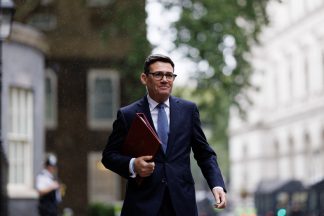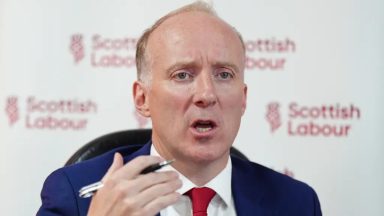

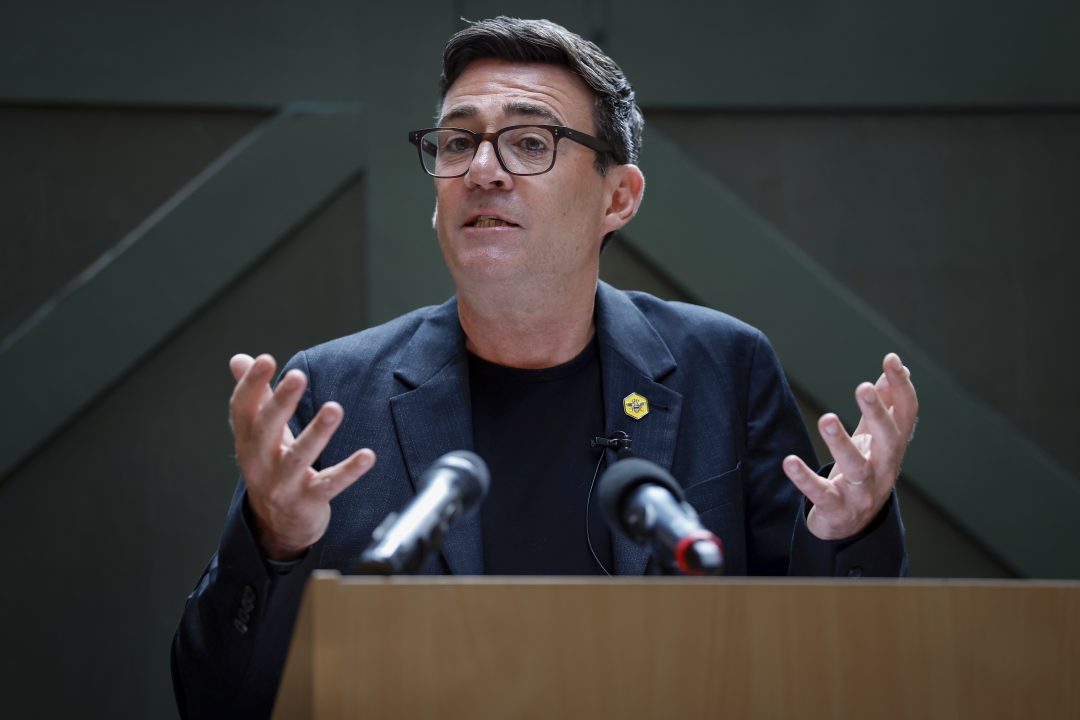
Devolution was the focus of Andy Burnham’s first big speech since becoming Labour’s newest MP almost a fortnight ago.
After Sir Keir Starmer announced he would resign as Labour leader last Monday, the Makerfield politician was quick to announce he would stand – after making his intentions clear during his election campaign. It was an ambition that helped him get elected in the first place, as the strength of the ‘anti-Starmer’ vote grew. But now that Burnham is in Westminster, his plans for power are coming under more scrutiny.
Today’s speech was an attempt to calm his critics who suggest that the former Greater Manchester mayor isn’t particularly clear what he stands for. This morning, in the People’s History Museum, Burnham explained that his vision for Britain is all about the rebalancing of power. “Westminster is not working,” he said. “It is broken.” He has a triple-pronged, ten-year plan to raise living standards: it will reform essential utilities, like water and transport, champion reindustrialisation and oversee the regeneration of towns and cities across the country. Burnham insisted that a government led by him could see the UK’s high streets become a ‘new symbol of Britain’s renaissance’. He will also create a ‘No.10 North’ in Manchester, which he said will be the ‘nerve centre of a revived Britain’.
Burnham’s is a message of hope – but it’s also one whose lack of detail raised a few eyebrows. Despite being a devolution-heavy speech, the new Labour MP made little reference to Scotland. He discussed the need to aid the ‘industrial transition’ in Aberdeen to expand devolution in places like Dundee, but it isn’t quite clear how his plans to decentralise Westminster’s powers will work alongside those existing devolved powers in Scotland. Indeed, his plans to expand devolution in Scotland may worry the Scottish Government for a different reason, given it has been accused of centralising power in Edinburgh at the expense of Scotland’s rural and island populations.
Burnham talked about the need to tear up the current system, but how can he enforce his model of change in Scotland? His speech saw much talk of collaborative politics: does he hope to foster a closer relationship with the Scottish Government than previous Prime Ministers have done, to get the SNP government on side? Will he take another look at the Scotland Act? Could he try to overrule devolved governments if they don’t play ball? It’s too early to tell what kind of leader Burnham will prove to be, but these are important questions. Scottish Labour figures want more explanation, too – they hope the Makerfield MP won’t simply devolve more powers to Holyrood and then leave the Scottish Government to get on with it. Interestingly, the former mayor showed more willingness to go further on Scotland when he had less to lose – in his 2024 book with Liverpool city mayor Steve Rotherham, he suggested replacing the Barnett formula with a “new arrangement that is demonstrably fair to all”. He omitted this suggestion today.
There is a concern that Burnham is more focused on England at the expense of the rest of the UK. First Minister John Swinney said that “Scotland is a nation and not a region”, and even Burnham-sympathetic Scottish Labour figures have been left a little worried that Burnham remains too close to his project of ‘Manchesterism’. “The core message resonates just as much to people in Glasgow as it does to Manchester,” one Labour insider said, “But he needs to change the language.”
And then there is the question of money – Burnham has committed himself to sticking with Rachel Reeves’ fiscal rules if he becomes Prime Minister. There’s the stability rule, which states that the current government budget should be on course to be in balance or in a surplus, and the investment rule, which says that debt should fall as a share of GDP, to be achieved by the end of this parliament. These make borrowing difficult – and so Burnham must explain how he plans to introduce his not unwelcome reforms to the very structure of British politics whilst adhering to these. In short, how will he fund his vision?
What is unmistakable is the fresh sense of optimism blossoming in Labour circles, among politicians in Westminster and supporters at home. Burnham has a successful track record in Manchester – on buses, Covid support and communication, given his popularity after almost a decade as mayor – and he has promised to prioritise concerns facing the next generation of workers, from welfare to housing to education. Whether Burnham can persuade voters of all backgrounds that ‘Manchesterism’ can work UK-wide, and bridge ever-widening political divides, will be key to an effective premiership. And he must remember that if he is going to make devolution a key cornerstone of his campaign, he can’t forget about Scotland.
Follow STV News on WhatsApp
Scan the QR code on your mobile device for all the latest news from around the country