
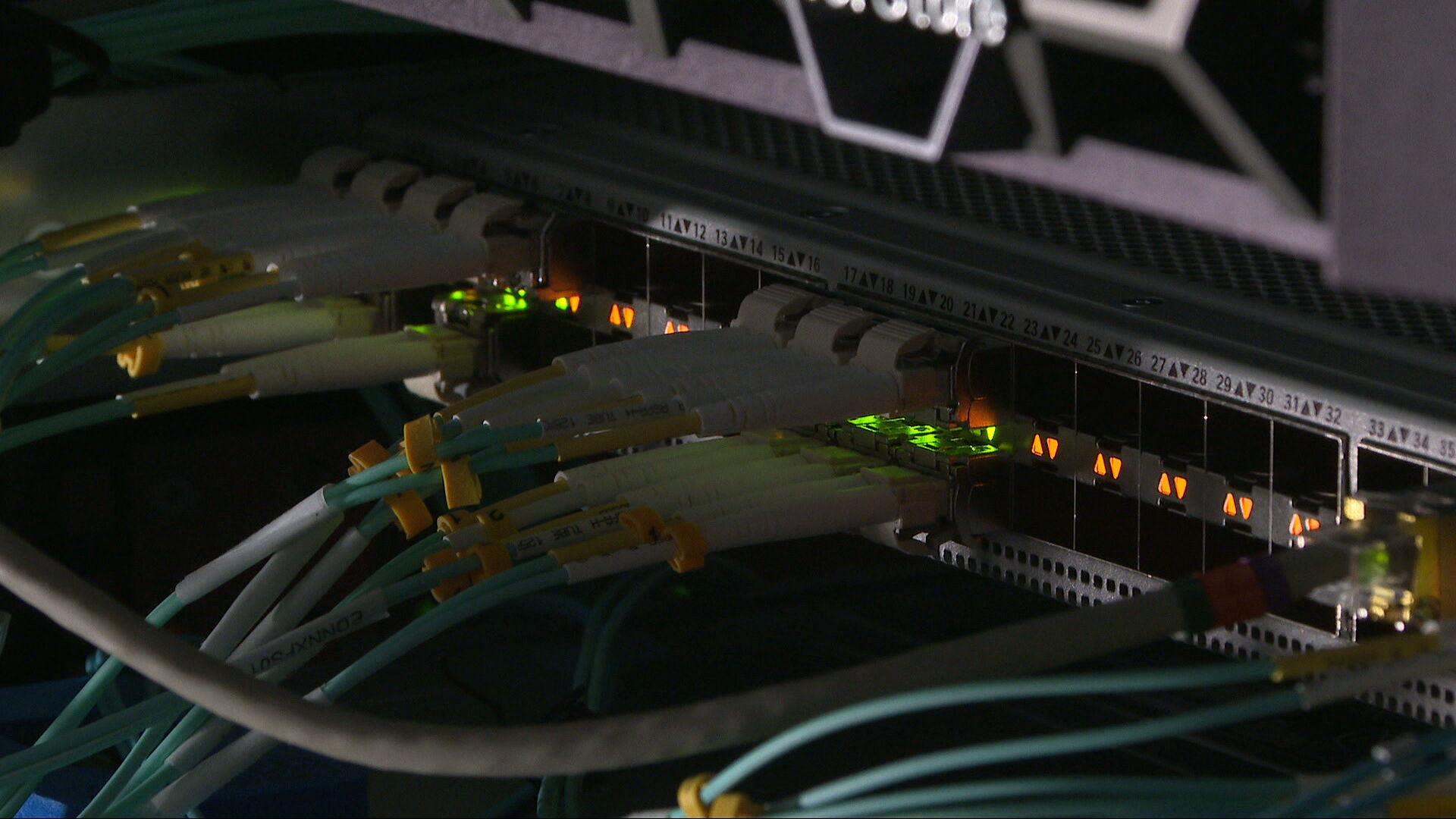
Inside an unassuming building in North Lanarkshire, row after row of computer cabinets emit a low hum.
They don’t look particularly futuristic but units like these are the central nervous system of the internet and investors want in on the action.
There are at least 20 data centre proposals across Scotland, many of them far larger than existing facilities, as demand for artificial intelligence continues to grow.
Business leaders say it’s important Scotland doesn’t miss the boat on AI, but there have been widespread protests from people living near the sites of proposed hyperscale projects.
Earlier this month, the Scottish Government rejected a motion calling for a moratorium on all data centre developments, stating that new guidance to assist planning decisions will be issued before Christmas.
So are AI data centres the key to powering Scotland’s economic future or are they environmental hazards that are set to blight our landscape for decades to come.
‘I’m not NIMBY-ish, it’s just really scary’
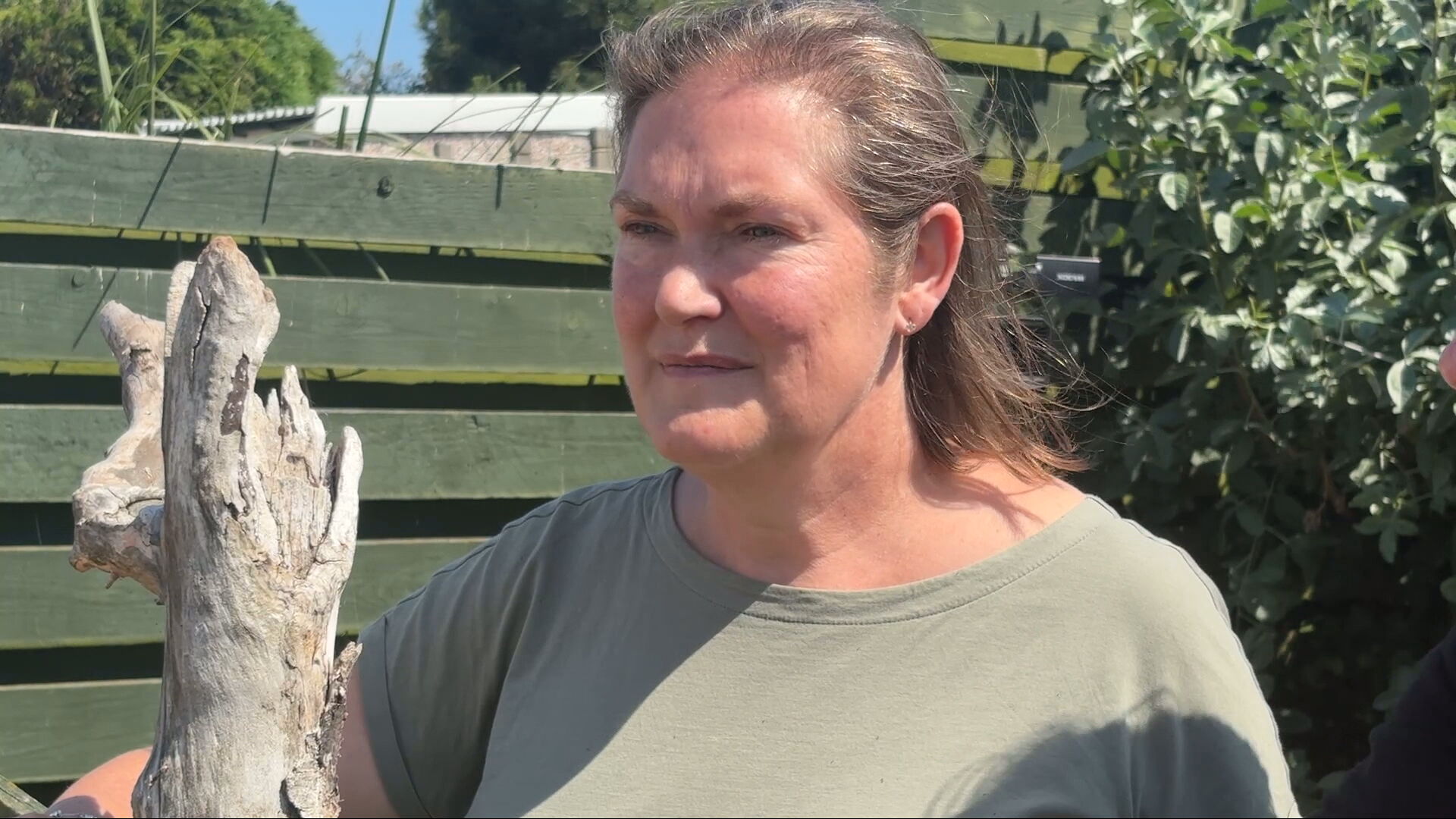
Jen Walker loves the countryside views from her garden in Dunbar, East Lothian.
But she’s concerned it will soon be spoilt if proposals to build a data centre – equivalent to the size of 85 football pitches – are given the go-ahead.
 STV News
“It’s not that I want to be NIMBY-ish, once you find out exactly what’s involved, it’s just really scary,” Jen told STV News.
“It’s really been reassuring to hear that so many people in Dunbar are against it in principle, because they’ve found out more about what is happening and more information about the planning process.
“There’s a big groundswell of support across Scotland to really get things right, to get the government to do things properly.”
The project in Dunbar is operated by Thistle Data Centres Ltd, who say they are committed to engaging openly with local communities throughout the planning process.
A spokesperson for the company said: “A data centre of the size we are proposing will be used for many purposes including streaming Netflix/Prime movies; e-commerce and online banking; popular website and email hosting; cloud storage and file backup, all of which are used by the majority of the population on a regular basis.
“The project also has the potential to deliver significant benefits to Dunbar and the surrounding area through inward investment, local jobs, opportunities for businesses, skills development and additional community benefits.
 STV News
It’s not just in Dunbar, however, where people have concerns about living next to proposed data centres.
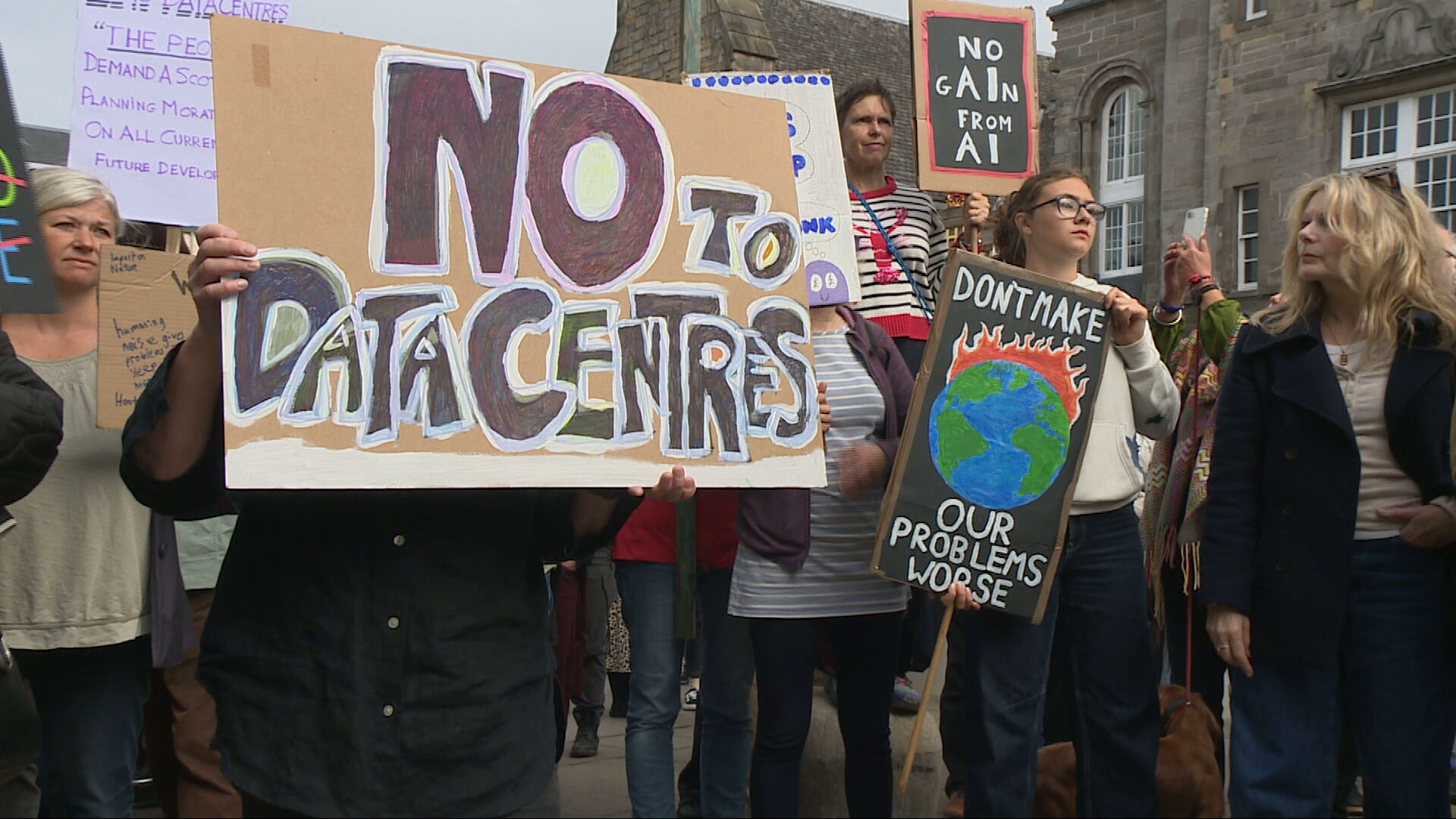
Hundreds of people from about 15 local campaign groups campaigned at the Scottish Parliament earlier this month to oppose the centres, which include a £5bn data centre project near the small village of Auchtertool in Fife, and a £2bn data centre in the Borders.
They are concerned the centres will place significant pressure on the environment, citing their vast consumption of electricity and water.
 STV News
What is a data centre?
AI data centres house the specific IT infrastructure needed to train, deploy and deliver AI applications and services. They have advanced compute, network and storage architectures, along with energy and cooling capabilities to handle AI workloads.
Hyperscale data centres are huge, including at least 5,000 servers and occupying at least 10,000 square feet of physical space. They are in wide use globally by cloud providers such as Amazon Web Services (AWS), Microsoft Azure and Google Cloud Platform.
Meanwhile, colocation data centres refer to companies that own a hyperscale data centre and rent out its facilities, servers and bandwidth to other companies.
That set-up allows businesses to enjoy the benefits of hyperscale, without the major investment.
Where are the proposed developments?
There are more than 20 sites in local authority planning portals, according to APRS, Scotland’s countryside charity.
The majority of them span across the central belt from Ayrshire in the west across to Fife in the east.
Those opposed to data centres fear they guzzle water, strain electric grids and raise prices, while offering almost nothing in return.
The centres require a large amount of power to run and existing facilities consume about 2.5% of the UK’s electricity, according to estimates from the UK’s National Energy System Operator (NESO).
But are the fears overblown?
Industry leaders say there’s a misunderstanding about data centres
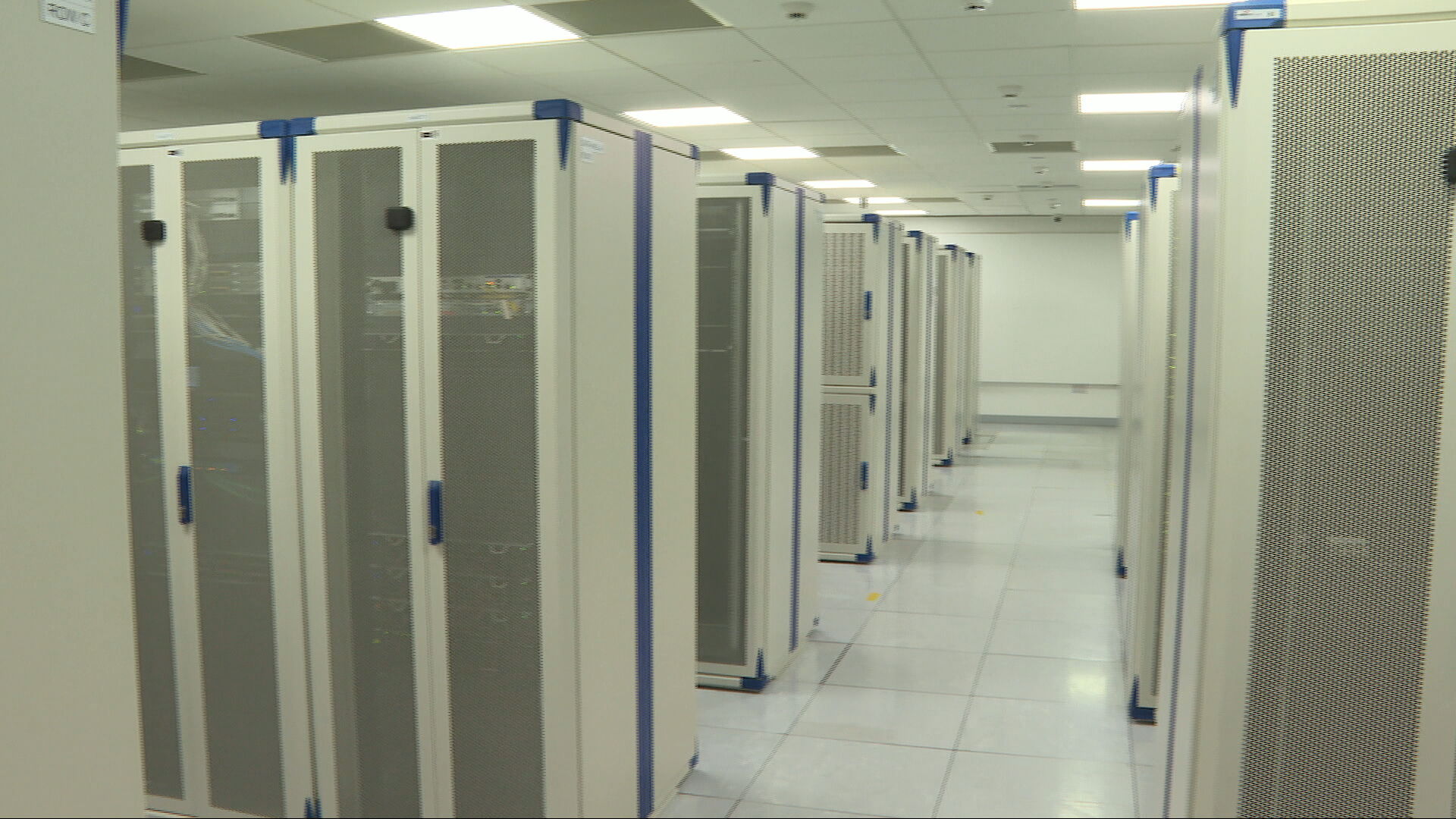
The Asanti data centre in Hamilton is tiny in comparison to what is planned elsewhere in the country.
It fits comfortably into a business park but many of the proposed new centres are 20, 50, 70 times bigger. One could even be more than 100 times the size of facility in Hamilton.
 STV News
The Scottish Government says it will require environmental impact assessments for all data centres exceeding 50 megawatts in power capacity.
Avanti doesn’t plan on building any hyperscale data centres itself, but supports those who want to.
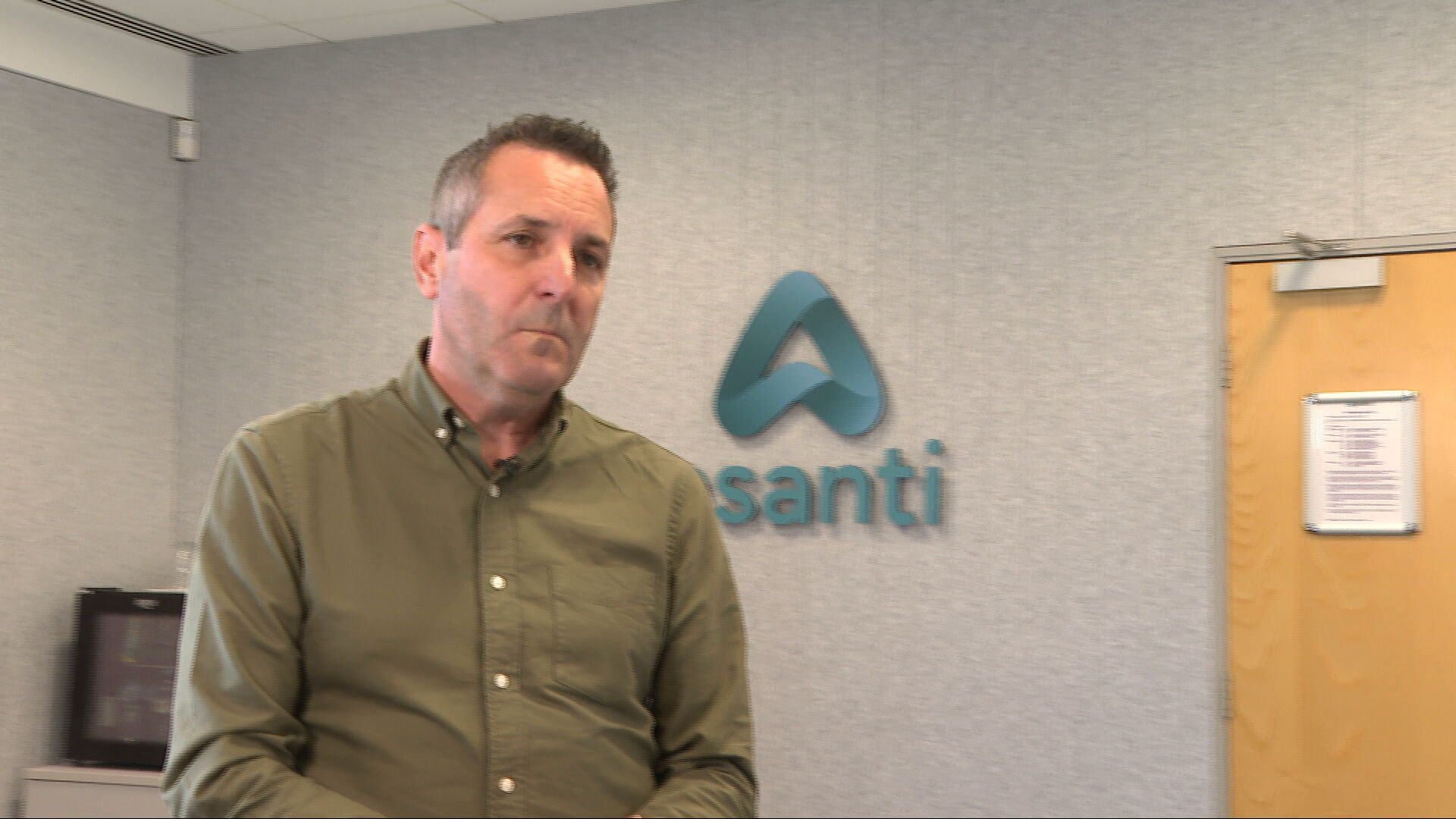
“If you look at large data centres in the US, for example, in very hot climates, they will use evaporative water techniques. That’s not something we typically see in the UK,” explained Darren Elliston, customer success director at Avanti.
 STV News
“There is a big difference (between data centres and hyperscale data centres). Data centres at the edge are probably sub ten-megawatts of energy consumption, whereas some of the applications that have gone in now in Scotland have 600 megawatts.
“Scotland should be ideally placed to service that, particularly with the amount of renewable energy that is available here.
Asanti “At a basic level, it’s a place where all the digital transactions, your internet, physically lives, so if you’ve downloaded a video or bought something online, ultimately you are talking to a data centre.
“Data centres have been around for a long time, you may have heard about the journey to cloud, which is basically where companies are moving away from having their own computers in their own buildings to effectively using someone else’s data centre.
“Predominantly in the UK, most of our data centres are air-cooled and simply put that is like a scaled-up version of your office air conditioning.
“As you scale up, particularly with AI-type workloads coming along, we then move towards liquid cooling, so we literally plug these cabinets into chilled water, it circulates around the back, takes the hot air away and brings cool back.”
Residents concerned next to AI Growth Zone
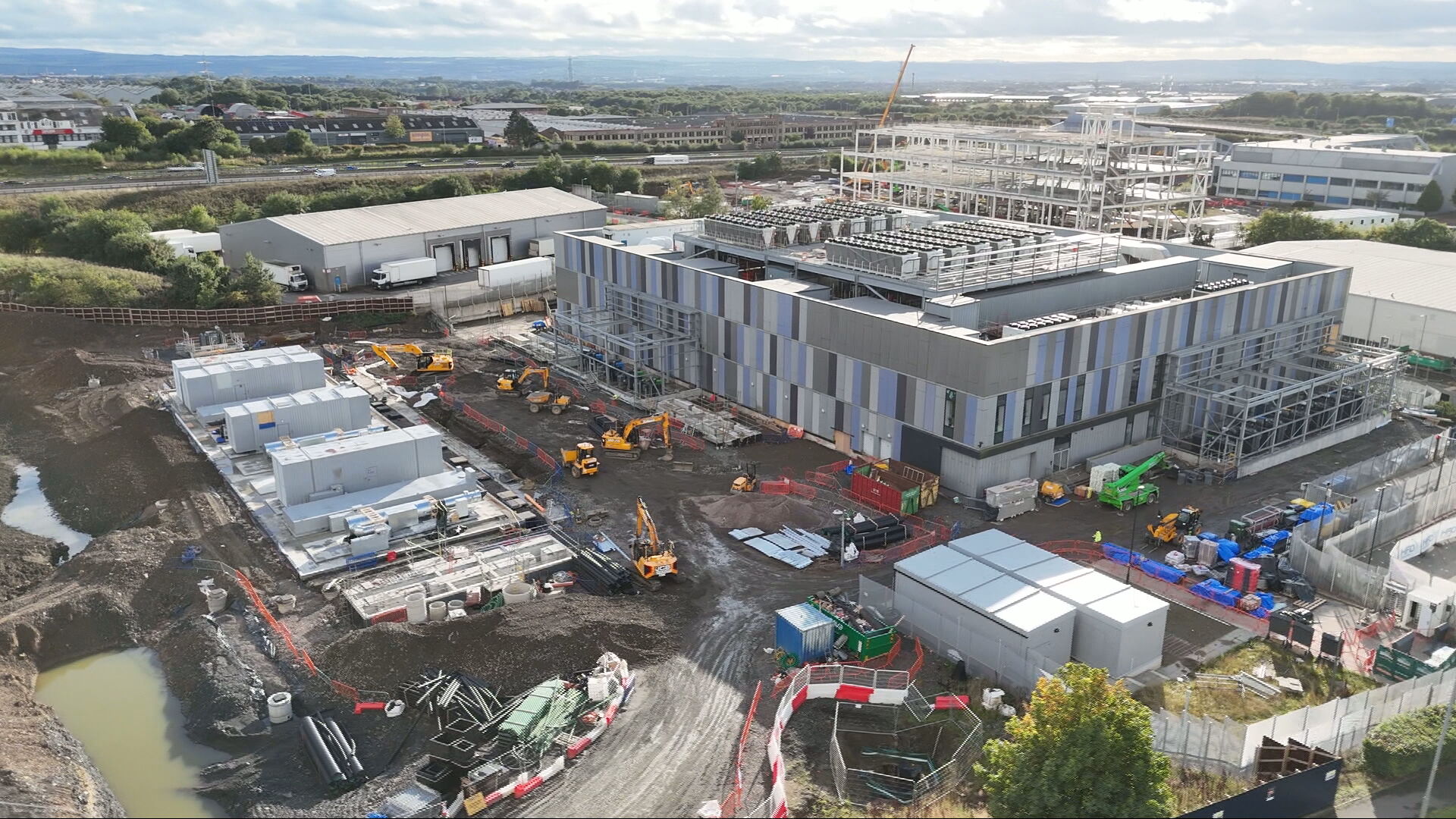
Tucked away just off the M8 in North Lanarkshire is Chapelhall – home to Scotland’s first AI Growth Zone.
Around 700 jobs are expected to be created after data centre firm DataVita secured £300m in financing to expand its existing site and build a second centre in the area.
 STV News
The benefit to firms based at Chapelhall is that the UK Government has guaranteed faster grid connections, cheaper energy and fast-tracked planning.
While DataVita is extending its existing data centre, the proposed new facility would dwarf anything it currently operates.
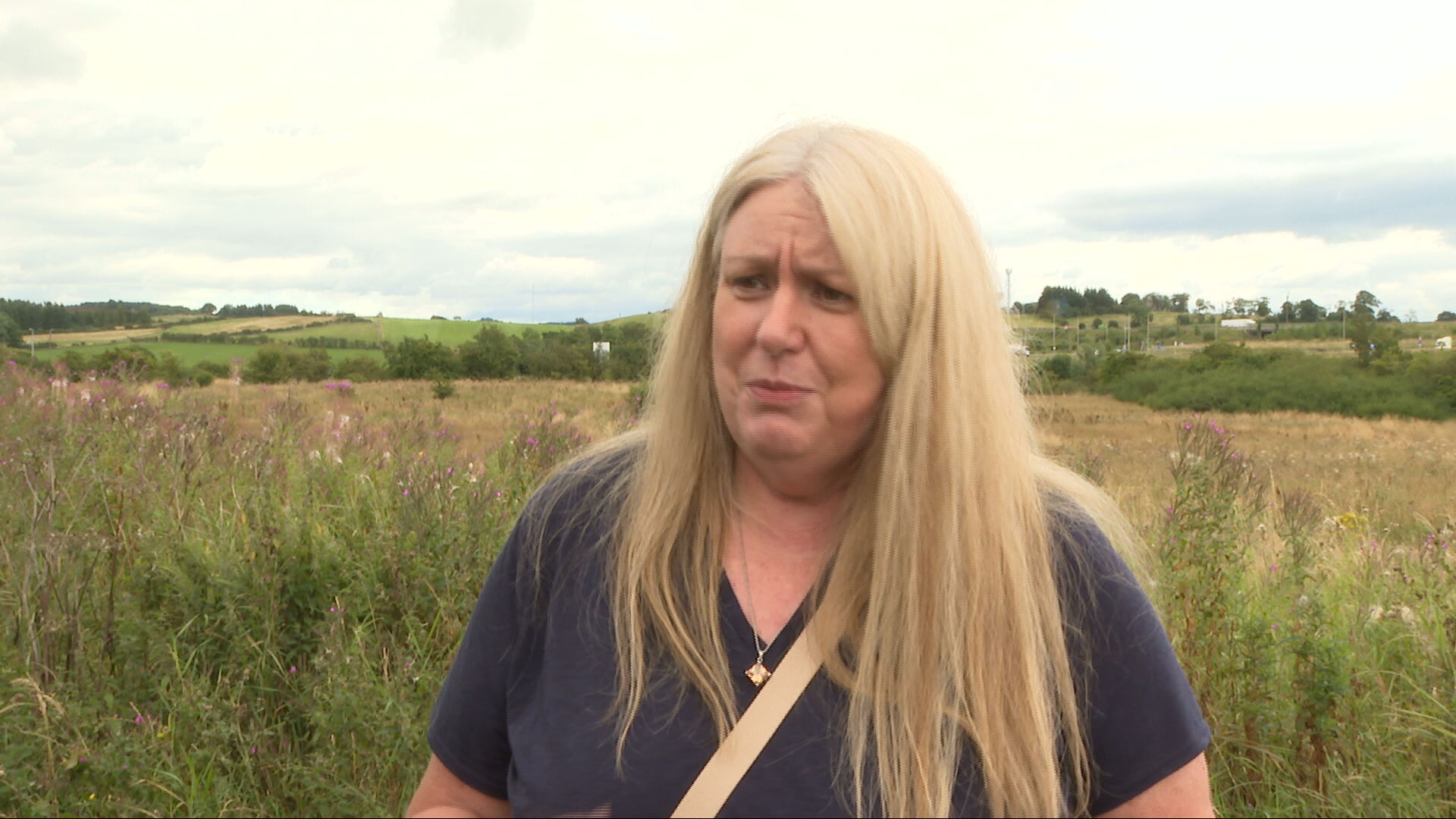
Local resident Diane Davidson said sarcastically: “I just wonder how we got so lucky, this bestowed upon us, and we’ve got to feel lucky about it.
 STV News
“DataVita4, they have had their consultation with the public, we went along to that and it was a tick-box exercise – biodiversity, we’re going to have benches to look at the building and closed-loop water, we’re going to heat the hospital for free
“It seems all decided and we’ve not been part of it at all.”
A spokesperson for DataVita said: “We have operated data centres in Chapelhall for more than ten years, and we are a Scottish-owned company making sure the nation is ready for the next industrial revolution.
“Our obligation is to provide clear facts, so people can make informed decisions and their own judgements.
“Scotland is making decisions about data centres and AI that will shape its economy for a generation. People living near our sites have every right to ask what that means for them, and they deserve a far better quality of debate than they’re getting.”
Business leaders: Scotland can’t miss the boat on AI
On the other side of the debate from the protesters is those who say Scotland can’t afford to miss out on the AI revolution.
Scotland’s tech sector is expected to grow 1.5 times faster than the overall economy until 2029, according to ScotlandIS, the membership and cluster management organisation for Scotland’s digital technologies industry.
Sandy Begbie from Scottish Financial Enterprise: “If you look at somewhere like New Zealand and you look at an independent report produced by BCG, they reckon over ten years that’ll bring NZ$70bn to the New Zealand economy.
 STV News
“New Zealand has many similarities to Scotland – geography, water, renewable energy.
“If we’re going to really going to deliver that economic growth, which will ultimately then fund our public services, then we need those data centres.
“Since this all started a few years ago, the geopolitical climate has changed significantly, so holding your own data and having your data here – data sovereignty – and having that security around it is now really, really important.”
Follow STV News on WhatsApp
Scan the QR code on your mobile device for all the latest news from around the country