 Adobe Stock
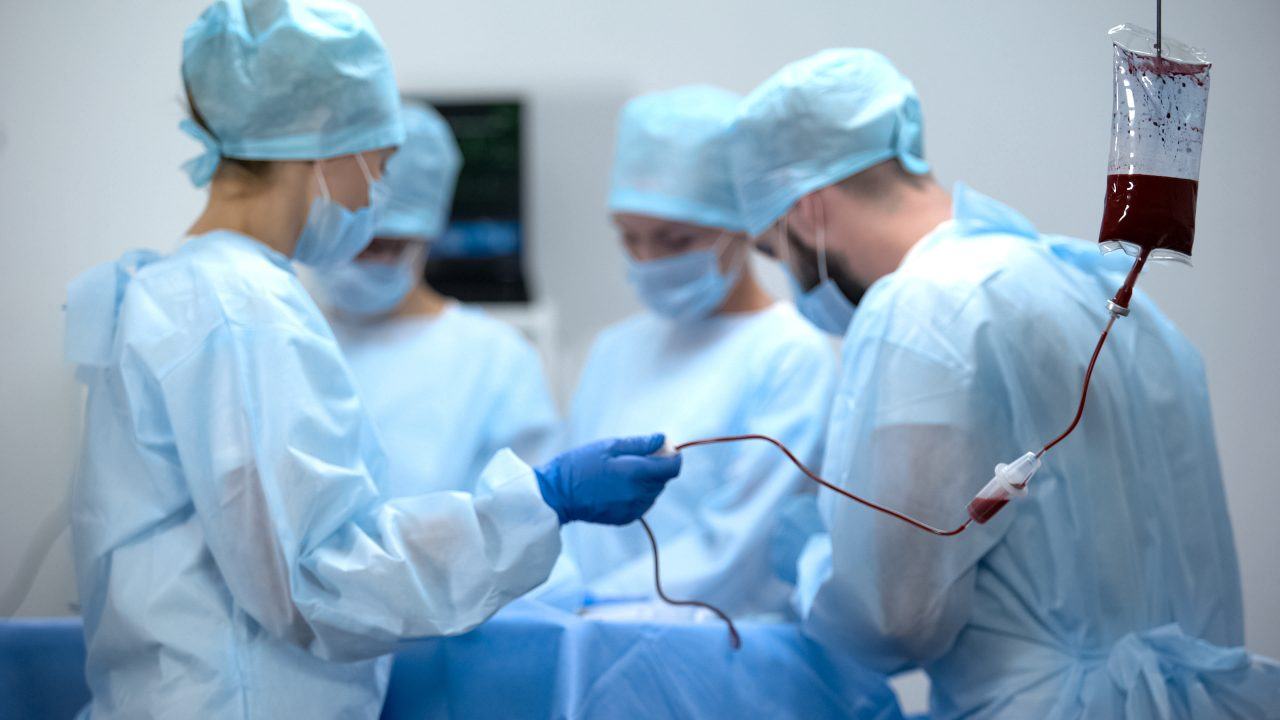
A judge has given Scottish doctors permission to give a blood transfusion to a teenage Jehovah’s Witness should she face death or life-threatening injuries following an operation.
Lawyers for a NHS health board addressed a judge at the Court of Session in Edinburgh over a situation which had arisen involving a 14-year-old girl.
Scotland’s highest civil court heard how the parties – who haven’t been identified – had gone to court because the child had told medics she didn’t consent to receiving a blood transfusion.
Judge Lady Tait heard how the schoolgirl told doctors that she was a Jehovah’s Witness and didn’t want to receive the procedure even in the event of a medical emergency.
The court heard that her wish was in “accordance with her religious beliefs”.
A report submitted to Lady Tait assessed the child as having “capacity” and having a full understanding of the implications of her decision.
This prompted the health board to go to the Court of Session to seek an order which would allow its doctors to administer the blood transfusion up to two weeks following the child’s procedure.
Its legal team told Lady Tait that such an order was necessary because blood loss was an “inevitable consequence” of the operation.
In a written judgment published on Tuesday, Lady Tait explained why she granted permission to the health board.
She wrote: “In the circumstances set out above, it is clear that whilst the probability of a blood transfusion being required is small, the consequences of it being required but not given are severe.
“A substantial loss of blood carries a risk of serious and lasting injury and also a risk of death.
“Were the recognised risk to materialise, the situation would be urgent. There would likely be insufficient time to seek a court order following the manifestation of the risk.
“There is no way of knowing in advance whether the recognised risk will materialise. Further, it is plainly preferable that the team caring for the child has certainty on the matter before the medical procedure starts.
“In these particular facts and circumstances, it is appropriate for the court to determine the matter in advance.
“Finally, I am satisfied that an objective assessment of the best interests of the child, giving appropriate weight to her views and particularly her religious views, comes down in favour of granting the order sought.
“As noted, the conventional clinical threshold for the administration of primary blood components is high. There are other available options before a blood transfusion would become necessary.
“A proactive approach in managing the child’s care has been adopted to lower the already small risk.
“A blood transfusion will be administered only if deemed necessary to avoid significant harm (including death).”
According to the religious community’s website JW.org, Jehovah’s Witnesses refuse blood transfusions.
A passage on its website reads: “This is a religious issue rather than a medical one. Both the Old and New Testaments clearly command us to abstain from blood. (Genesis 9:4; Leviticus 17:10; Deuteronomy 12:23; Acts 15:28, 29)
“Also, God views blood as representing life. (Leviticus 17:14) So we avoid taking blood not only in obedience to God but also out of respect for him as the Giver of life.”
It further states that “thousands of doctors worldwide now use blood-conservation techniques to perform complex surgeries without transfusions”.
It adds: “Such alternatives to blood transfusions are used even in developing countries and are requested by many patients who are not Jehovah’s Witnesses.”
In the judgment, Lady Tait said she wrote an opinion as there was “no reported consideration of the particular issues” in the case – a Scottish court hadn’t previously considered the position in respect of people aged under 16 who has “capacity”.
She wrote about how the Court of Session can authorise treatment for a child who does not have capacity and who cannot consent to medical treatment
Lady Tait wrote about cases examined by English courts. She concluded that in the context of the case brought before the court, it would be in the best interests of the child that the order be granted.
She wrote: “It is clear that the clinicians are respectful of the child’s wishes and other alternatives would be exhausted before transfusion.
“The clinicians have demonstrated a professional, sensitive and patient-centred approach which has assisted the child.
“They are determined to uphold the child’s wishes if they can but also to protect her in a life-threatening situation or one which would be seriously detrimental to her health.
“The child has confidence that her clinicians will respect her wishes within the boundaries of the law and that a blood transfusion would be a last resort.
“The child has also been assisted by the balanced information shared by her religious community as to why the present petition was brought before the court.”
Follow STV News on WhatsApp
Scan the QR code on your mobile device for all the latest news from around the country