New research has laid bare the extent of sexual violence and harassment experienced by women in Scotland’s traditional music scene.
Four in five women musicians have experienced sexual violence and harassment while working or taking part in the Scottish folk music scene, according to new survey findings published on Thursday. Overall, 81% of women musicians reported having been sexually assaulted or harassed.
The research was conducted by the Scottish Centre for Crime and Justice Research at the University of Glasgow. Researchers surveyed 409 women musicians, the majority of whom were working musicians (89%), alongside music teachers (29%) and students (11%).
While many participants described the folk community as welcoming, nurturing and culturally significant, the findings show that positive experiences of music-making often coexist with inequality, harm and exclusion.
‘He was believed – I wasn’t’
 STV News
The women who took part in the study disclosed personal experiences which included intrusive sexualised comments and advances, pressure to engage in sexual activities, harassment and stalking, domestic abuse, sexual assault and rape.
According to the survey, 75% of respondents have been subjected to sexualised questions or remarks. Beyond verbal harassment, over half of those surveyed (51%) reported experiencing unsolicited sexual advances, while 42% faced non-consensual sexual touching.
The data further highlights systemic pressure, with 28% of participants being pressured to engage in sexual activities. Personal safety is also a major concern, as 21% of respondents reported being victims of stalking or harassment, and 17% experienced targeted online abuse. The study found that 17% of individuals had been sexually assaulted or raped, and 13% reported experiencing domestic abuse.
Most participants identified fellow musicians as the perpetrators. Almost three-quarters (72%) said their experiences involved music colleagues or peers, while 53% involved prominent musicians in positions of power.
One woman told researchers: “The person was a ‘much-loved character’ on the scene, so he was believed – and I wasn’t.”
Many incidents occurred in social settings connected to the folk scene, such as ‘sessions’ or while socialising after performances.
 Adobe Stock
One participant said: “I was raped by an [educator]… who is a well-known musician in the scene. He followed me home after a session and refused to leave.”
Another said: “I’ve had to lock myself in a car, I’ve had to leave gigs and go home, and I’ve had to continuously say no to a guy wanting to sleep with me. I’ve had married musicians kissing me… I’ve been hassled for ignoring drunken advances and called names. It puts me off the whole scene.”
Women spoke of sharing their experiences privately with one another, saying the problem was widespread and hidden in plain sight.
‘Of all my close friends working in the folk scene, I’d say nearly all of them have experienced sexual violence and/or harassment whilst working in this industry,” one commented.
“Lots of women are talking about this among ourselves, and we all know a lot of incidents, either experiencing it ourselves, or friends and colleagues. It’s a much bigger problem than people realise and it’s taking place in plain sight.”
Others described abuse of power within professional settings. One participant said she was offered a “really good” job with a “prolific band” before the encounter took an alarming turn.
She added: “Everybody knows them to have a great reputation. And then as soon as that meeting was done, it was like, ‘okay, do you want [to] come back to my room?’ Do you want to do some cocaine?’ ‘Do you want to, like, have sex?’ And you’re like, oh, okay, is this why I’ve been given this job, you know?’”
Several women described receiving explicit images and messages. One participant said a musician sent her an unsolicited video of a sex act captioned ‘looking at your Instagram’, adding: “It made me feel horrible.”
Others spoke of predatory behaviour being enabled by power and status within the scene. “There are men with influence running loose, many who are abusing that power for their own selfish gains,” one woman said.
For some, the impact was so severe that they left the folk scene entirely. “My experience has been so toxic that I no longer work in it,” one participant said. “It is difficult to list all the different ways it has impacted me and how many incidents have taken place, from ‘banter’ remarks to assault.”
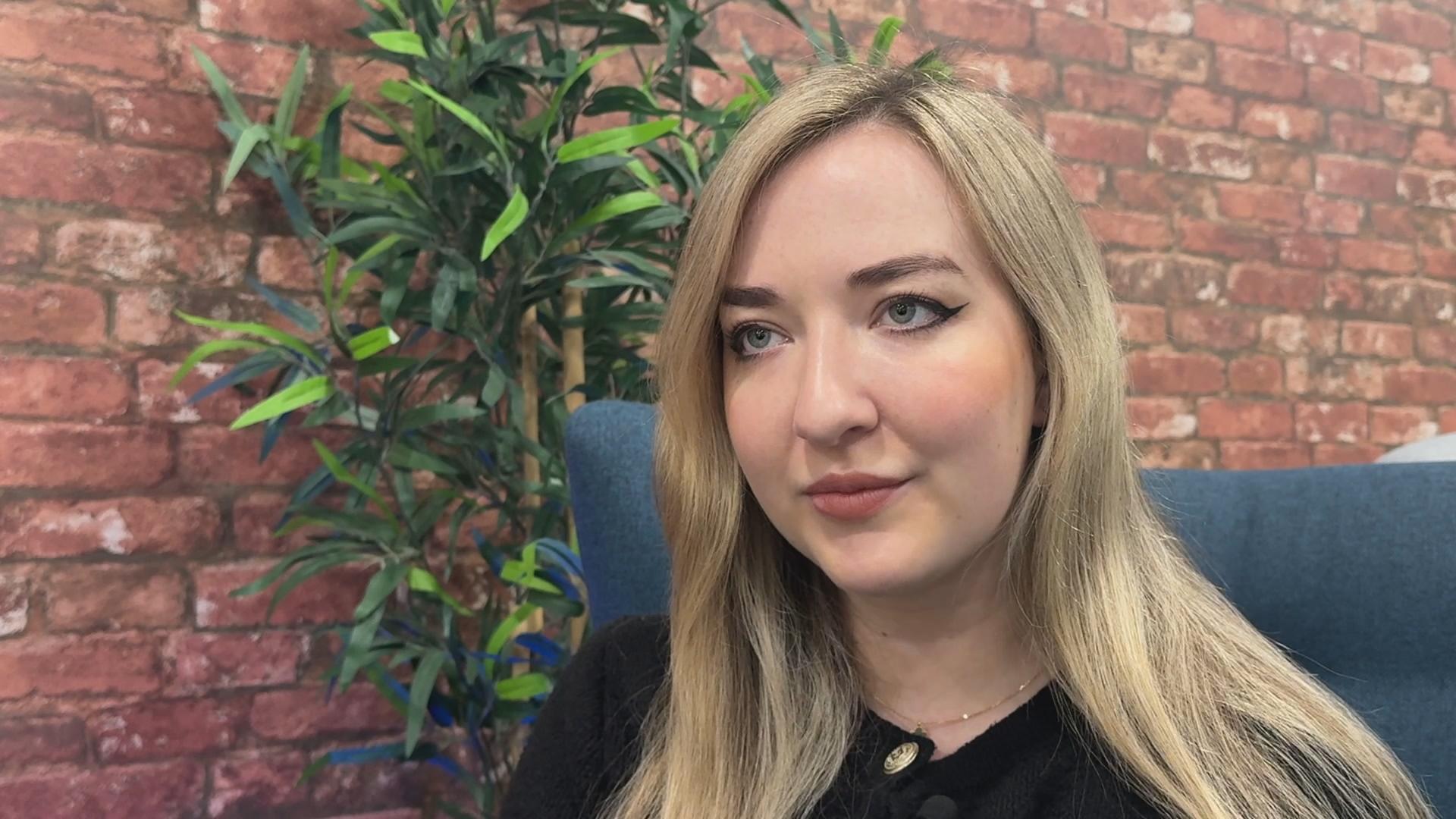
Iona Fyfe: ‘There needs to be a culture shift’
 STV News
Folk singer Iona Fyfe has been an outspoken campaigner against abuse, harassment and misogyny in the industry.
She recalls being propositioned by an older, married musician when she was aged 20 in 2018.
“He said that if I was a friend and ‘did what good friends do’, he would allow me to be booked at a festival,” she said. “That opened my eyes to how sinister it was.
“I laughed him off and said ‘away you go’ – but what happens if that person is younger, easily led? Maybe they would’ve been taken advantage of and completely exploited.”
Now 28, Iona said that many within the scene are “in denial” about the scale of the issue.
“I have seen that play out online and in the comments,” she said. “I think it’s really sad that mostly older males will negate the fact that some women have this lived experience just because they haven’t seen it personally.”
While she acknowledged the industry has made significant strides in safeguarding over the last five years, she insists there needs to be “systemic change”.
“I think women in the scene have been let down. If we want to preserve and enjoy these traditions, we need to stamp out any kind of inequality.
“There needs to be a culture shift.”
‘Abuse and harassment has been normalised’
Dr Kelly Johnson, senior lecturer at the University of Glasgow and lead researcher on the project, said the findings highlight the urgent need to address sexual violence and harassment as a workplace issue.
“The Scottish folk scene is not alone in facing the challenges of sexual violence and harassment – it is an issue across the music industry and society more broadly. However, the findings speak to an urgent need to recognise the experiences of victim-survivors and address sexual violence and harassment as a workplace issue that affects the Scottish folk scene.
“In addition to the large number of women musicians impacted by sexual violence and harassment, it was also striking to hear that these experiences were not isolated or ‘one-off’ events.
“More than three-quarters (78%) of the participants reported multiple experiences of harassment and abuse, taking place across different folk-related contexts and settings.”
 Adobe Stock
The research identified status and industry influence as central factors in enabling abuse and limiting accountability.
Professor Michele Burman, a co-author of the report, said the small, male-dominated nature of the folk scene meant harmful behaviour was often normalised.
“The Scottish folk music scene is small and primarily male-dominated, and participants felt many forms of sexual violence and harassment were normalised, rarely being formally acknowledged or met with meaningful consequences. Unfortunately, as a result ,some women left the scene entirely because they felt unsafe or unsupported. This is a sad state of affairs, resulting in a real loss of female talent.”
An overwhelming 92% of responding participants felt more needed to be done to make the Scottish folk scene a safer and more supportive space for women.
Researcher Dr Amy Cullen, another co-author, said the music industry needs to take more meaningful action to bring about accountability, safeguarding and cultural change.
“We need a structural, collective response so that the scene can be safe and inclusive for everyone. We outline a series of recommendations which include introducing codes of conduct and working agreements that would strengthen the mechanisms for reporting incidents of sexual harassment or violence.
“The industry could also better support victim-survivors by ensuring there’s a designated safeguarding person on site, such as at festivals or in educational settings. We would also recommend creating time and space for discussions around gender equality, conduct and respect within the community.”
The findings will be discussed at an industry event during Celtic Connections on Thursday.
The project was commissioned and funded by the University of Glasgow. The full report, Women Musicians’ Experiences of Sexual Violence and Harassment in Scottish Folk Music, will be published on the Scottish Centre for Crime and Justice Research website.
Follow STV News on WhatsApp
Scan the QR code on your mobile device for all the latest news from around the country