 Adrian Coll
A meteorite thought to be the first recorded fall in Scotland for more than a century came down in the Highlands last summer.
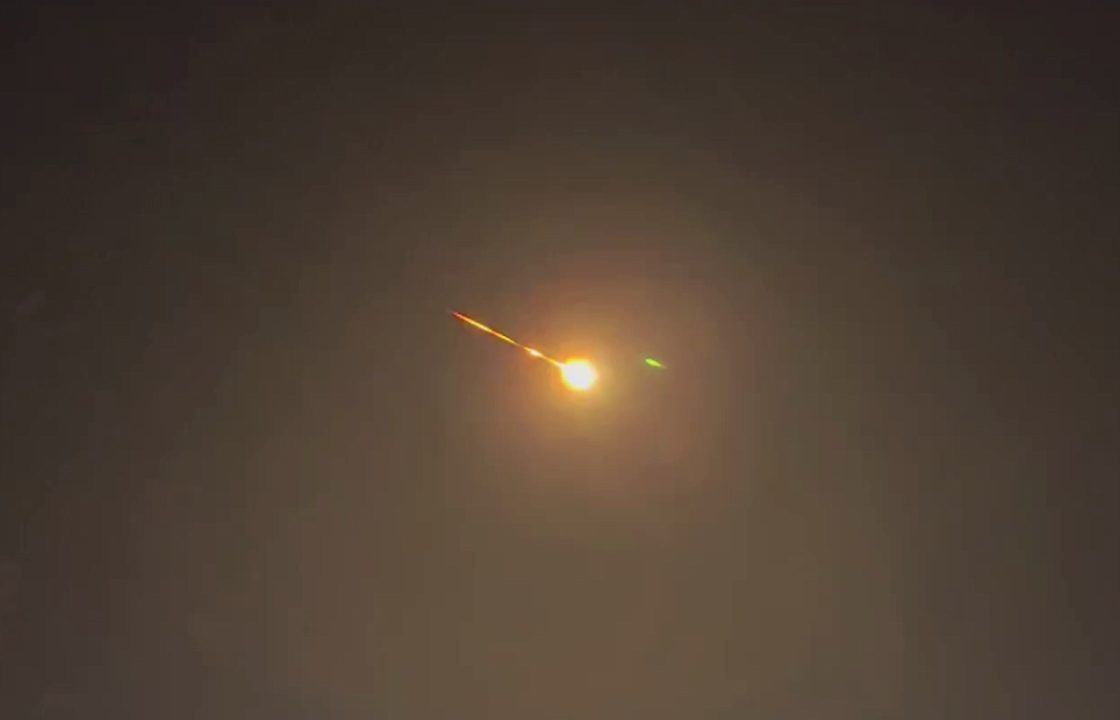
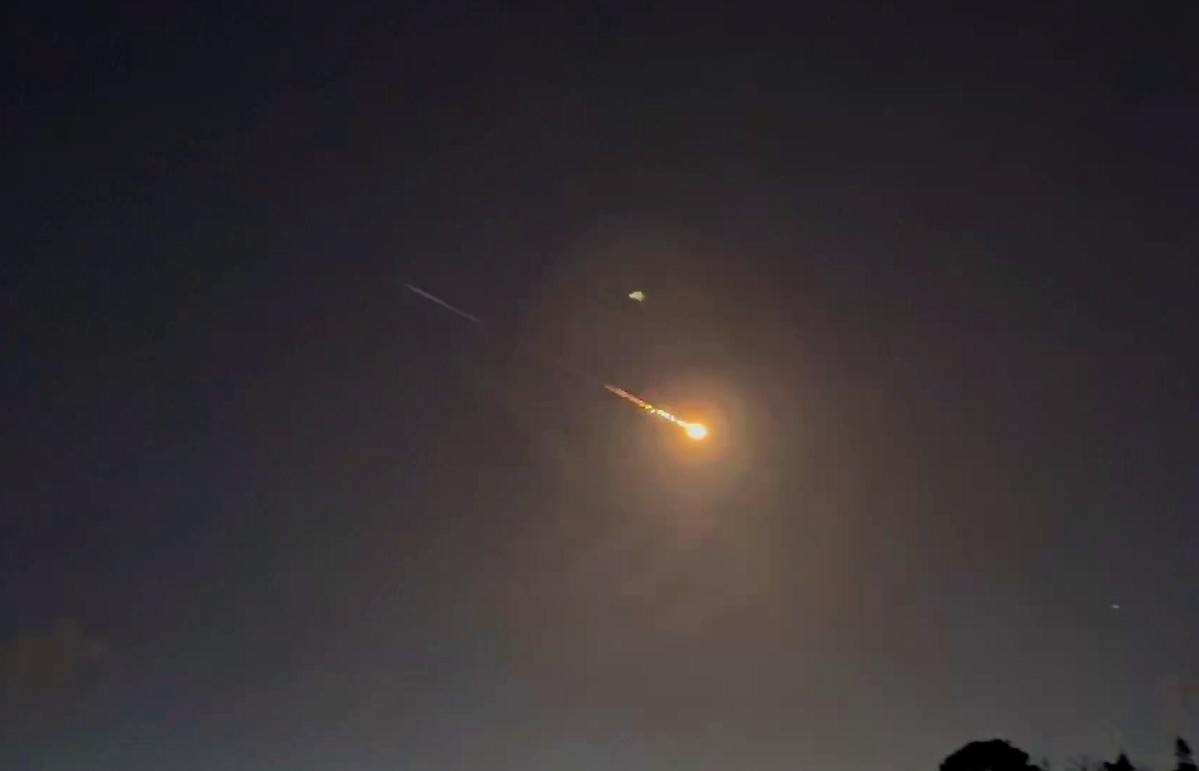
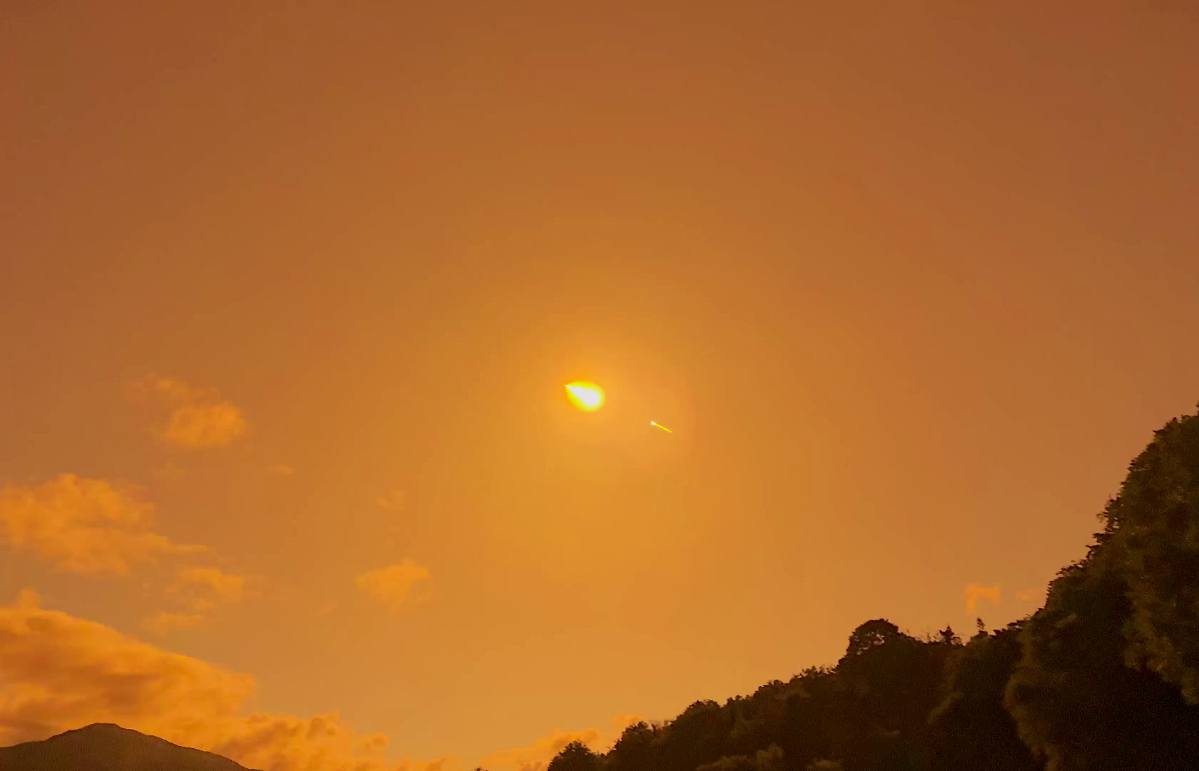
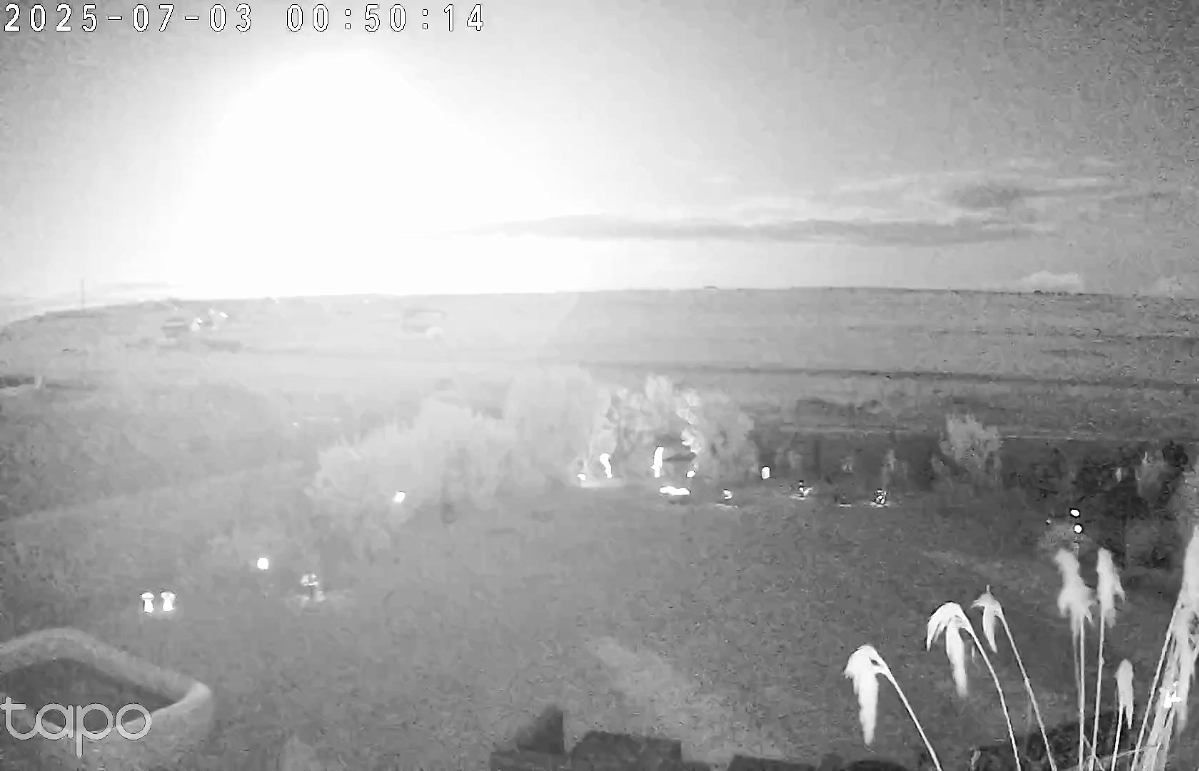
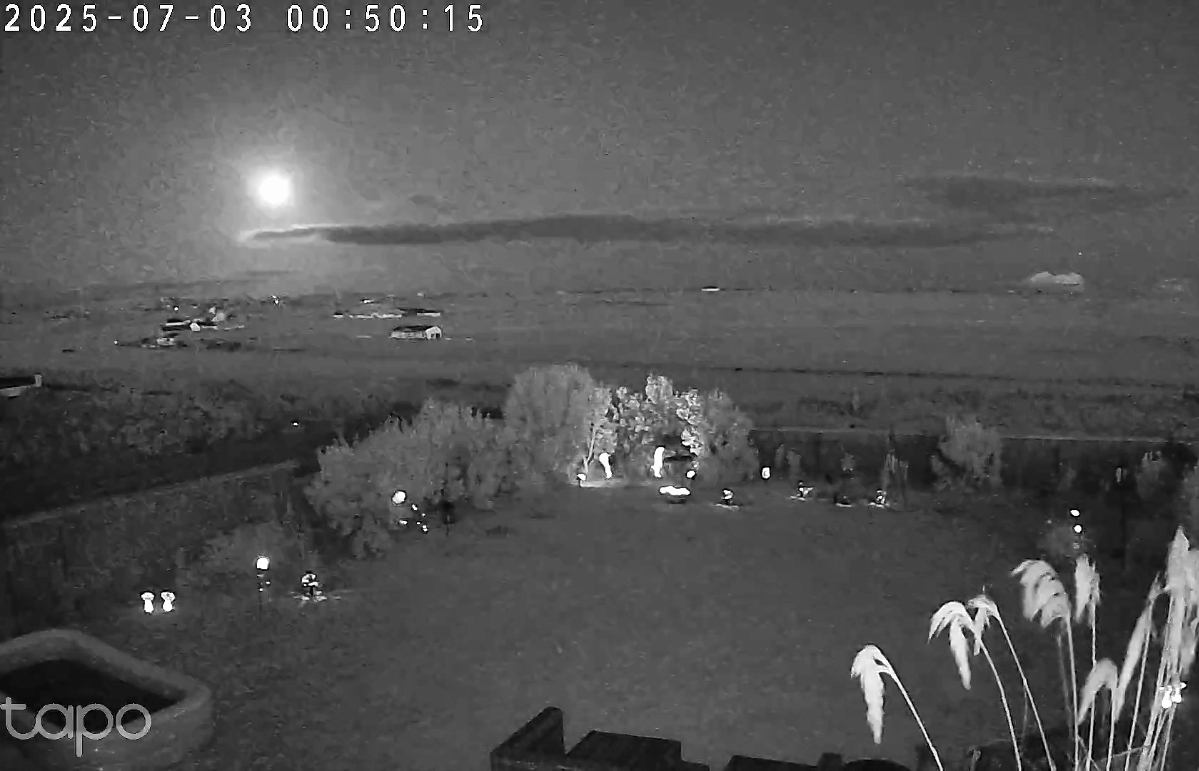
A bright orange fireball was spotted shooting across the night sky, accompanied by a loud bang, with the spectacular event captured on mobile phones, home security cameras and doorbells from Glasgow and Stirling to Argyll and Bute and the Isle of Lewis.
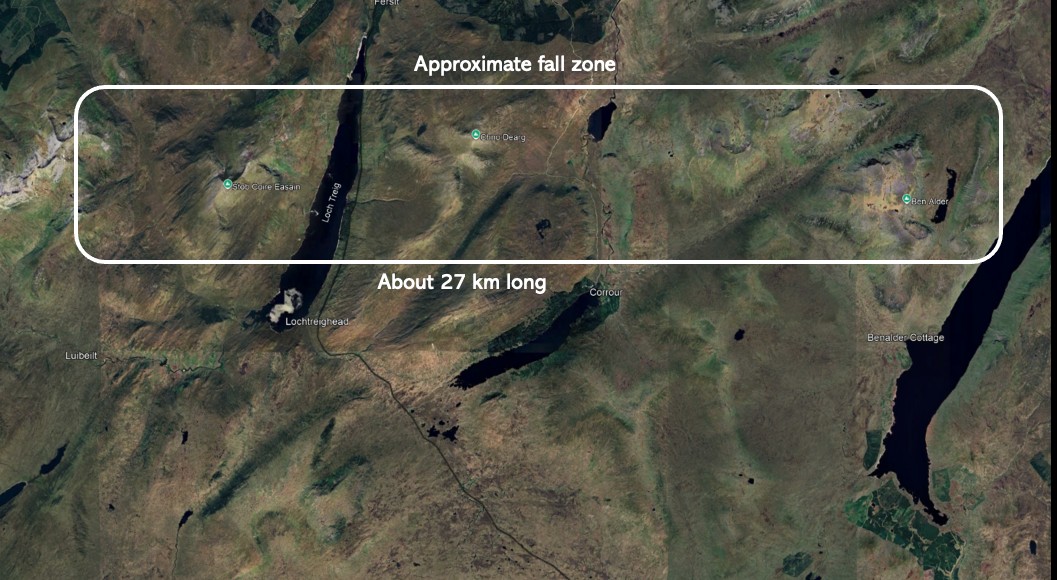
Today, the shattered fragments are waiting to be found across a remote, 27-kilometre stretch in the Highlands.
Now that summer is in full swing, researchers are asking outdoor enthusiasts and Munro-baggers to keep their eyes peeled for a piece of space history.
Planetary scientist Dr Aine O’Brien says their analysis has traced the meteor to the asteroid belt orbiting between Mars and Jupiter.
She says scientists are excited by the prospect of studying the meteorite, which could provide more clues about the origins of our planet.
 Adrian Coll
She told STV News: “These little minerals are basically the earliest things to form in the Solar System – 4.5 billion years old.
“The grains in them really tell us, by studying them, exactly what was happening in the Solar System before the Earth was formed.”
Meteors are bits of rock that burn up when they enter the Earth’s atmosphere, creating streaking light across the sky.
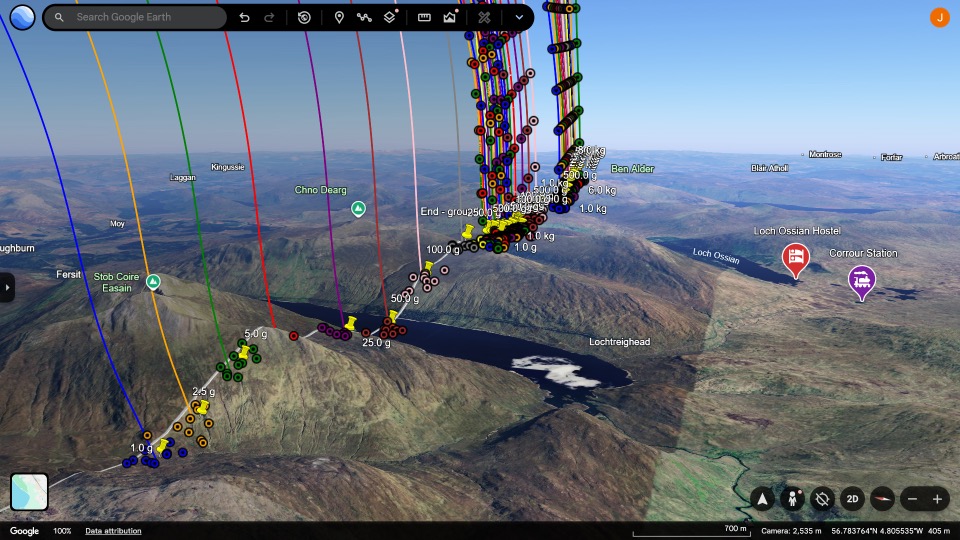
Using footage captured by the public, experts at the UK Fireball Alliance have managed to reconstruct the meteor’s final moments and track its journey backwards through the Solar System.
“When a fireball enters the atmosphere, it burns up until a height of about 30 kilometres,” says Dr O’Brien.
“At that point, it’s slowed down too much to look like a light anymore. But if you’ve seen that view from enough angles, you can triangulate it.”
 Jamie Shepherd of the Astronomical Society of Edinburgh
Hunting for the space rocks is a formidable task. The 27km-wide fall line is located in one of the most isolated parts of the UK, with three Munros along the fall line.
Studies of the footage suggest that smaller fragments of up to 100 grams were dropped to the west as the fireball travelled across Stob Coire Easain and Chno Dearg, before larger chunks of up to 10kg fell over Ben Alder.
Some of the smallest pieces, weighing less than 10 grams, are thought to be scattered near Loch Treig, one of the most remote parts of the Highlands. The area, which is home to the ‘Hermit of Treig’ – once described as Britain’s loneliest man – is covered in shoulder-height ferns and thick heather.
 Adrian Coll
The largest chunks, weighing between 3kg and 5kg, are believed to be sitting on the broad summit plateau of Ben Alder, one of Scotland’s hardest-to-reach Munros.
Researchers stressed the area should only be approached by walkers properly equipped for remote mountain conditions.
“It takes about a 12-hour walk minimum from the nearest road to get to the bottom,” Dr O’Brien warns. “Then you’ve got to climb the mountain… You’ve got to be pretty hardcore.”
A 14-member search party attempted a recovery expedition last August, but a severe thunderstorm forced them to abandon the mountain peak.
A further trip has been delayed until next spring, meaning the fragments could remain undiscovered for another year.
 Jamie Shepherd of the Astronomical Society of Edinburgh
The last meteorite recovered on Scottish soil was in Strathmore in 1917, which now sits in Perth Museum.
Scientists estimate that there could be anywhere from 20kg to 40kg of total material scattered across the landscape – a massive haul compared to the 600g recovered from the Winchcombe meteorite that fell on an English doorstep during the 2021 lockdown.
For Scots out bagging Munros this summer, the UK Fireball Alliance have outlined what to look out for and how to handle a potential find.
Dr O’Brien says members of the public should look for a dark rock that looks “out of place” from the other rocks around it. At around 30% iron, it may also look quite rusty.
 Norma Macleod
 Norma Macleod
People searching in the area are also being asked not to handle any potential meteorites directly.
“If you’re going to the area, take a sandwich bag and some tin foil with you to pick it up with. Please don’t pick it up with your bare hands – not because it’s toxic, but because of contamination.
“Take a photo of it in its environment first before you touch it. If you can, record the coordinates.
“Once we find one piece and have the GPS coordinates, the maths wizards can refine where the other bits fell.”
Any discoveries can be reported on the UK Fire Ball Alliance website.
Unlike regular archaeological finds, there is currently no explicit rule in Scots law regarding who owns a fallen meteorite.
The UK Fire Ball Alliance operates under the principle that the rock legally belongs to the landowner. The group liaises with owners to encourage them to donate finds to National Museums Scotland, where they can be preserved and studied by researchers and enjoyed by the public.
NatureScot noted that meteorite deposits are considered the property of the landowner under Scots law.
They also urge people exploring the outdoors to do so responsibly and in line with the Scottish Outdoor Access Code.
A spokesperson said: “While we understand public interest in this extra-terrestrial aspect of Scotland’s nature, meteorite deposits are the property of the landowner. So, if meteorite fragments are found, landowner permission must be sought, and we encourage people to contact the National Museum or a research institute to record their finds.
“NatureScot encourages responsible enjoyment of nature and the outdoors, ensuring care for the environment, respecting the interest of other people and taking responsibility for your own actions – the outdoors cannot be made risk-free so act with care at all times for your own safety and that of others, as advised in the Scottish Outdoor Access Code.”
For Dr O’Brien, helping people engage with science is one of the most exciting parts of the search.
“When we were on our expedition, what was amazing were there were families out looking for parts of the meteorite.
“Having those conversations, getting people thinking about science, getting out and about in nature, can only be a good thing. It’s very wholesome.
“This summer, you could be bagging a meteorite as well as a Munro.”
Follow STV News on WhatsApp
Scan the QR code on your mobile device for all the latest news from around the country