
 Adobe Stock
Imagine if, one day, the sun simply went out.
No warning. No explanation. In the middle of the day, the light begins to fade, the temperature drops, birds start behaving strangely… and within minutes, you’re standing in darkness. Is the sun dying? Is this the end of the world?
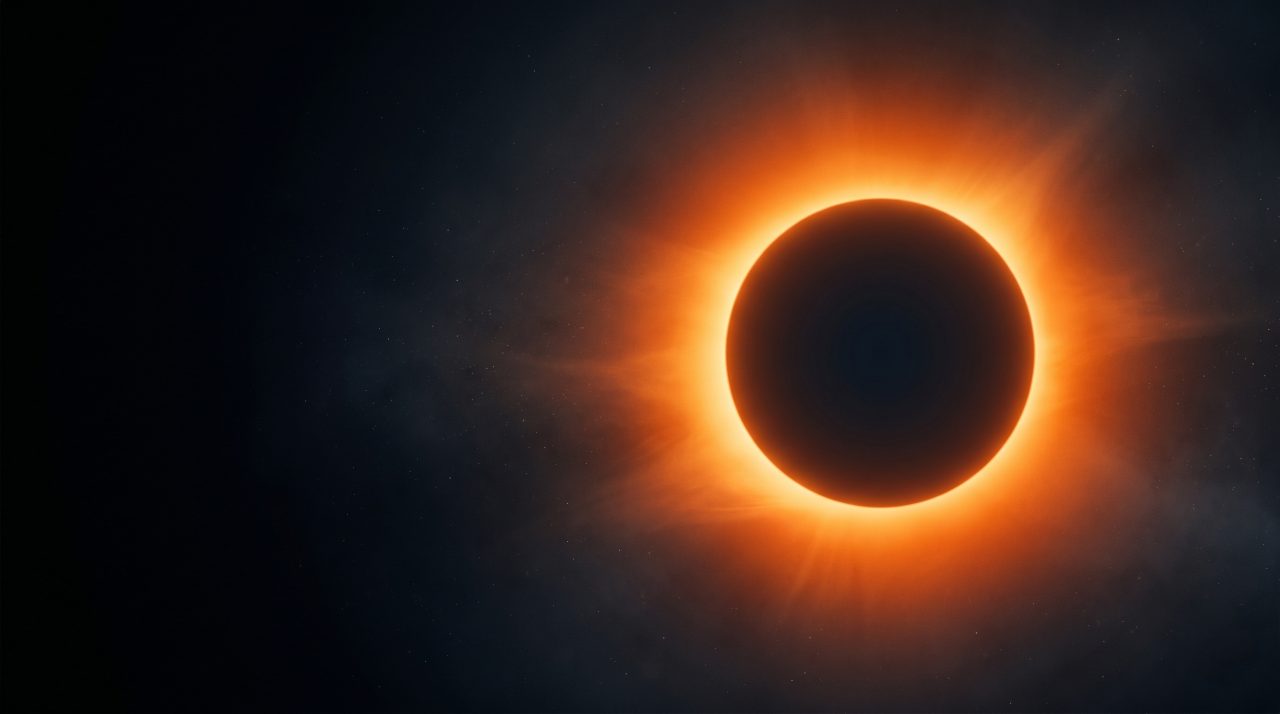
Today, we know exactly what’s happening during a solar eclipse. The moon is simply passing between us and the sun. But imagine experiencing one hundreds of years ago, when eclipses weren’t widely understood. It must have felt terrifying – essentially, the sun switching off.
I sometimes wonder what the modern-day equivalent would be. Perhaps something completely beyond our understanding suddenly appearing in the sky – something so unexpected that rumours, fear and panic spread before anyone could explain it – an alien invasion perhaps?
Scotland experienced an extraordinary example of this in the 1600s – the day the light went out and became known as Mirk Monday.
It was already a time of great unrest. King Charles I had been executed just three years earlier, and Oliver Cromwell had invaded Scotland with his army two years after that. Then, on April 8, 1652, the sky went dark.
Across a large part of Scotland – including Glasgow, Edinburgh, Ayr, Dundee and Aberdeen, the sun simply disappeared and stars came out. Day turned to night for around three minutes.
Birds were said to have “plummeted” from the sky to roost, while people working in the fields reportedly ran for shelter. To some, the darkness was so ominous that it seemed the Day of Judgement – or the apocalypse itself had arrived.
Predictions circulated that it would bring about pestilence, disease, invasions, the fall of countries and earthquakes. To be fair, a lot of bad stuff had been going on in the previous few years, so it could be believed!
And for Scotland, the extraordinary run of dreaded eclipses wasn’t over.
Just two years later, in 1654, another total solar eclipse plunged parts of northern Scotland into darkness. Two total solar eclipses over the same small country within just two years is pretty extraordinary and extremely rare.
To put it into perspective, Scotland’s most recent total solar eclipse was in 1954 – and even then, the path of totality only just brushed Unst in Shetland. Scotland won’t experience another until 2133 – a 179-year gap!
Yet people living through the turmoil of the 1650s witnessed two in the space of just two years.
So when you watch the eclipse unfold on Wednesday, enjoy the show – but also try to imagine seeing the same thing hundreds of years ago. No forecasts. No diagrams. No livestreams. No reassuring explanation of exactly what was about to happen, and definitely no excitement – quite the opposite.
Imagine it – the sun slowly disappearing… and for a few minutes holding your breath and wondering whether it was ever going to come back.
Watch out for our updates over the next 24 hours as we cover the eclipse – from the totality in Majorca to the sizeable chunk of the sun disappearing over Scottish skies.
And, of course, there’s the cloud! We’ll be keeping a close eye on the front threatening to spoil the party for quite a few of us – especially in the west.
Fingers crossed wherever you are for at least a glimpse of this massive eclipse – the kind we won’t see again here until 2090.
Follow STV News on WhatsApp
Scan the QR code on your mobile device for all the latest news from around the country