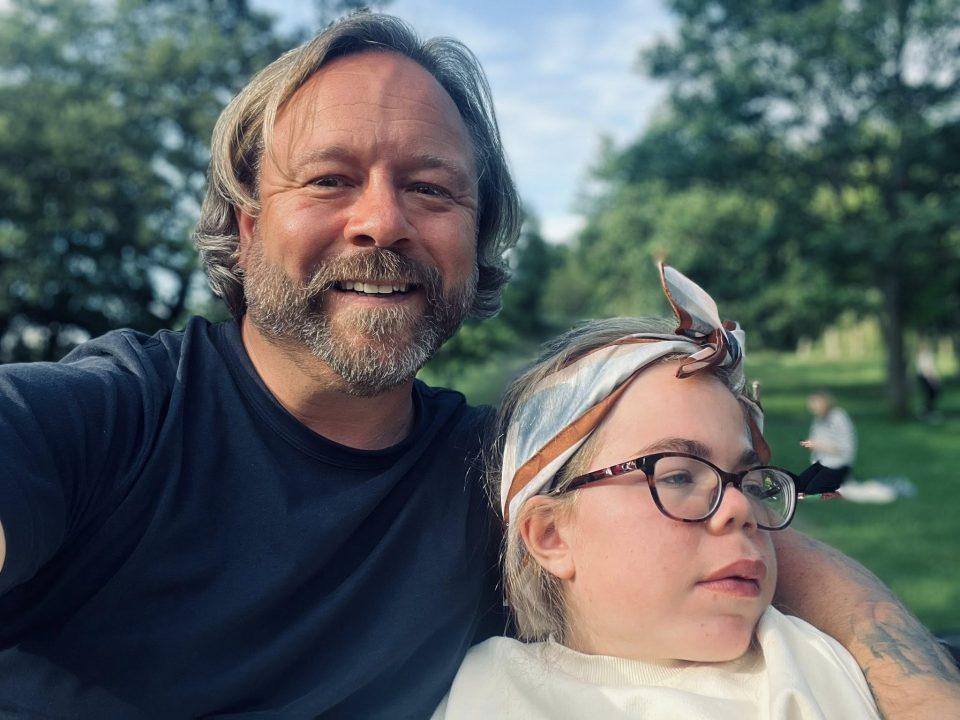
The parents of children with dementia have told STV News that caring for their child has left them feeling “helpless and broken”.
It comes as a new report, seen exclusively by STV News, found “catastrophic failures” in the current system to support youngsters living with the condition.
Almost 400 children in Scotland have dementia, but charity Alzheimer Scotland says the disease remains largely invisible, poorly understood and overlooked by policymakers.
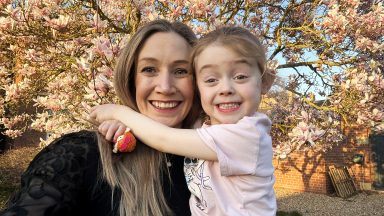
Darren and Amanda Scott’s daughter has Sanfilippo syndrome – an incurable, rare condition that causes childhood dementia.
Sophia, now aged 14, was diagnosed the day before her fourth birthday.
“The words were that she won’t live long,” says Darren. “(We were told) take lots of photos while you can, I’m very sorry,’ and that was it.”
Childhood dementia is an umbrella term for more than 145 genetic, metabolic and neurodegenerative conditions that result in progressive brain damage in children and premature death.
They share the symptoms of adult dementia but start in early life. 70% of children with dementia will die before their 18th birthday. Most variants of childhood dementia are caused by inherited gene mutations.
Darren told STV News: “I’ve gone from having a child who was capable of running, dancing, attending a mainstream school.
“Now Sophia, has lost her speech and those last words are difficult to hold on to. She has lost her ability in terms of her physicality. She’s unable to walk.
“She struggles to eat on her own. And I have watched her lose her abilities in the same way as an elderly person or mature person would lose their abilities with dementia.”
“I mean it ripped our souls out and broke us into a million pieces of which we’ve never recovered,” Darren says.
“You can’t recover, you just have to keep going and remember there’s a little person that still needs you and that you’ve got to do your best by. We have a philosophy now, we very much live for today.
“We try and make the most of every single moment. We try and make sure it’s the best life possible. But the year or two after that diagnosis was a dark, dark place.”
Darren told STV News that one of the hardest parts of dealing with the condition and watching Sophia deteriorate has been a lack of public awareness or knowledge of the condition.
“And it’s almost alienating, it’s isolating,” he said. “There is no support network for these type of conditions. There is no funnel or system, whether it be to help with counselling, funding, research, support, educational, or local authorities.
“You have to become the expert. You have to learn everything. You have to go through every step of that on your own and fight for every single thing because you don’t fit an existing category. So not only is your world being ripped apart, but the most simple things are not provided.”
“There are no cures out there, but there are trials and certain treatments for aspects and certain conditions going on, which is something we’ve pursued relentlessly and invested a lot of money in.
“I’ve been to the States and travelled to conferences to make myself aware. We try to make the most of every single moment and we’re constantly fighting for awareness – trying to get Sophia onto trials, find cures.”
‘His brain is dying, your world falls apart;
 Contributed
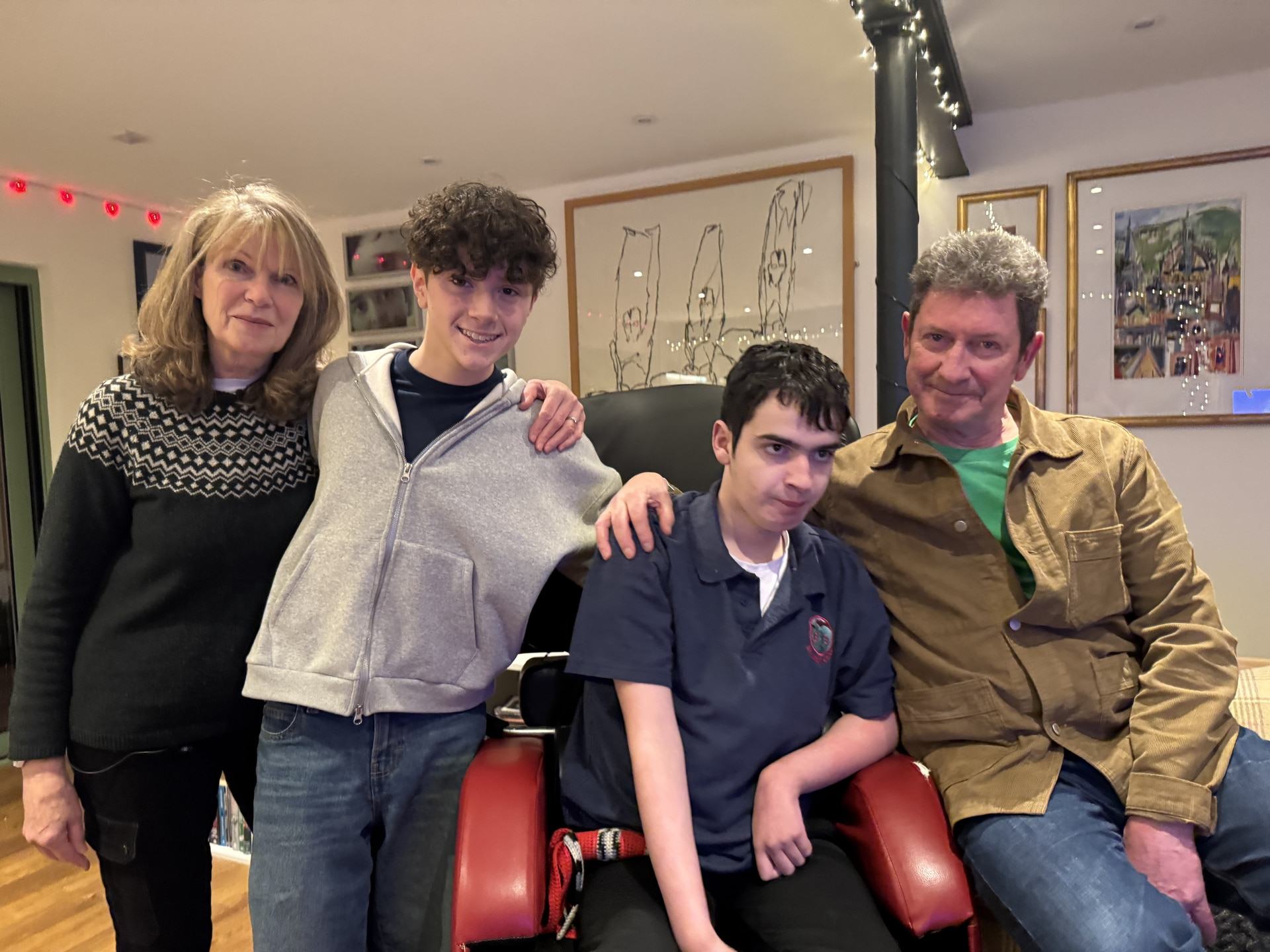
Claire Fyvie’s 15-year-old son, Alexander, has Niemann-Pick Type C – another form of childhood dementia.
“It was that kind of gradual realisation that he wasn’t keeping up with the other children, even at that age, three, four years old,” Claire told STV News.
Alex was referred for testing and initially diagnosed with autism. “I felt like a completely neurotic mother saying there’s something else. I don’t know what it is, but there’s something else.”
David Key, Alexander’s dad, told STV News: “[The school] said to us they were surprised that Alexander was actually regressing, as opposed to progressing. So things he’d learned he’d forgotten.”
Alexander was finally diagnosed with Niemann-Pick Type C at age 7.
“Your world falls apart,” said Claire. “I mean, you know you’re going to lose your child. It might be next week. It might be next year. It might be five years. Who knows? But that’s what you’re waiting for.”
Alexander suffers from daily seizures and takes various medicines throughout the day. “I’ve seen him decline from a basically normal kid into a guy who’s now in a wheelchair all day,” says David. “He’s no speech. He has a very little comprehension. He’s tube-fed and damp all day.”
When Alexander comes home from school, he enjoys watching young children’s TV. Claire says the shows are comforting to him, while other memories have faded, these shows remain in his long-term memory.
“He knows the scripts,” said Claire. “He used to be able to speak the scripts. Now he can’t speak them, but you can tell. He knows what’s coming, and occasionally you’ll glimpse a bit of a laugh or some humour when they do the jokes.”
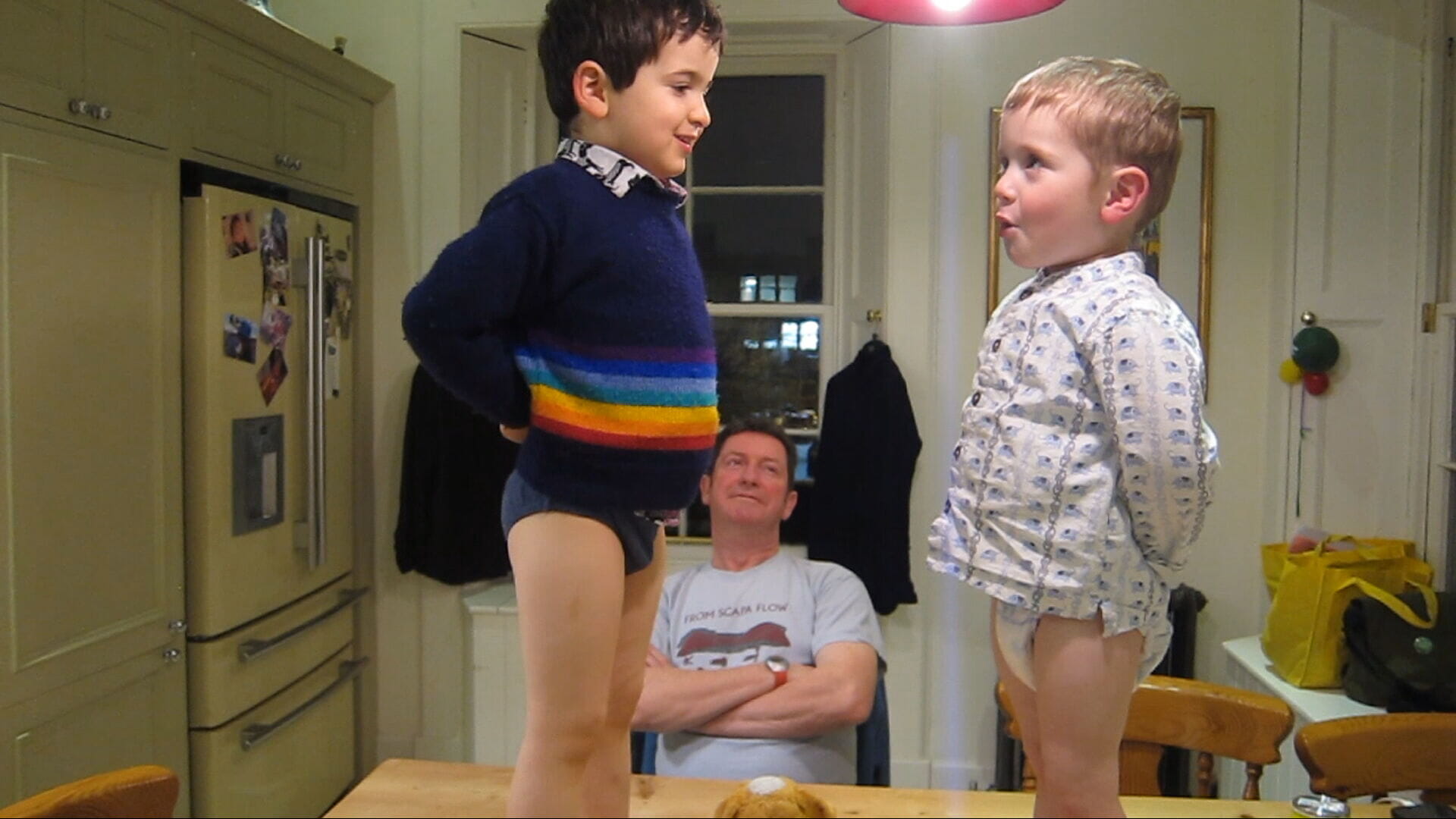
Alexander’s condition has been tough on his brother William, 13, as they were close as children.
“It’s very difficult because he doesn’t obviously have a normal relationship with his brother, and I think he finds it hard,” said David. “It’s something that brotherly love, which he can’t get from Alexander, sadly.”
 STV News
Darren, Claire and David are calling for more research into the condition and, if possible, to try and find a cure or treatments, despite it being too late for their children.
Claire said: “It’s really remarkable the research that’s going on and what we would like to see is an investment and support for that research so that other families don’t have to go through what we’re going through.”
A new report seen exclusively by STV News found children with dementia and their families are being “catastrophically failed” at every level by the current system.
Alzheimer Scotland is calling for greater awareness, improved care pathways and investment in research for treatments and cures, which could unlock more information on how to treat adult dementia too.
Jim Pearson, the charity’s deputy chief executive, said: “The Scottish Government’s national dementia strategy is the first one in the world to mention childhood dementia.
“But what it doesn’t do is any make any significant commitment as to how it’s going to address that.”
“And the tragedy of that is for those young children and for those families is that they are currently caring for those children in a vacuum of a system that’s not really meeting their needs.”
The report found care for children with dementia is “invisible, inconsistent, fragmented and reactive.” It says there is “no unified approach” so families must find own way through services, creating inequalities in care.
A roundtable at the Scottish Parliament will be held tomorrow with MSPs, researchers and families, to help raise awareness and highlight inequalities in care.
In 2023, Alzheimer Scotland formed a partnership with the Childhood Dementia Initiative in Australia.
Childhood Dementia Scotland is a collaborative network hosted by Alzheimer Scotland and brings together families of children living with dementia.
It also aims to improve the response from health and social care, as well as encouraging greater investment in coordinated and collaborative research around the conditions that cause childhood dementia.
A Scottish Government spokesperson said: “The Scottish Government recognises the significant impact of childhood dementia, which may be due to a rare genetic condition.
“We are collaborating with NHS Education for Scotland and NHS Inform through the Rare Disease Action Plan to improve awareness and understanding of rare conditions among healthcare professionals and the public – which may also benefit families affected by these conditions.”
Follow STV News on WhatsApp
Scan the QR code on your mobile device for all the latest news from around the country