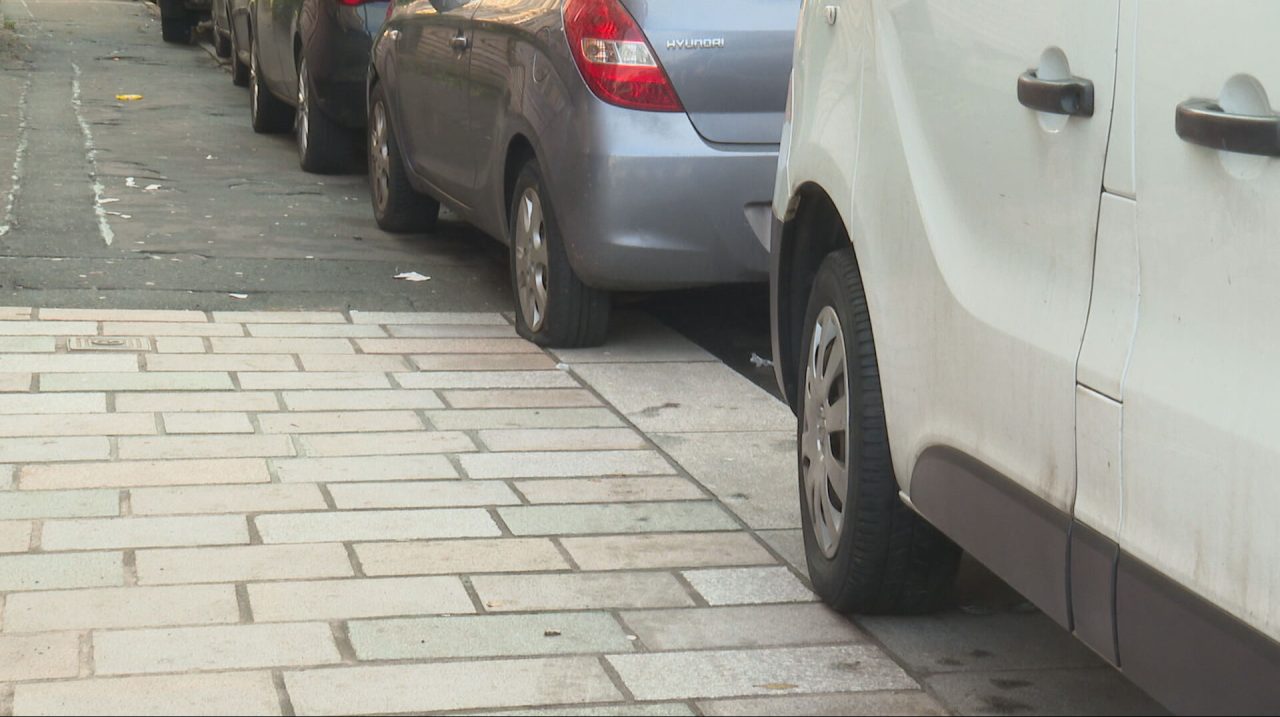
A charity has called for the ban on pavement parking to be “properly enforced”, as a survey found a quarter of Scots were forced to change route last year due to pavements being blocked by cars.
The Scottish Walking and Wheeling Survey, commissioned by Walking Scotland, found 54% of adults experienced cars parked on the pavement in 2025, and 25% were forced to change route as a result.
This is up from 46% in 2023, despite legislation banning pavement parking coming into effect on December 11, 2023.
The ban was designed to make pedestrians safer, particularly those with mobility issues, visual impairments, and parents with pushchairs.
The legislation gives local authorities the power to issue penalty charge notices of £100 in cases where cars are parked on the pavement, at dropped pavements or double-parked.
With the 2026 Holyrood election approaching, the charity has called on all parties to ensure the ban on pavement parking is fully implemented.
Ian McCall, policy and campaigns officer at Walking Scotland, said: “Cars parked on the pavements impact our most vulnerable groups.
“It means wheelchair users, parents pushing buggies, and those who are less mobile must change their routes, often forcing them on to busy roads.”
The survey of more than 2,000 adults found 18% of people would walk and wheel more if there were less pavement parking.
Other barriers reported included poor pavement quality, safety concerns, and poor access to local amenities.
Mr McCall continued: “Walking has so many physical and well-being benefits, and creates healthier, happier communities.
“No one should be prevented from walking and wheeling due to the behaviour of others.
“Properly enforcing the ban will increase the accessibility of our streets and reduce road danger and traffic-related injuries.
“We need to start putting pedestrians first.”
A Transport Scotland spokesperson said local authorities are at “various stages of readiness” to enforce the ban.
They continued: “Some local authorities have also been issuing warning notices ahead of actual enforcement commencing to help instil behaviour change against inconsiderate parking.
“We are working closely with all local authorities, Cosla and Scottish Collaboration of Transportation Specialists to support them to be able to enforce this law at the earliest opportunity.
“Prohibitions for pavement parking, double parking and parking at dropped kerbs were introduced by the Transport (Scotland) Act 2019 and are aimed at promoting, supporting and advancing the rights of pedestrians to ensure that our pavements and roads are accessible for all.
“The last of the secondary legislation to support this came into force in December 2023, giving local authorities the tools to enforce these prohibitions by issuing penalty charge notices of £100 (reducing to £50 if paid within 14 days).
“Local authorities also have powers to exempt certain areas of pavement from the national ban, should they feel it necessary and if certain criteria are met.”
The Walking and Wheeling Survey questioned 2,009 adults between June 16 and July 7.
Follow STV News on WhatsApp
Scan the QR code on your mobile device for all the latest news from around the country