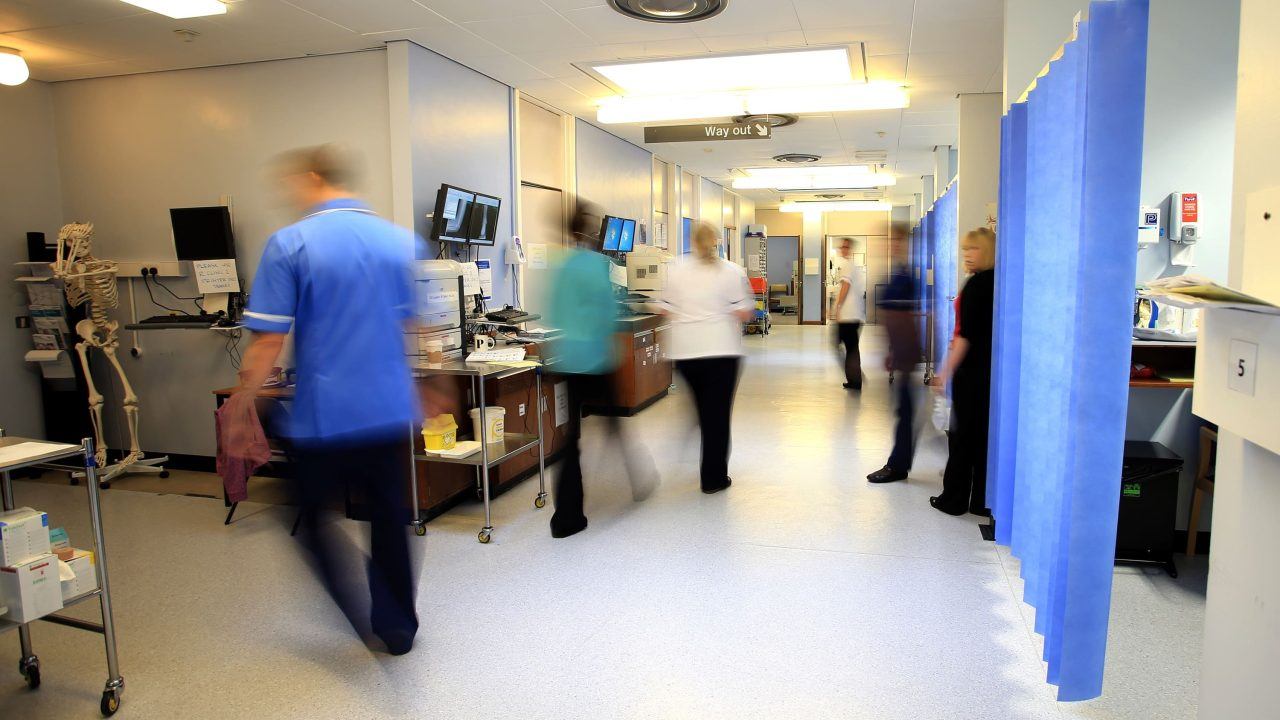
A new report on the prevention of doctor burnout in Scotland is offering “politicians a blueprint for change”, a medical expert has said.
The research, by the Medical & Dental Defence Union of Scotland (MDDUS), is calling for change in the NHS to protect doctors’ wellbeing.
The report, titled Wellbeing by Design, was released after the MDDUS found that 66% of doctors surveyed in Scotland reported they have either experienced burnout or are currently living with its effects.
Leaders from Royal Colleges, the British Medical Association and MDDUS are calling on the Scottish Government to adopt a preventative approach to burnout of doctors ahead of the Holyrood elections in May.
Chris Kenny, chief executive of MDDUS, said the report is offering “politicians a blueprint for change”.
He said: “We invited medical leaders to form an expert group on doctors’ wellbeing because of growing concern about the pressures facing the professionals we support.
“The politicians responsible for funding and overseeing our health service must recognise that the current system lacks the structures needed to protect staff and support safe practice.
“The wellbeing of doctors is inseparable from the wellbeing of patients. This report sets out practical changes that could begin to address a crisis that is now affecting the sustainability of care across Scotland. We’re offering politicians a blueprint for change.”
The report makes five recommendations – including commissioning a comprehensive national review of doctors’ wellbeing and its impact on patient safety, quality of care and workforce retention.
It also suggests setting and publishing a measurable national target to improve doctor wellbeing and reduce burnout, reported annually to Parliament and guaranteeing safe workloads, predictable rotas, rest spaces and protected learning time so individuals and teams can deliver sustainable care.
Niall Dickson is the independent chair of the expert group, and was previously chief executive of the GMC.
He referred to the report as “a call to arms”, and said that the changes outlined would require “clear commitment” instead of a “crisis response”.
Mr Dickson added: “The challenge for Scotland’s leaders is to work with professionals to set out a long-term vision for a health system that restores trust, prioritises staff wellbeing and delivers safe care.
“The report is realistic. Much of what it proposes has been tried elsewhere and could be delivered without significant additional resources.
“But this requires a clear commitment to wellbeing by design rather than crisis response. Without that shift, Scotland will continue to lose experienced clinicians and patients will feel the consequences.”
Professor Lindsey Pope, a Greenock GP and medical educationalist at the University of Glasgow, said: “Patients need doctors who can practise medicine in conditions that protect their wellbeing rather than test it.
“That requires systems and workplaces built with wellbeing in mind from the outset. Any incoming government that wants to sustain patient services will need to accept that reality.”
Dr Iain Kennedy, chairman of BMA Scotland, said: “BMA Scotland welcomes this report, which demonstrates the importance of wellbeing for doctors especially in the context of an NHS where the demands on all staff have been ever-increasing in recent years.
“Providing doctors with the opportunity to achieve a genuine work-life balance, supported by appropriate staffing levels and manageable workloads, allows them to deliver the very best and highest standard of patient care they can, benefiting patients and the NHS as a whole.
“However, our recent survey of Scottish consultant and SAS doctors also highlighted some deeply concerning findings which show the urgent need for more focus around support and wellbeing.
“One in four doctors said their workload was unmanageable and two-thirds of doctors said that work was harming their wellbeing. General practice also has been starved of resources for years and while steps are now being taken to address this, major work and ongoing progress is still required to reduce excessive workloads and ensure GPs have the capacity to meet growing demand from patients.
“Burnout, stress, ill-health and absence are being experienced far too often by doctors today, which not only results in lost working days and increased economic costs due to absenteeism and presenteeism, but also risks the loss of essential staff as doctors are forced to reduce their hours or leave the NHS altogether.
“Recognising the need for safe and sustainable workloads for all doctors will lead to improved wellbeing and safer services and this report from MDDUS is an important contribution to the discussion.
“Prioritising the wellbeing of doctors must be at the heart of any strategy to improve the NHS in Scotland and to safeguard both doctors and patients for the future.”
Health Secretary Neil Gray said: “We recognise the tremendous pressures staff have been working under and are extremely grateful for their continued efforts in the face of sustained demand.
“We are in close contact with health boards to ensure staff are not regularly working past their contracted hours and that long shifts remain rare occurrences.
“We appreciate the work done by MDDUS to raise concerns and advocate for our workforce. We will carefully consider this report and continue working with boards to ensure they create environments where staff wellbeing is protected, and staff feel valued and supported.
“We provide more than £2.5 million through boards annually for national wellbeing programmes to support the mental health of our health workforce.
“Over 2,000 doctors took part in the Future Medical Workforce project and the report made clear that planning for the future is not only about workforce numbers but about nurturing the profession to feel empowered and sustain fulfilling careers.
“Phase 2 of this project will turn these insights into action, working in partnership with the profession, with progress to be discussed at a parliamentary event in February.”
Follow STV News on WhatsApp
Scan the QR code on your mobile device for all the latest news from around the country