 Andy Hay via RSPB
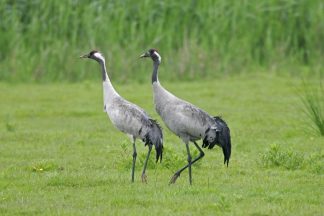
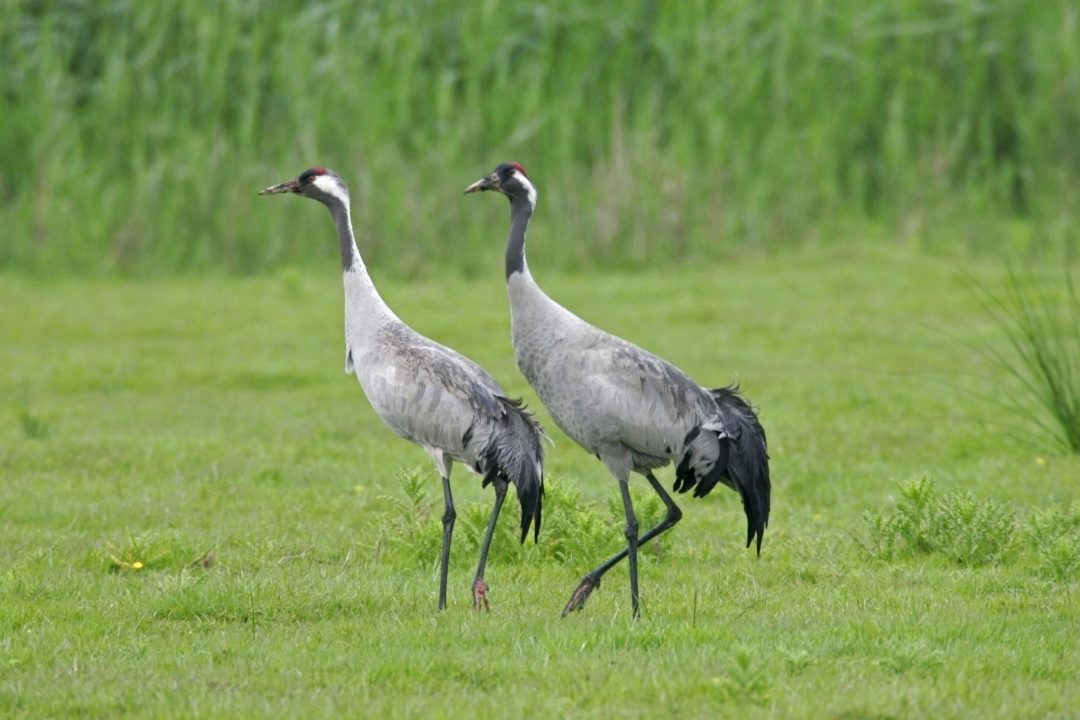
Scotland’s tallest species of bird has recorded its most successful breeding season in modern times, marking a significant milestone in its recovery after centuries of absence.
The crane was driven to extinction in Scotland in the 16th century due to habitat loss and hunting.
But its fortunes began to change in 2012, when a pair successfully bred in Aberdeenshire for the first time in more than 400 years after naturally recolonising the area.
New figures show that in 2025 a total of ten breeding pairs fledged nine chicks, up from four confirmed breeding pairs in 2024.
The counts were carried out by volunteers working with RSPB Scotland.
Ron Macdonald, a volunteer involved in monitoring cranes in north-east Scotland, described the experience of observing the birds’ return.
“As one of half a dozen volunteers that comprise the RSPB North East Scotland Crane monitoring team, I feel privileged to be able to regularly observe such a rare bird that has recolonised Scotland under its own steam.
“There’s something primeval in the way it looks, reminiscent of a pterodactyl that in the distant past probably flew over our ancient woodlands and raised peat bogs.
“One of my first sightings of breeding cranes was seeing and hearing a lone Crane flying towards an established pair bugling as it did so.
“Local farmers tell us that they also bugle at night, a melancholy sound that carries some distance if the night is still.”
Despite the record year, concerns remain about threats facing the species. Macdonald warned of the impact of avian influenza on crane populations across Europe.
“However, my delight over its record breeding success in 2025 is mixed with apprehension as a recently published research paper reports that an estimated 10% of the western flyway of the Common Crane has succumbed to avian influenza.
“That’s 40,000 out of a flyway population of 400,000 birds.
“We hope that the record breeding success of 2025 is not set back by the impact of avian influenza.”
Cranes first began returning to the UK in 1979, when a small number of birds from mainland Europe were spotted in Norfolk. Since then, their population has steadily grown.
Across the UK, 2025 also proved to be a record year, with 87 pairs raising 37 chicks. The total UK population is now estimated at around 250 birds, aided by conservation efforts and improved habitat protection.
Known for their elaborate courtship displays – including bows, pirouettes and bobbing movements – cranes are also recognised for their distinctive “bugling” calls, which can carry for up to 3.5 miles.
Andrew Stanbury, a conservation scientist with the RSPB, highlighted both the significance of the species’ return and the challenges ahead.
“Cranes are iconic birds, with unforgettable pirouetting mating ‘dances’ and unmistakable bugling calls.
“But for hundreds of years these sights and sounds were lost to the UK, and we’re so lucky to live in a time where, thanks to the huge efforts of supporters, volunteers, and charities, these birds are once again part of our landscape.
“But their wetland homes are still very much at risk from extreme weather events, such as drought and flooding, and there’s also the ever present risk of bird flu.
“We must also invest in long-term protections if we wish for cranes to truly recover.”
Follow STV News on WhatsApp
Scan the QR code on your mobile device for all the latest news from around the country