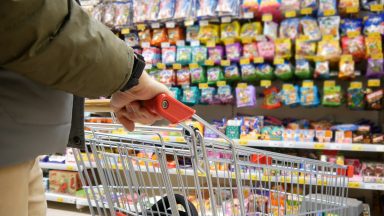
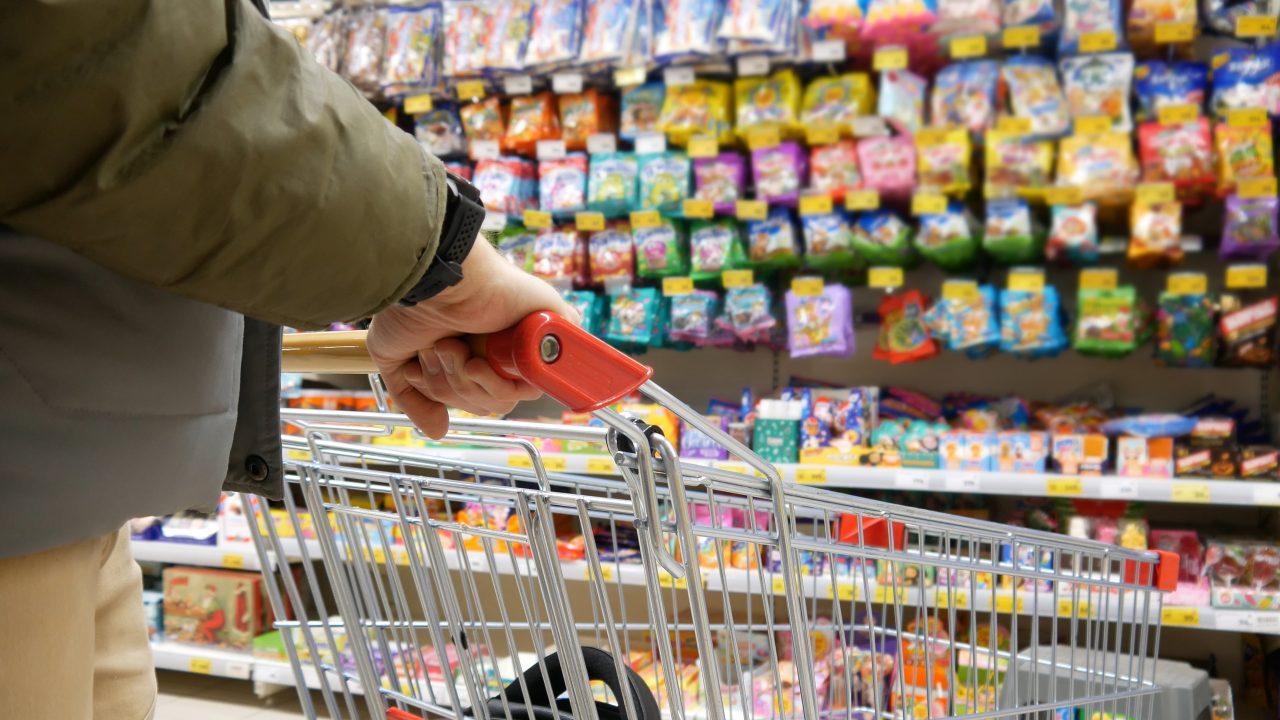
Chocolate, sweets and sugary drinks are set to vanish from supermarket checkouts as ministers crack down on the tactics used to tempt shoppers into impulse buys.
New Scottish Government guidance reveals how unhealthy products will be pushed out of some of the most prominent locations in stores and online.
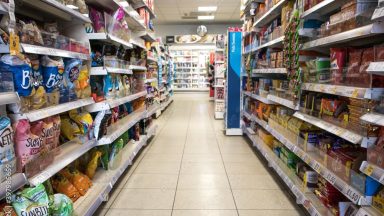
Businesses with more than 50 employees are no longer allowed to display pre-packaged foods like sugary soft drinks, confectionery, biscuits and breakfast cereals in prominent locations, such as at entrances, checkouts and the end of aisles.
What products are affected?
The crackdown will target many of the treats lining supermarket shelves, including fizzy drinks, chocolate, sweets, biscuits, cakes, ice cream and crisps.
It will also apply to some breakfast cereals, flavoured yoghurts and convenience foods such as pizzas, ready meals, chips and breaded products.
However, not every item in those categories will be affected. Products will be assessed under a government nutrition scoring system to determine whether they contain high levels of fat, sugar or salt.
The rules mainly cover pre-packed foods, meaning items sealed before they reach the shop.
Freshly prepared products packaged and sold on the same premises, such as a made-to-order baguettes, are generally exempt.
But some products marketed as healthier alternatives – including certain kombuchas and flavoured drinks, muesli and chewing gum – could be affected if they contain enough sugar to be classed as less healthy under the nutritional scoring system.
A full list of the products affected can be viewed here.
Where can sugary products no longer be located?
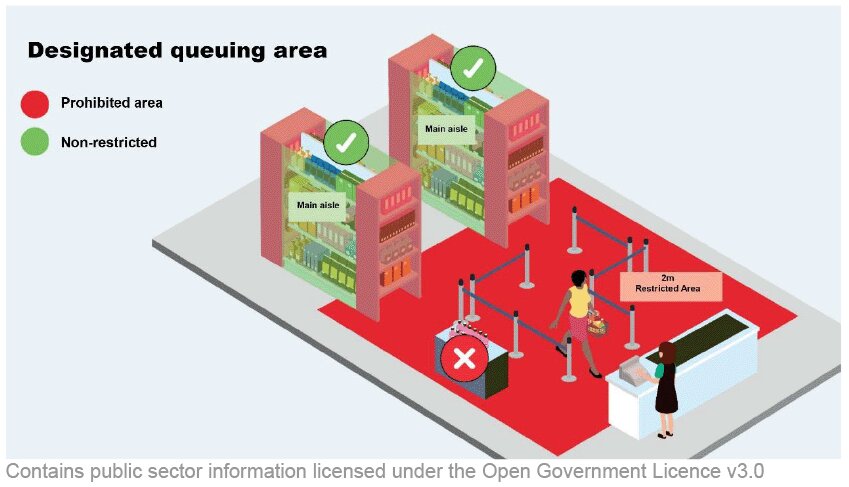
Any sweets, chocolates or other restricted foods must be kept at least 2 metres away from checkouts and queueing areas.
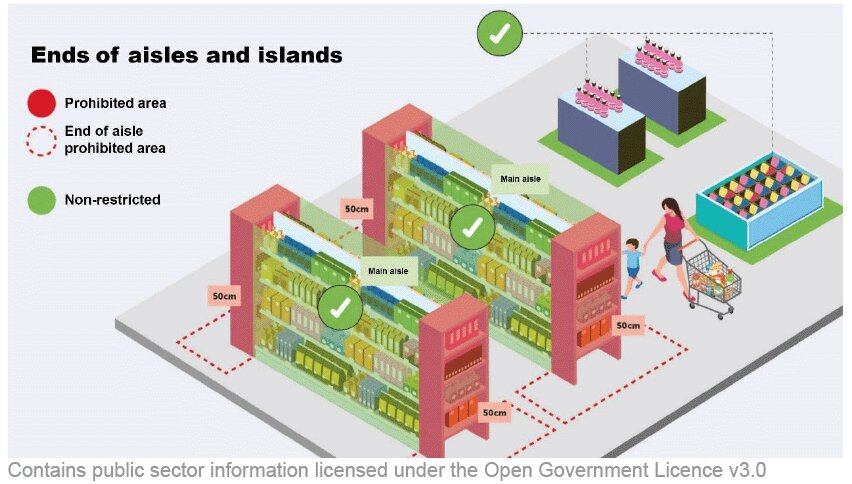
They can still be placed in nearby aisles, but cannot be displayed at the end of an aisle if that falls within the restricted zone.
 Scottish Government
The ends of aisles are off-limits for restricted foods, along with the area within 50cm of the aisle end.
However, supermarkets can still display these products on separate promotional stands elsewhere in the shop, as long as they are not attached to an aisle or placed within the 50cm exclusion zone.
 Scottish Government
What has prompted this move?
The Scottish Government says the new rules aim to tackle obesity and help people live healthier lives.
The regulations, which will apply both in-store and online, are intended to create a healthier balance of products on offer, support healthier eating habits and help lower levels of obesity.
Public health minister Maree Todd said: “In Scotland, two out of three adults are overweight or obese, with those living in our poorest areas more likely to be overweight and experience the most harm as a result.
 STV News
“We know that promotions and the prominent product placement can encourage over-consumption and impulse buying of foods with high levels of calories, fat, sugar and salt.
“By restricting the promotion of less healthy food and drink we can make it easier for people to make healthier choices, improving health and wellbeing and create a Scotland where everyone eats well and has a healthy weight.”
Similar restrictions are already in place in England and Wales.
How have supermarkets reacted?
The Scottish Retail Consortium (SRC), which represents the retail industry in Scotland, says it believes the new regulations are proportionate.
Ewan MacDonald-Russell, deputy head of the SRC, said: “Scotland’s retailers are committed to helping consumers make healthier choices.
“For example, fresh fruit and veg are heavily price promoted and grocers have led the way on reformulating products to reduce salt, sugar, and fat. We’ve pioneered traffic light labelling and signage to help consumers make informed choices.”
The choice to implement a consistent model with other UK nations should simplify and reduce the cost of implementation, albeit retailers will still invest around £20m to deliver the policy.
“We hope this approach, where industry is meaningfully consulted and government acts in a constructive manner, can serve as a model going forward as we work in partnership to make Scotland a healthier and wealthier nation.”
Are there any penalties for non-compliance?
Shops that break the rules could face fines of up to £2,500.
Retailers caught promoting restricted products in banned locations may receive compliance notices from local authorities, ordering them to rectify the situation.
While officials are expected to use warnings and compliance notices in many cases, repeat offenders or businesses found flouting the rules on a large scale could face prosecution.
Fixed penalty notices are also expected to be introduced in the future, giving councils another tool to tackle businesses that fail to comply.
Follow STV News on WhatsApp
Scan the QR code on your mobile device for all the latest news from around the country