

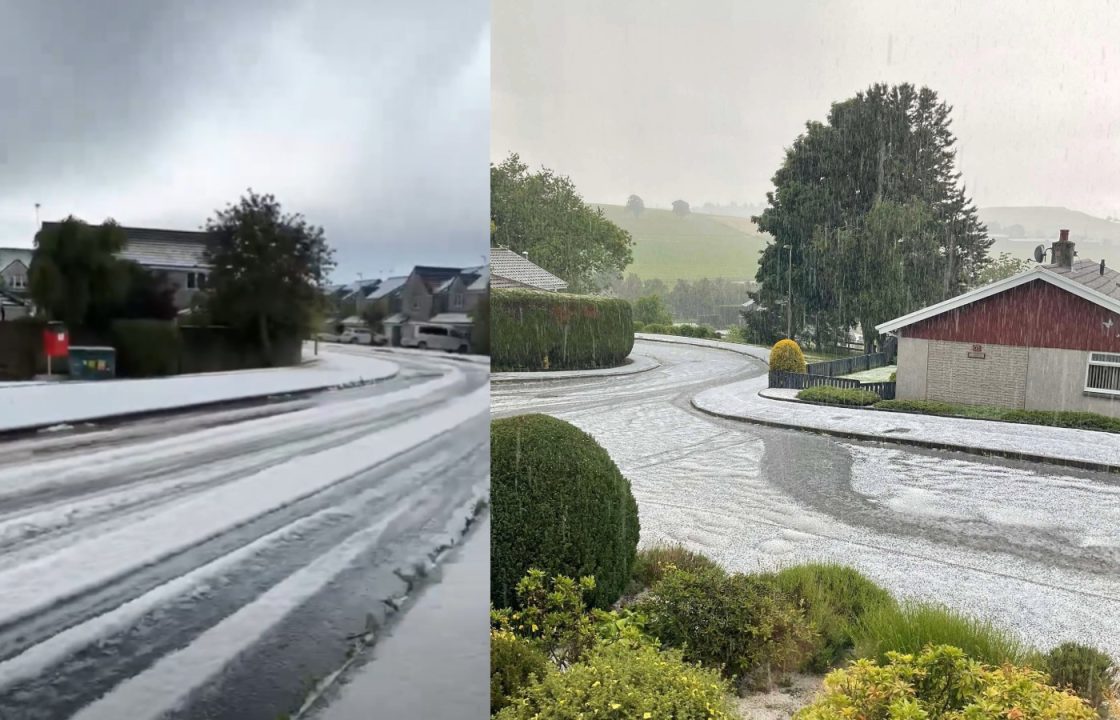
Places in Scotland have been turned white after hailstones showered down just days into summer.
But did you know that hail is pretty common in the summer?
Every year, at some point in the summer, there are the inevitable posts on social media exclaiming: “Hail, in summer?!” or “Why is it snowing in summer?”
Now I know what you’re thinking – hail is ice and so is snow, so surely they’re things we’d associate with winter?
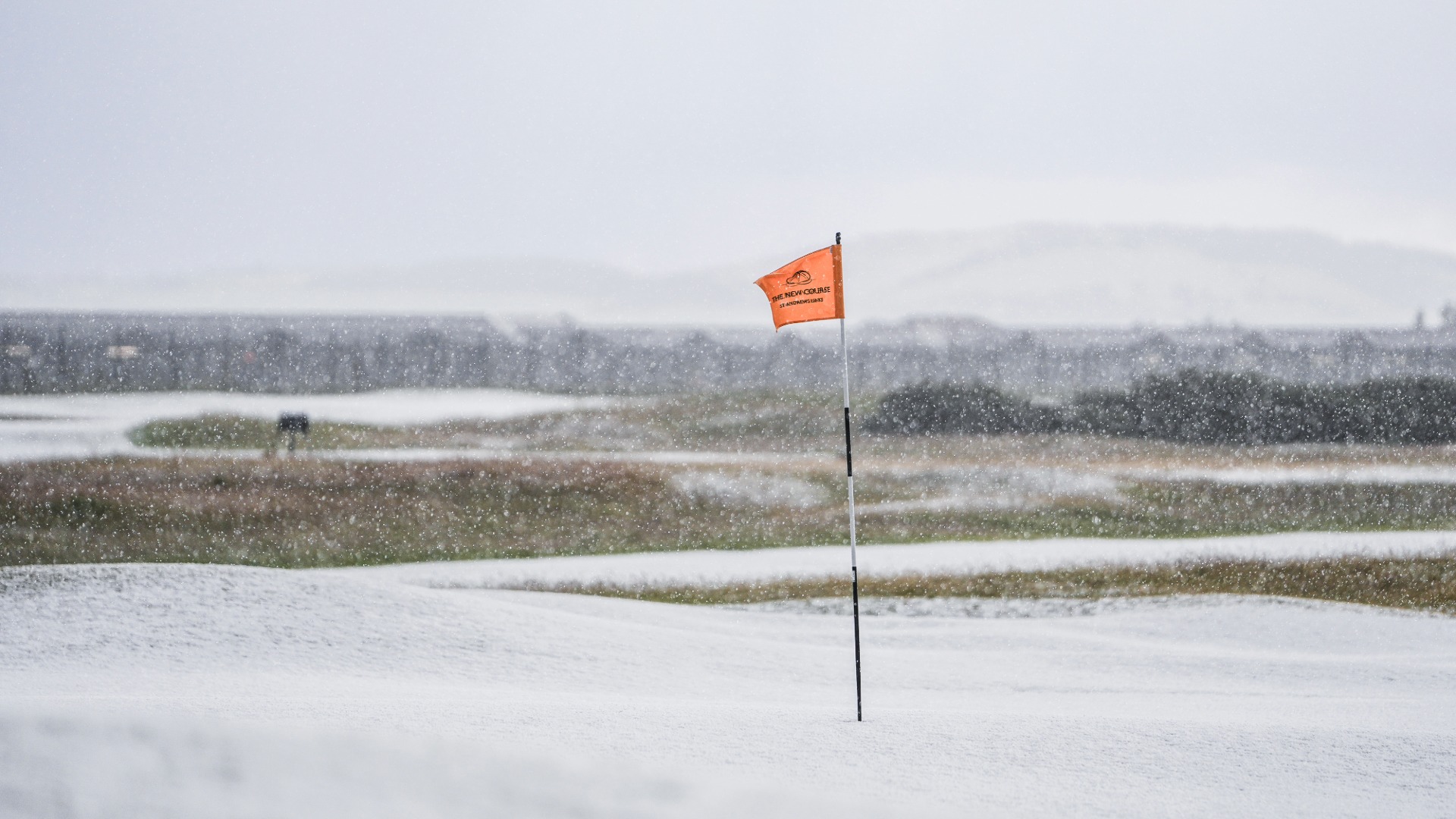 St Andrews Links
Well, they form in very different ways, with snow only falling to low levels when it’s cold, but hail can fall even on the hottest days of the year – in fact, it’s actually more likely – but why?
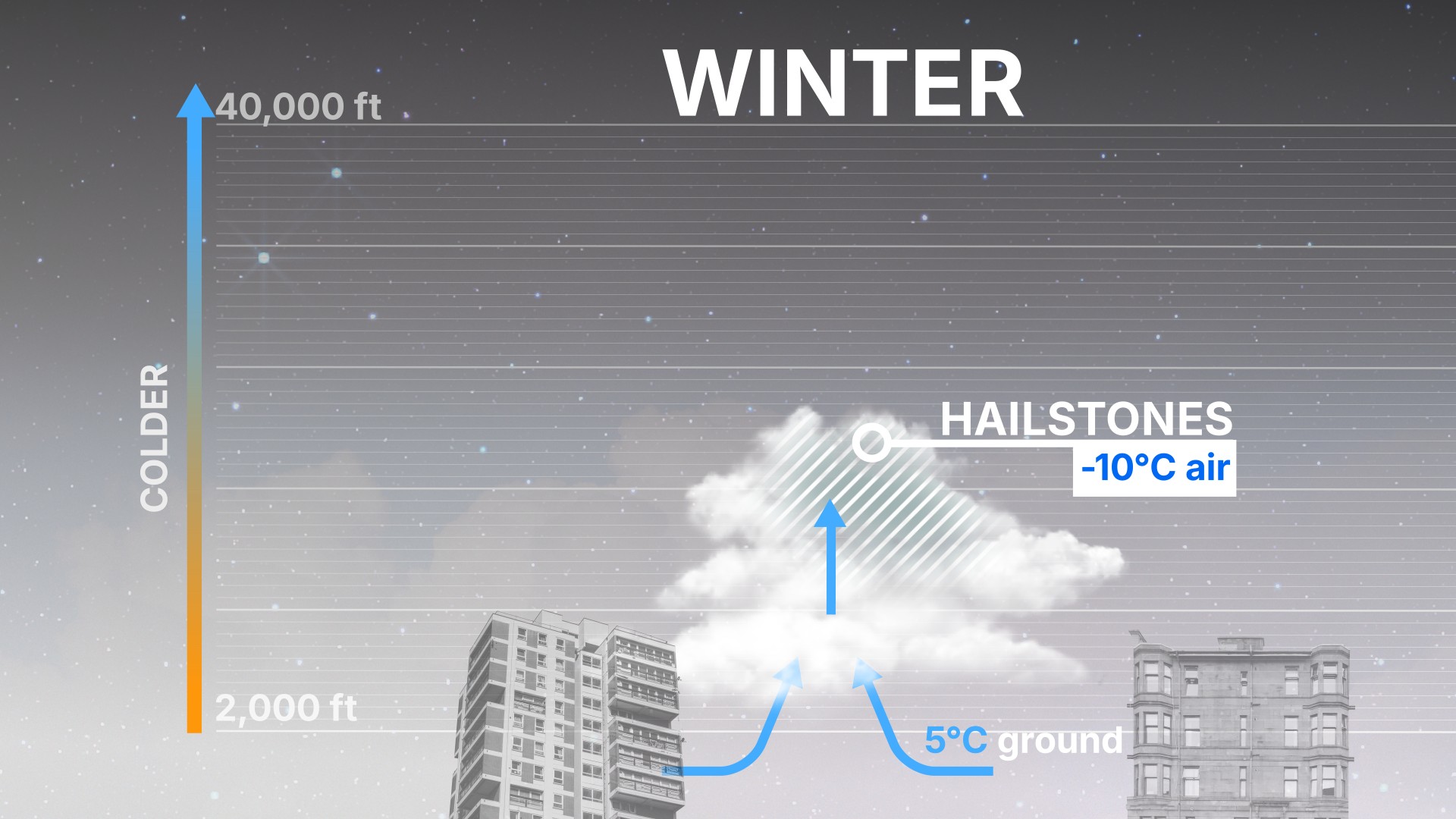
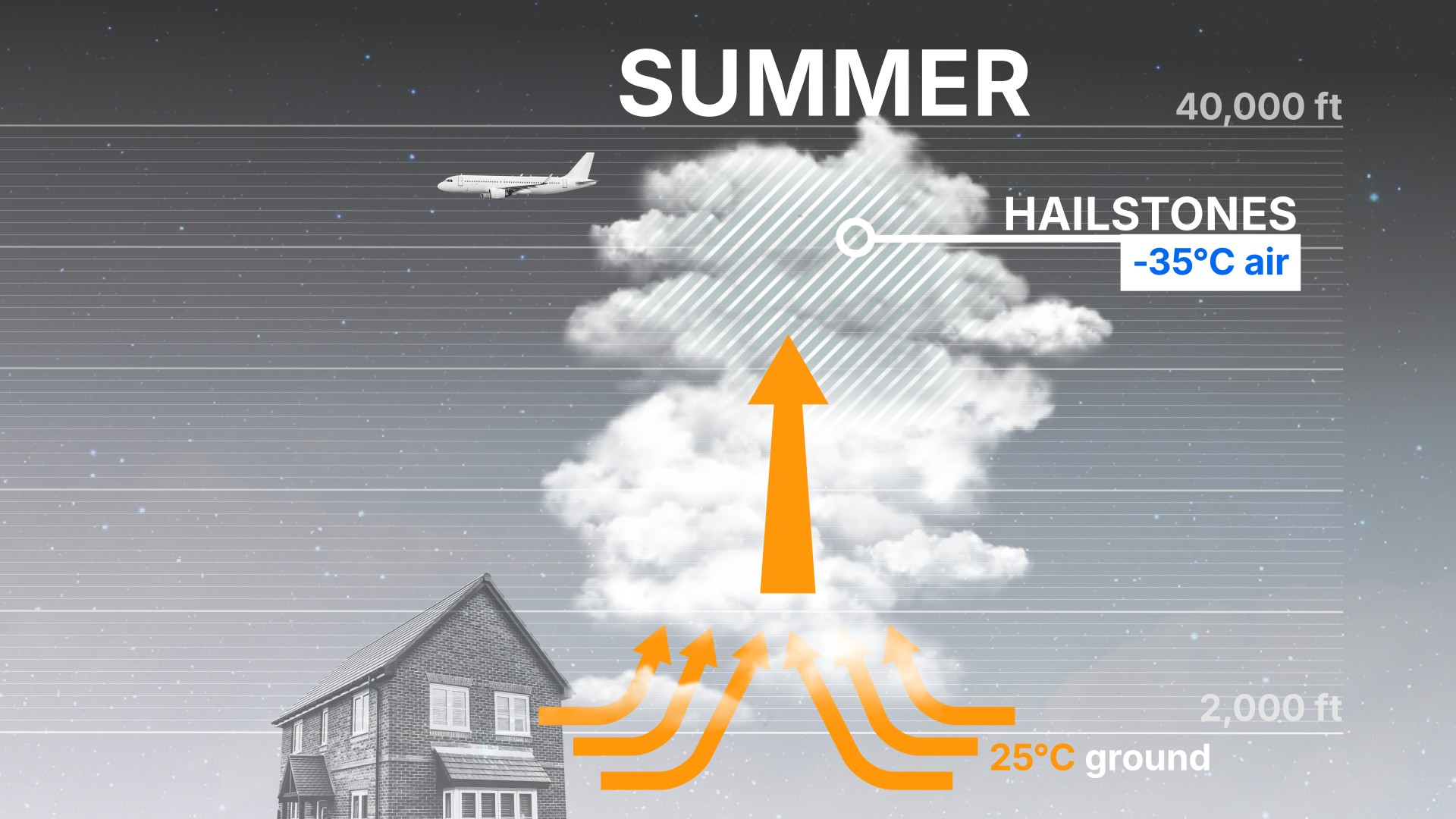
The clouds which bring hail are those huge cauliflower-like ones called cumulonimbus, which can extend to around 40,000ft in Scotland – high enough to interfere with planes even in their cruising altitude.
These clouds are driven by heat rising from the ground, which is far more intense in June than, say, December, which means the clouds can end up much bigger and go much higher into the atmosphere.
 STV News
 STV News
We all know that when climbing a mountain, it generally gets colder as you go higher – well, it’s the same for clouds.
So in the summer, these clouds extend higher into very cold air – it’s still extremely cold up there in the summer.
Today, for example, it’s +14C on the ground, but the tops of the clouds are around -20C.
The strong updraughts of warm air coming from the ground force water droplets high up into the cloud, which then freeze on contact with ice particles.
Here’s something interesting about hail – they can travel up and down inside the cloud numerous times, being coated in an extra layer of ice each time they rise into the cold upper parts – this is how they grow in size.
It also means that if a hailstone is cut in half, it can look a bit like an onion with many different layers.
Luckily, in Scotland, hailstones don’t tend to grow much bigger than a few centimetres, but in more continental areas where warm updraughts are more intense, this can lead to hailstones as big as tennis balls, which obviously bring huge amounts of damage.
Follow STV News on WhatsApp
Scan the QR code on your mobile device for all the latest news from around the country