
 SNS Group
The last season of Scottish football has been one of the most gripping in recent memory, with the chaotic three-horse title race grabbing global headlines, Stenhousemuir achieving an unprecedented promotion to the Championship, and former double winners returning to the top flight.
During this thrilling campaign, STV News has also reported on numerous incidents of disorder involving teenagers throughout the pyramid.
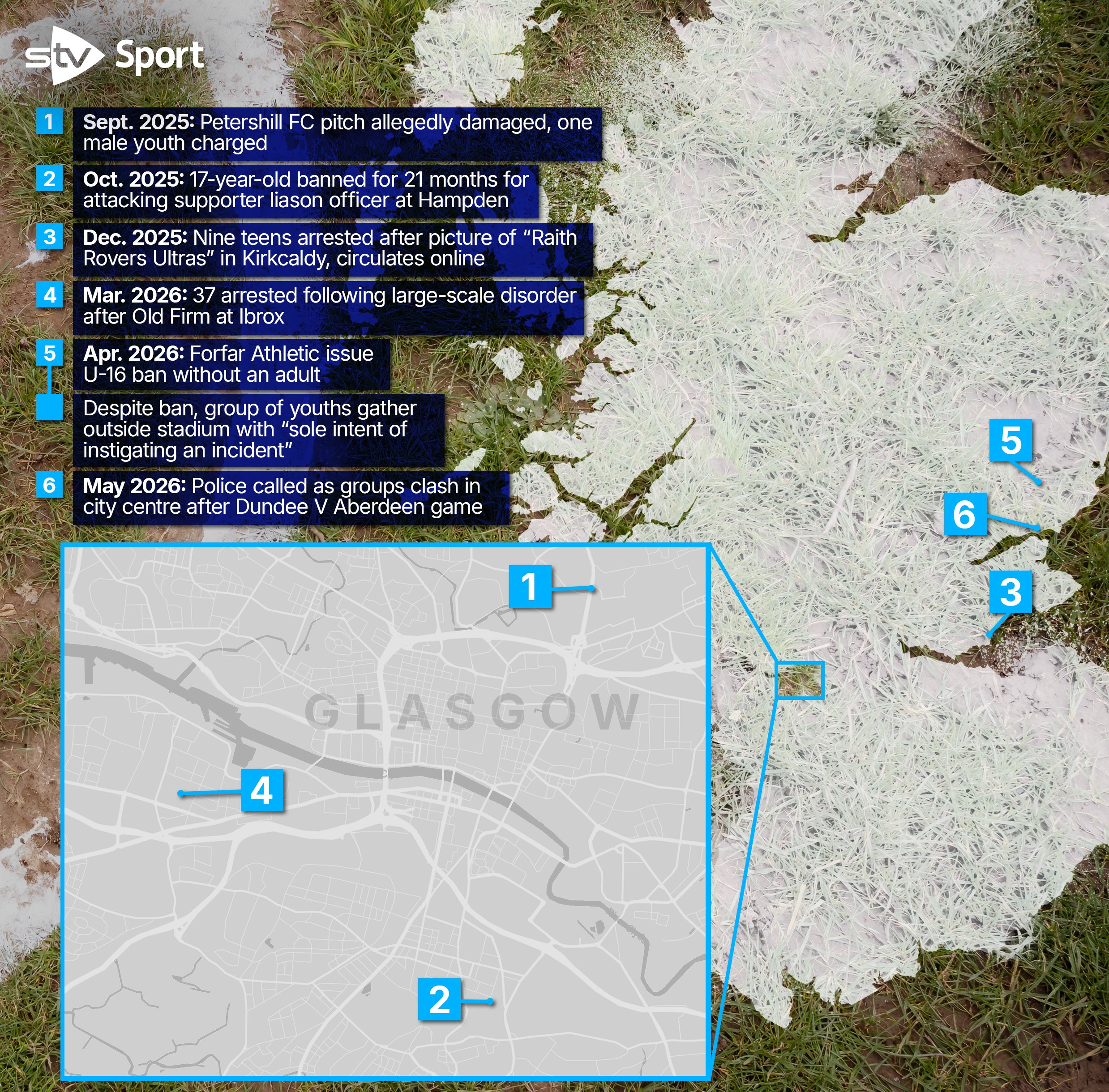
In October 2025, a 17-year-old boy was issued a banning order for 21 months after seizing a drum from the St Johnstone supporters’ liaison officer, causing her to fall and strike her head on the ground at Hampden Park on August 17, 2024.
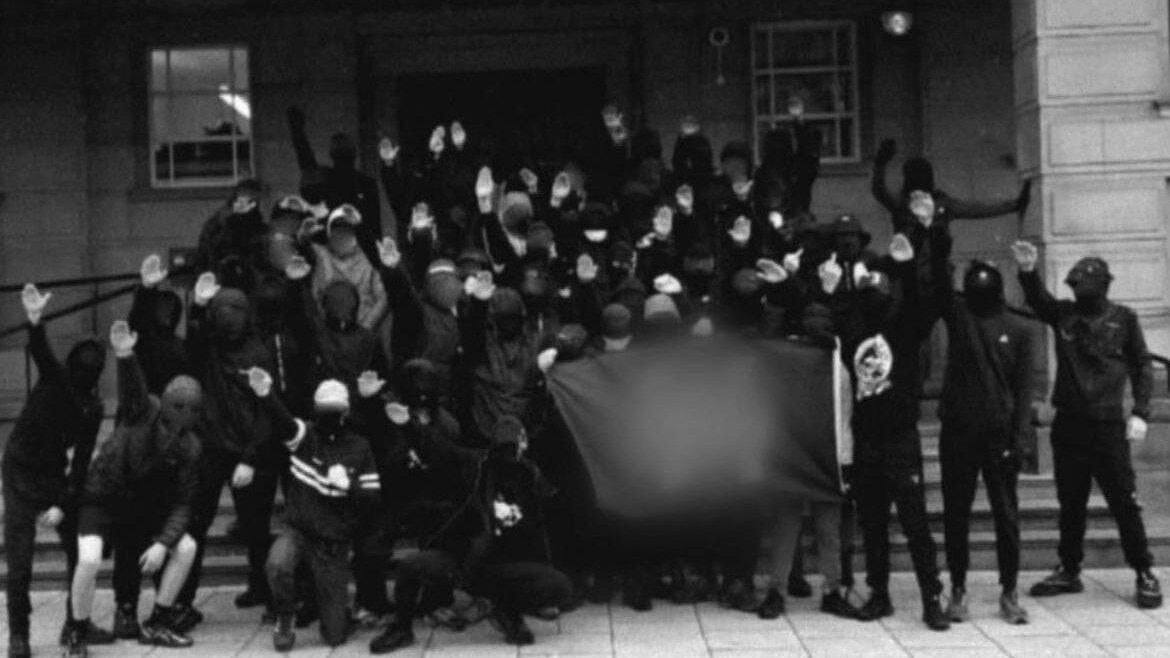
Last December, nine teens, including four 16-year-olds, were arrested after a picture of a group, claiming to be Raith Rovers Ultras, circulated on social media.
 Social Media
The image showed masked individuals outside Kirkcaldy Town Hall, raising and extending their right arms in a gesture used by the Nazi Party alongside a Schutzstaffel flag, adorned with the SS insignia.
The Nazi paramilitary group, which operated under Adolf Hitler, is estimated to have murdered around six million Jewish people during the Holocaust.
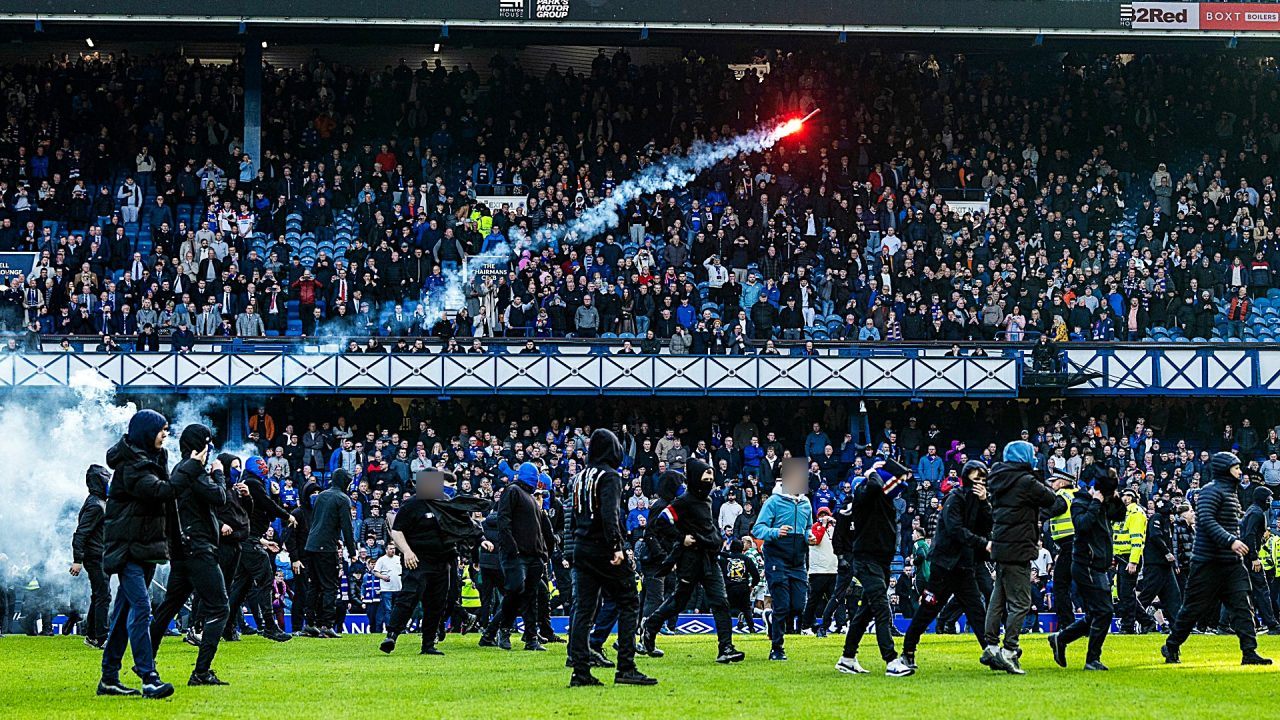
At least eight teenagers were among the 37 arrested after large-scale disorder at the end of an Old Firm Scottish Cup quarter-final at Ibrox on March 8.
 STV News
Fans clashed on the pitch after the final whistle, with police, players and club staff attacked during the disorder.
In April, League Two outfit Forfar Athletic banned under-16s from attending games without an adult following “incidents involving youths” and “unacceptable behaviour”.
Despite the prohibition, a group of youths, who did not attend the game, gathered outside the ground following the side’s match with East Kilbride, with “the sole intent of instigating an incident”.
Two boys were arrested.
On the final day of the season, officers were called to Dundee city centre after groups clashed following the Dundee and Aberdeen game.
It isn’t just Scotland’s professional game that has reported issues with disorder this season; the junior football scene has also been affected by crowds of “youth ultras”.
Petershill FC’s pitch in Glasgow’s Springburn was damaged last September after a group arrived “with the sole intention of causing trouble”.
At the time, the club described the actions as “abhorrent” and that “threats of violence” were made towards the Partick Thistle Charitable Trust staff at the West of Scotland First Division match.
One boy was charged in connection with the incident.
Police Scotland says it works closely with football clubs and match organisers to “ensure appropriate plans are in place to maintain public safety and minimise disruption to the wider community”.
‘Fan groups are really important for steering young boys in right direction’
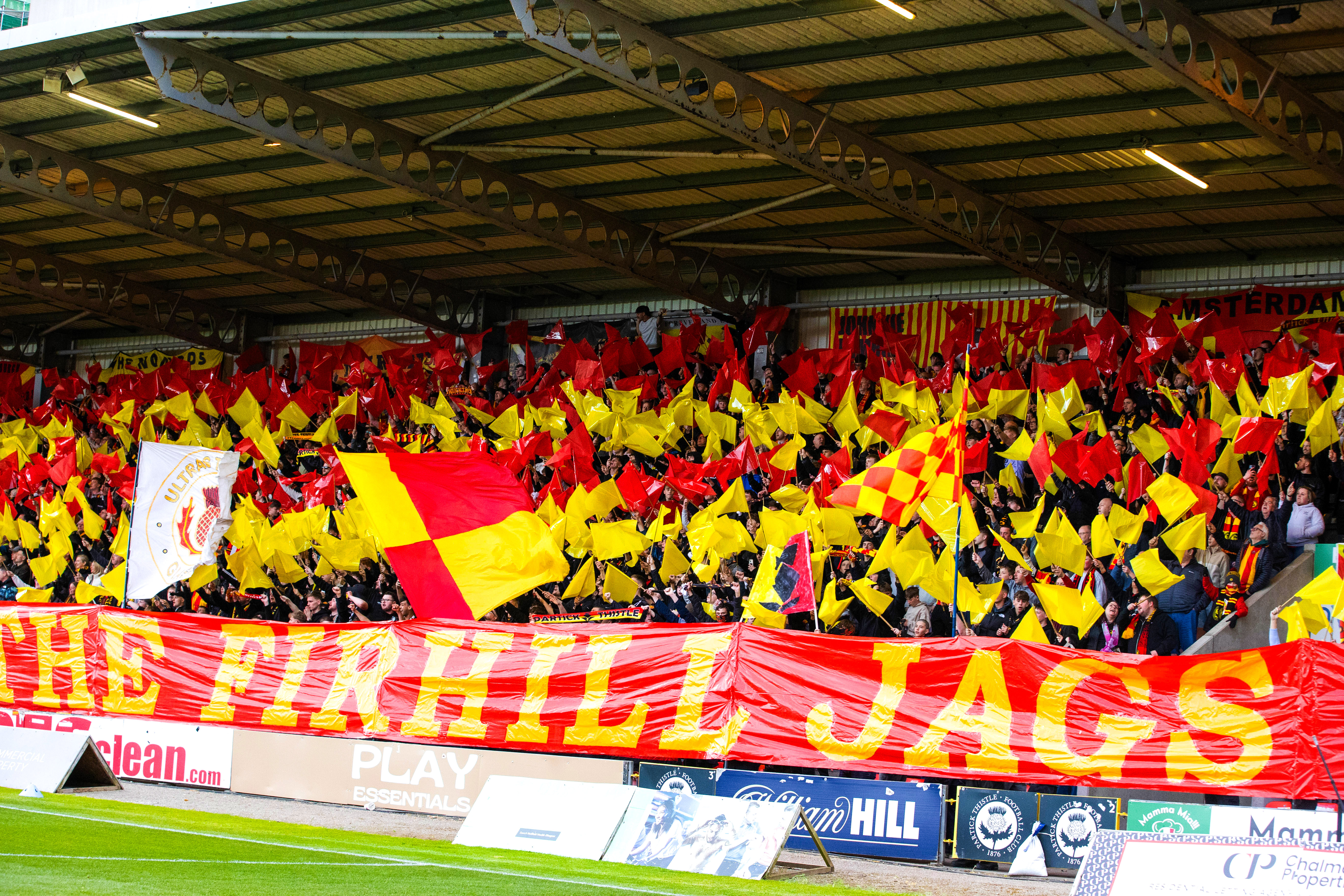
Manpreet Singh has been a prominent member of the Partick Thistle ultra group since they were formed two seasons ago.
He helps the club set up pre-match displays before big games and ensures a line of communication between the team and supporters.
The 25-year-old has been a regular in the stands at Firhill Stadium for the last decade, watching the Jags go through highs and lows.
He believes that organised fan groups can play a “really important” role in helping steer young boys in the right direction.
Manpreet told STV News: “Instead of getting into trouble during the weekend, they are part of something that isn’t only helping themselves but also the community.
“I know a few young boys have kept out of trouble because they are joining us in the stands.
“A lot of them are just trying to find a place where they fit in, so it can be easy to go down the wrong path.”
Following the Scottish Challenge Cup Final in April between Raith Rovers and Inverness at Partick’s ground, images of vandalism in the section housing Rovers fans circulated online.
 SNS Group
The graffiti involved racial slurs directed towards Manpreet. The Jags fan believes ultra groups need to have older members who are able to self-police and cut out unwanted behaviour.
“I think that’s where some of the lower league teams struggle because the groups are just made up of young boys and there is no one to step in,” he said.
“We have a lot of boys who can step back and see the whole picture. I feel that with any fanbase, if you can’t self-police, the club won’t back you when it comes to organised groups.
“No group can function without the support of the club. At the start of the season we had a meeting with the club and they explained that they wanted us to have better control of the section.
“We have had no issues at all this season.”
Social media has played a significant role in glamorising the violent side of ultra culture, with pages dedicated to sharing disorder involving a number of Scottish teams, including the Old Firm clubs, Aberdeen, Hibernian, Falkirk, Livingston and Raith Rovers.
Manpreet believes that negative incidents involving fans can be amplified online, leading to a stigma against young supporters.
“You hear a lot about what the fans of clubs have done negatively, but you don’t hear about the groups holding collections for food banks at games,” he explained.
“The young boys causing the trouble are in the minority, but they’ll be the ones getting the headlines.
“For example, our ultra group worked closely with disabled people supporters group and the LGBTQ+ group to paint banners for the stadium.”
‘There definitely has been a rise in the last couple of years’
Stenhousemuir’s chairman, Dan Wharton, has watched the club soar through the pyramid into the second tier of Scottish football.
He believes that disorder in football has always been a “historic issue”; however, the chairman has seen a “rise in the last couple of years” of youth disorder.
Mr Wharton told STV News: “What we’ve noticed as a club is that there are more organised meetings of youths away from the stadium. For example, Alloa fans will travel to our area to greet Inverness fans as they get off the bus.
“When we travelled to Queen of the South, there was an incident where a young lad threw a brick through a bus window.”
The chairman has credited fan groups across Scotland for creating better atmospheres in stadiums, with very little, if any, disorder.
However, when disturbances occur outside the grounds, such as when young Stenny fans allegedly threw rocks at an Inverness supporters’ bus and confronted others at the train station, it is harder to stamp out.
 SNS Group
“We struggle to influence or control what happens in those incidents away from the stadium,” the chairman explained.
“When things happen in and around the stadium, we are stewarding the situations in as high-profile a way as we possibly can.”
Mr Wharton believes that club foundations, such as the one run in connection with the Falkirk-based side, are vital when it comes to instilling positive behaviour amongst young supporters, and ensuring the future of the team.
“We try to use these opportunities to show young supporters more positive ways to back the club,” Mr Wharton explained.
“My understanding is that it tends to be young boys under the age of 17 who tend to get caught up in the trouble and as a club it is our job to show them a different path.
“Our young supporters could be our chairperson, board member, manager or player of tomorrow.
“We want to encourage people of all genders and ages to come to our football match. It is those younger supporters who are creating that positive atmosphere.”
Follow STV News on WhatsApp
Scan the QR code on your mobile device for all the latest news from around the country