

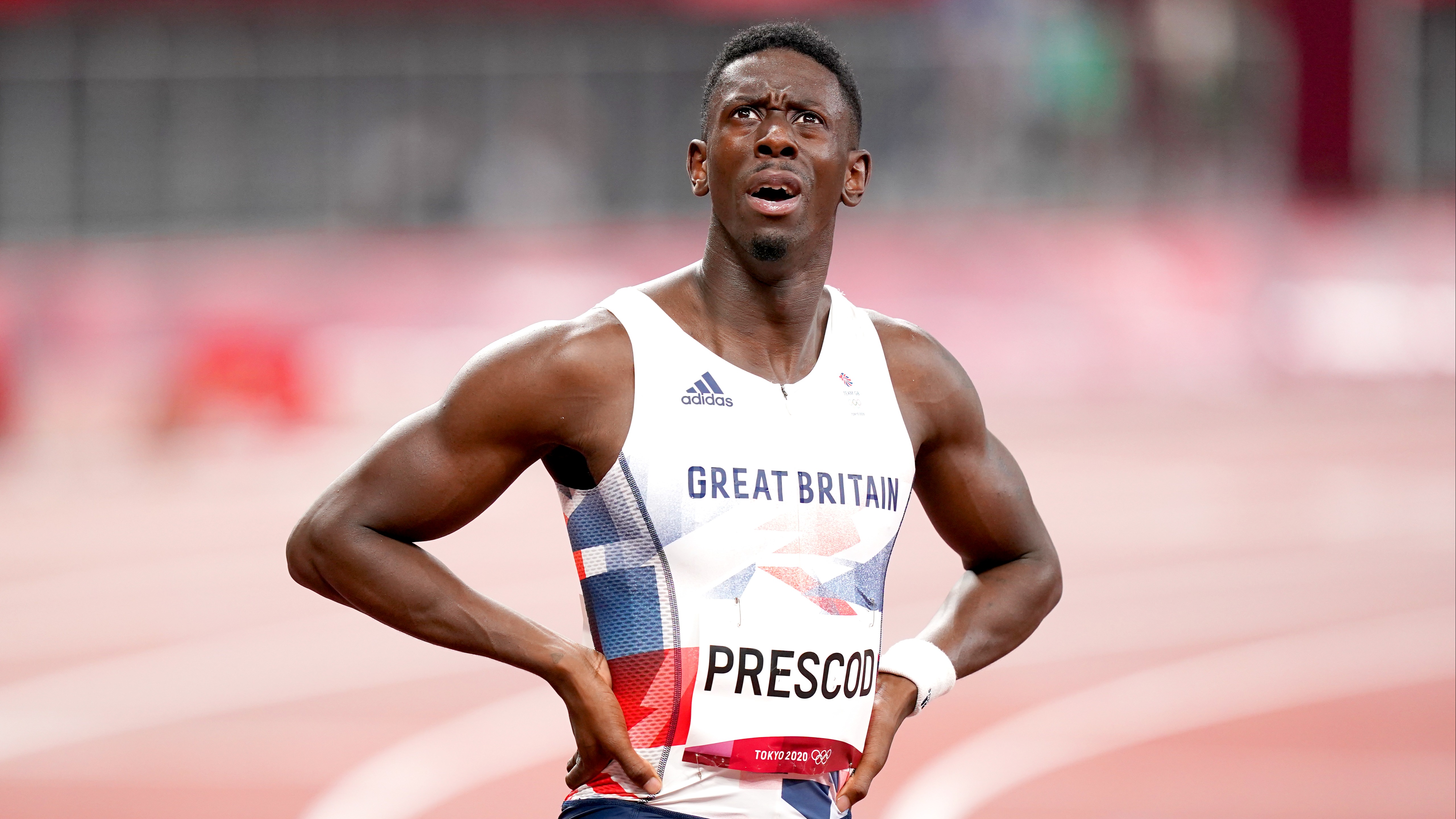
Former Olympic sprinter Reece Prescod tells ITV News Sports Editor Steve Scott why he decided to take part in the controversial Enhanced Games
“I was doing 5am removals with one of my friend’s removal companies, then going from there and doing PT for seven hours. I was working as hard as I can.”
These are the words former Olympic sprinter Reece Prescod used to explain to ITV News how, in part, his struggles in retirement led him to sign up to the hugely controversial Enhanced Games.
It’s an event that has been labelled the “Olympics on steroids” by its many critics
In 2018, Prescod won a European silver and also competed at the Tokyo Olympics before retiring in August last year, when interest from UK Athletics and sponsors dried up.
The Enhanced Games, which are paying fees to athletes to compete and have put up a 25 million dollar prize-pot, allow doping if regulated and supervised by their medical teams.
For Prescod, the games represent a chance to land some financial security while continuing to compete.
Speaking to ITV News Sports Editor Steve Scott, 29-year-old Prescod said: “The way I see it is that now I’m doing something, I’m doing something different. Everyone you know is going to obviously have their opinion and say stuff about it.”
Prescod told Steve Scott ‘everyone you know is going to obviously have their opinion’ but is undeterred ahead of May event
His decision has already come under fire from UK Athletics chief executive Jack Buckner, who called his participation “appalling”.
In a statement, former Olympic long-distance runner Buckner said: “As a former athlete, I find this particularly appalling.
“Those of us who have competed know what it takes to succeed the right way — through talent, dedication, and respect for the rules.
“To see a British athlete aligning themselves with an event that celebrates the use of performance-enhancing drugs is profoundly disappointing.”
Prescod recognises his revelation may make people look at him differently from now on, and his decision will potentially damage his reputation.
The sprinter told ITV News: “I think in one instance I can totally, you know, people will necessarily say the reputation to be tarnished.
“But I think for me, the way I’ve kind of looked at it and seen it, is that I did that chapter for the last 12 to 15 years, I never had one violation against my name.
“I competed cleanly, I ran as fast as I could, and now this is like a different chapter.”
ITV News Sports Editor Steve Scott asked Prescod if his involvement in the games is solely financial?
The Enhanced Games were originally launched as a concept in 2023 by London-based businessman Aron D’Souza, who said at the time the sporting event “will obliterate all world records” by “unlocking human potential”.
Substances approved by the United States Food and Drug Administration (FDA) are allowed to be taken at the games, which will feature short-distance swimming, sprinting and weightlifting.
Prescod says he has not yet decided whether he will dope ahead of the competition.
It is not just his reputation at stake, health risks are also a consideration.
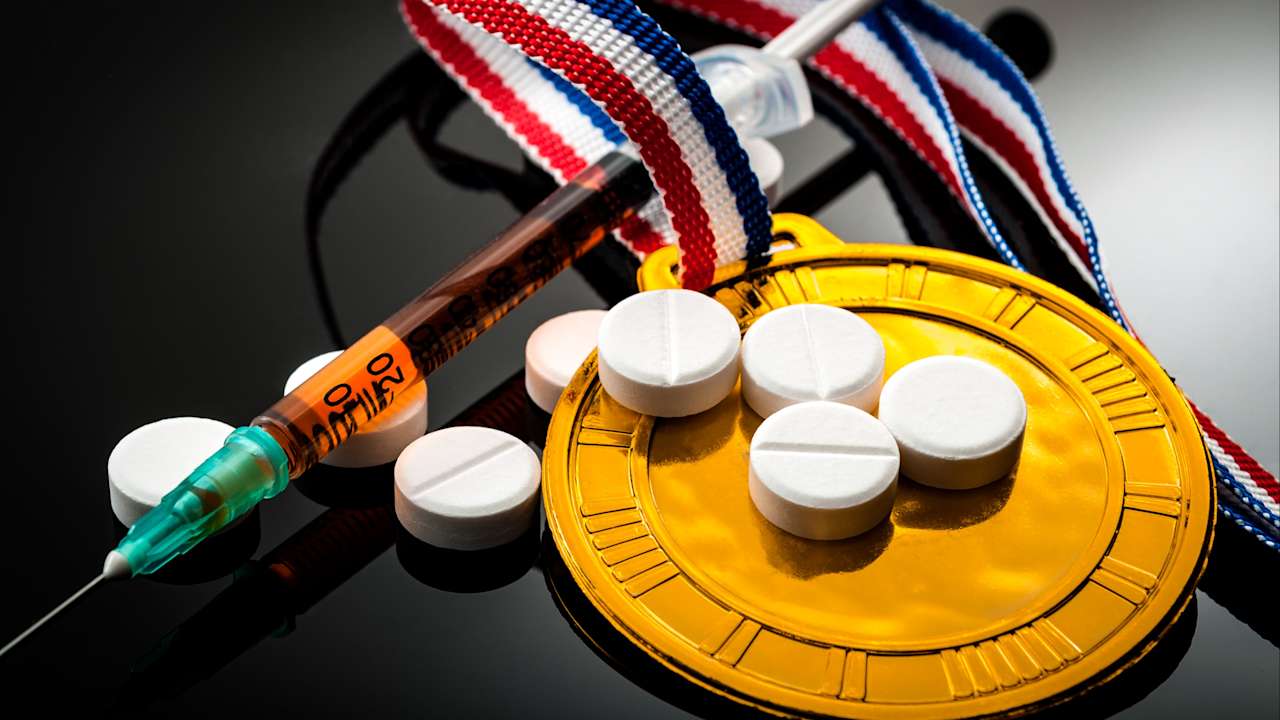
Enhanced Games competitors will be allowed, if not encouraged, to take performance-enhancing drugs like steroids, testosterone, and growth hormones, which are typically legal to possess but are banned in competitive sport.
Organisers hope the event will remove the stigma of using the substances and promote safer ways in which to push human limits.
Critics argue the use of performance enhancers crosses an ethical line, but there are also concerns for the athletes’ long-term health.
According to USADA, the US Anti-Doping Agency, performance-enhancing drugs have the ability to drastically alter the human body and potentially change biological functions.
They also have the ability to improve athletic performance, but can be extremely dangerous and in some situations, fatal.
USADA has stated its mission is to ensure that no athlete considers using performance enhancers to succeed in sport, something that the Enhanced Games relies on as a premise.
For anabolic steroids, which are often misused to boost strength and add muscle, there are a whole host of side effects.
However, Prescod is confident that the organisers have safety checks in place.
“If you didn’t have like a solid medical team and in-depth medical team and the guys that are qualified, I think there’d be more of a health risk in the future,” he told ITV News.
“If that’s something, if I want to enhance, the team is totally safe. So I’m not necessarily worried about that. But for now, I think the initial is just getting fit again.”
Professor Ian Broadley, whose research has been supported by the World Anti-Doping Agency, told ITV News: “It’s not possible to, on an individual basis, prescribe these drugs in a safe manner.
“The drugs have idiosyncratic effects, so for one athlete, the effects might be quite different to another athlete. So it’s not that you can have a safe level.
“So for a particular dosage of a particular substance, the effects on one athlete might be quite different to another one. And that’s both in terms of the performance-enhancing effects, but also some of the harmful effects.”
Despite not having decided whether to dope or not, does Prescod’s involvement in itself serves to promote the use of banned substances?
“What happens in the Olympics, the World Champs, British and British athletics, all that kind of thing is one thing, but what happens in EG is a completely different format, you know, so I’ve kind of separated that in essence,” the former Olympian said.
“It’s a different competition, it’s a different format. They’re trying to push the boundaries and see how fast the human body is capable of with enhancements, and I think that’s where it’s at.”
Chris Jones, Chief Communications Officer at the Enhanced Games said: “Enhanced’s core mission is to deliver transparency and unmatched health safety by removing the stigma of enhancement in sports.
“Enhanced is bringing regulated and medically supervised usage into the light for our athletes.
“This occurs within an independent approved medical framework, and one that protects athletes who would otherwise risk their health by operating in the dark to circumvent the punitive structures in place today.
“Contrary to inaccurate assertions made about the Games, our athletes are fully empowered to choose whether to enhance under sustained individualised clinical supervision using legal substances currently approved for use in the United States.”
Follow STV News on WhatsApp
Scan the QR code on your mobile device for all the latest news from around the country