 Supplied
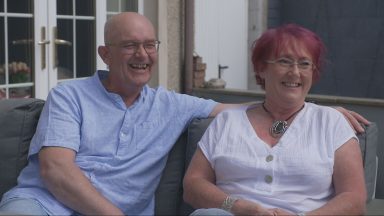
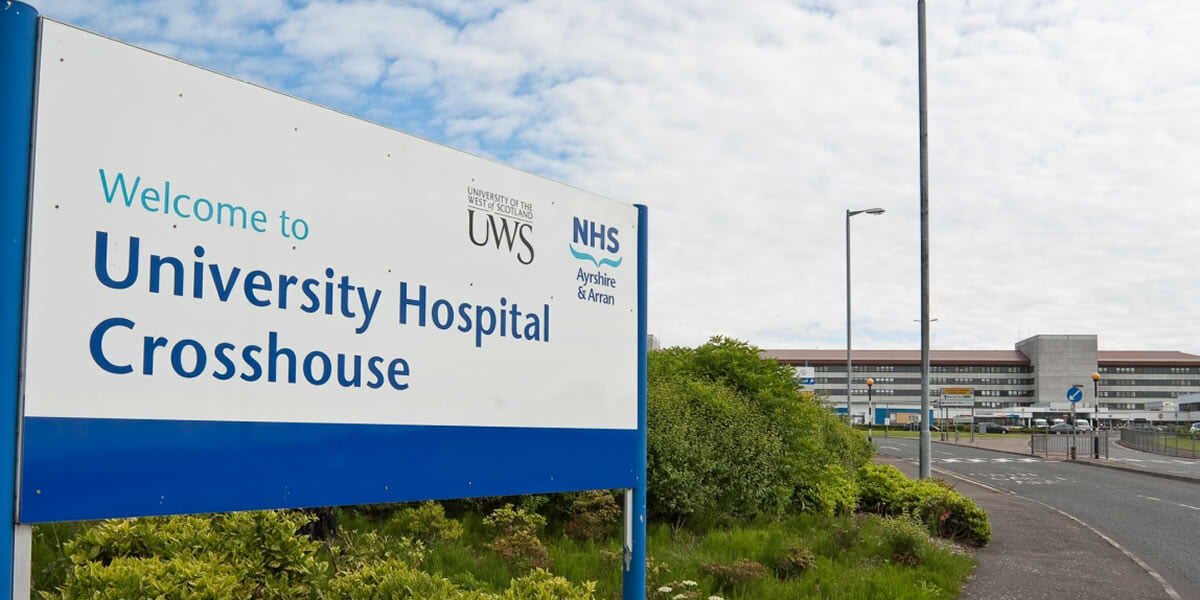
An Ayrshire mum believes the care provided at the University Hospital Crosshouse in Kilmarnock contributed to the brain injury which caused her newborn daughter’s death.
Caitlyn Robertson believes the dislodgement of a breathing tube in her daughter Belle’s airway resulted in her death three months after she was born.
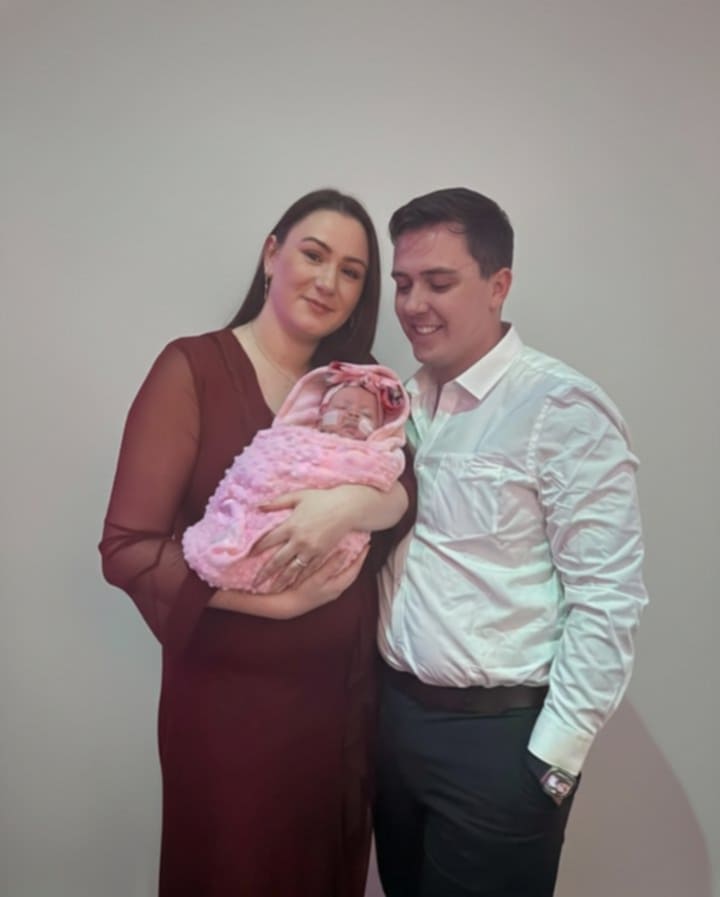
The mum had previously experienced difficult pregnancies and met with a consultant to discuss a plan before welcoming Belle into the world with her partner, Clinton MacArthur.
At 14 weeks, the 27-year-old would receive a cervical stitch to ensure that she did not go into premature labour, but she started to suffer excessive bleeding and burning sensations.
Doctors decided to remove her cervical stitch; however, after numerous attempts, doctors were not successful.
At 31 weeks pregnant, Caitlyn’s waters broke on July 4 and she was taken to Crosshouse’s inpatient ward. She described the pain like she was being “torn open”.
Following tests the medical team identified she had an infection and labour would need to be induced.
After suffering “excruciating pain” despite having an epidural, it was discovered the 27-year-old had a uterine rupture, a rare but life-threatening emergency during pregnancy or labour where the muscular wall of the uterus tears open.
The 27-year-old was quickly transported to the theatre as she continued to lose blood. After she was stabilised, during which surgeons used four bags of blood, Caitlyn was told that her daughter was born.
‘We tried to prolong her life as long as we could’
Belle MacArthur was delivered at 31 weeks on July 7, 2025 and taken to Intensive Care in the Neonatal Unit.
According to BabyCenter, a global parenting support platform, children born at 31 to 32 weeks have an “excellent chance of survival”.
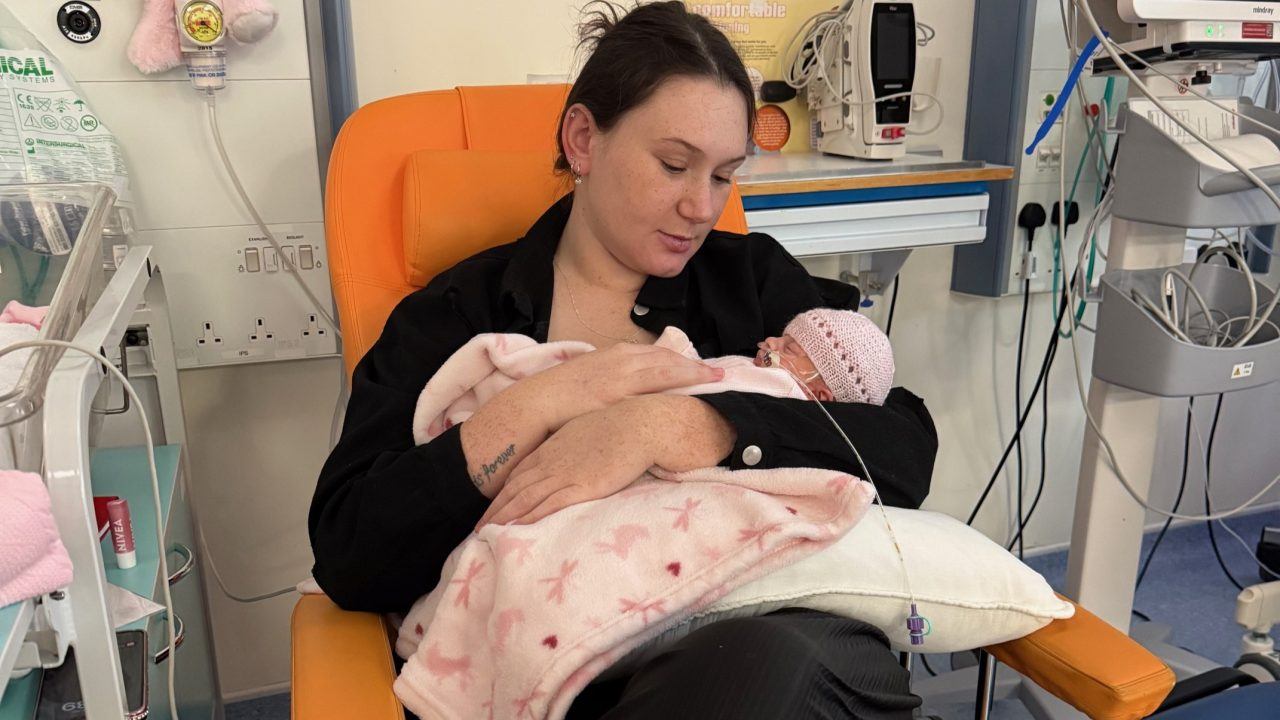
Four weeks after she was born, her family was getting ready to welcome the newborn home. Belle still required oxygen due to her premature birth and her struggles with breathing.
During the newborn’s time in care, she went into respiratory arrest. Caitlyn claims that a breathing tube was inserted into the premature baby’s airways without her being sedated.
While the family were in the room, a nurse tried to readjust the tube, and the mum heard a popping sound. Following this, her daughter flatlined.
It was believed that part of the tube had dislodged and fallen into her airway. The family say it took 15 minutes to retrieve the dislodgement and get Belle’s heartbeat back.
Following the ordeal, it was found that the newborn’s right lung had collapsed, and Belle was taken to the specialist team in Glasgow.
Following an MRI, it was found that Belle had suffered a brain injury due to oxygen deprivation.
Caitlyn and Clinton were allowed to take their child home after treatment, but Belle stopped breathing again and was rushed to the paediatric intensive care unit in Glasgow.
 Supplied
Due to the brain injury, Belle struggled to keep her eyes open and breathe on her own for a prolonged period of time.
She also had numerous seizures throughout the day due to her medically resistant epilepsy, believed to be caused by the injury.
Clinton and Caitlyn were told by doctors that their baby girl would die. The parents decided to take her home after their child had survived a few days off of a ventilator.
It was the first time Belle had left the hospital in eight weeks.
The mum told STV News: “We got to live life with her for around a week and a half.
“It was really hard having her at home because we knew she was going to die. On October 2, her stomach stopped working and the pallative nurse said that was her in the final stages of life.
“We tried to prolong her life as long as we could but it wasn’t working.
“By the end, we took all of the machinery off of her and kept her oxygen on. Belle’s dad held her in his arms as he normally would to get her back up.
“I waited in the other room because I knew that I would phone the ambulance to do CPR on her, even though there wasn’t much of Belle left.
“I couldn’t watch paramedics pound her chest again. I didn’t want her last minutes to be full of chaos and hurt.
“I wanted Belle to die with dignity. The only time Belle was treated with any kind of respect was when she was dying.
“Belle passed away in her dad’s arms at 6am on October 3.”
A palliative nurse came in and took Belle from her father and confirmed “she was gone”.
Investigation into Belle’s death
Due to the circumstances surrounding Belle’s death, the incident has been referred to the Procurator Fiscal.
An initial post-mortem carried out deemed that the newborn’s death was caused by a hypoxic brain injury, which her parents believe was caused by the breathing tube being dislodged in their child’s airway.
Police Scotland detectives do not believe there are any suspicious circumstances surrounding the death and an investigation to the establish the full circumstance is ongoing.
A Police Scotland spokesperson said: “Around 6.50am on Friday, October 3, 2025, we were made aware of the death of a baby at an address.
“There are no suspicious circumstances in connection with the death.
“Enquiries are ongoing.”
 NHS
NHSThe Procurator Fiscal has confirmed that any “significant developments” will be shared with the family.
NHS Ayrshire and Arran are also conducting a Significant Adverse Event Review regarding the care of Belle. This review does not relate to Caitlyn’s care.
Jennifer Wilson, nurse director, said: “I would like to extend my sincere condolences to Belle’s family. We are deeply sorry that they have had to raise concerns about the care their baby received at such an incredibly sad and difficult time.
“We can confirm that a Significant Adverse Event Review is currently under way, and that communication with the family is ongoing as part of this process.
“However, due to patient confidentiality, we are unable to comment further.”
‘I have not only lost my daughter, but I have also since lost my womb’
In January, Caitlyn would have her womb removed due to what she believes were further failings at Crosshouse related to her daughter’s death.
The mum had continued to bleed and feel “excruciating pain” following the birth of Belle; she thought this was due to the uterine rupture.
An ultrasound showed that her womb was significantly damaged. An internal scan was then carried out, which revealed that the cervical stitch, lost almost a year prior, was still intact.
On January 16, Caitlyn underwent a hysterectomy in an effort to stop the pain. During the operation, medical teams had found that her womb was fixed at the size of a 12-week pregnancy and that the lower segment of her womb was necrotic, a life-threatening, rare condition.

If it is left untreated for a prolonged period, necrosis can result in a blood infection.
According to the US National Institutes of Health, necrosis of the womb can be caused by infected sutures, bacterial infection, or uterine artery embolisation.
The mum added: “Not only have they stolen my child from me, they’ve taken my womb.
“They’ve taken everything from me. It makes me fell like less of a woman.
“I’m not only grieving Belle, but I’m also grieving the fact that I have no womb. Seeing other young children is complete torture.”
Crosshouse maternity ward ordered to improve in 16 different areas
Healthcare Improvement Scotland carried out an unannounced inspection of University Hospital Crosshouse’s maternity unit five days after Belle’s death
It found that the ward had fallen short in 16 different areas.
Requirements included better fire safety, incident reporting, ensuring women can receive timely access to midwifery telephone assessments, better governance and oversight of the maternity ward, and the right care at the right time.
It also called for ongoing engagement among staff to ensure a transparent workplace, and to ensure timescales of significant adverse events reviews are achieved to support and improve the quality and safety of care.
It also found the hospital must take more steps to ensure patient equipment is clean and ready for use.
Donna Maclean, chief inspector, HIS, said: “We raised concerns regarding potential delays to care for women accessing maternity triage and potential gaps in incident reporting, which may impact on the learning from adverse events and reducing opportunities to improve safety.
“We also raised concerns regarding fire safety. Other areas for improvement identified include flushing of infrequently used water outlets and some improvements required in the cleanliness of patient equipment.”
The inspection also noted a number of areas where the ward is excelling – including support for families with newborns, a dedicated area for bereaved families, and that families were given the opportunity to stay in the hospital during births.
Follow STV News on WhatsApp
Scan the QR code on your mobile device for all the latest news from around the country