 LDRS
LDRSPlans to demolish a B-listed Glasgow church have been given the go-ahead despite more than 300 objections.
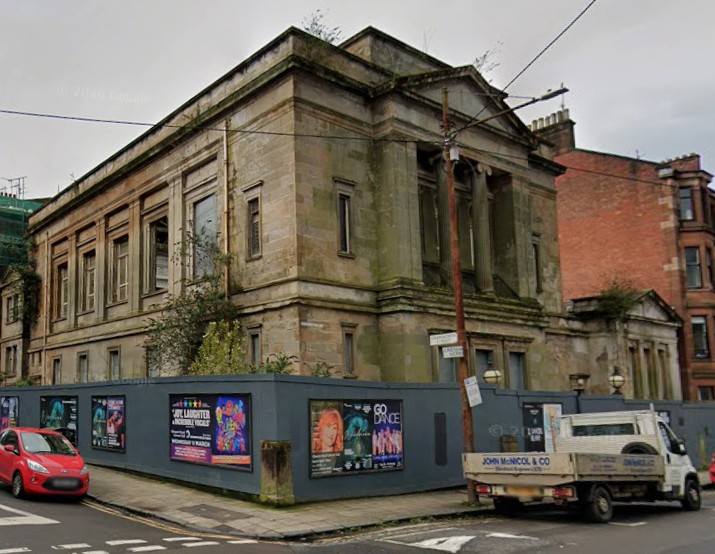
Wemyss Properties has secured permission from the city’s planning committee to knock down Hillhead Baptist Church and build 32 flats.
Objectors called for the façade of the Cranworth Street building to be saved at a hearing, but the developers said it was a “last chance saloon”, adding their plan is the “only economically viable option” for the site.
The decision to grant both planning permission and listed building consent for the project came down to the casting vote of Cllr Ken Andrew, SNP, the planning committee chair, after a 3-3 tie.
While he had “some concerns” over the design of the planned six-storey development, he said there is “every likelihood the building is just going to continue to deteriorate” if the application is refused.
“Potentially, it may have to be demolished anyway, just to protect the surrounding tenements,” he added.
Council planners had recommended that the scheme be approved, and there were 19 letters of support for the project, but 332 objections had been received.
Glasgow MSP Paul Sweeney, Labour, told the committee he was “not convinced” that “at least partial façade retention can’t be achieved”.
“There is developer interest in taking the building on with a view to retaining and saving the facade at least,” he added. “We could get a compromise here with a revised approach.
“This building has stood for 150 years in Glasgow – through world wars and all sorts of other economic strife – give it six months to see if we can get someone to come forward and take it on.
“We should be showing as a city that we value these heritage assets.”
The applicant’s agent, Tim Ferguson, of Ferguson Planning, said: “All of the investigations concluded the building is unfortunately not viable for redevelopment.”
He added façade retention is “not economically viable”.
Dr John Boyle, director of research at property firm Rettie & Co, added: “Viability is the biggest issue in development today. Since 2019, construction cost inflation has risen by over 40%.
“Average house values have only gone up by 26% and this gap is growing. This is what is leading to enhanced development risk.
“The developer in this case is willing to take on this risk for the demolition and the rebuild option, and, in our view, this is the only economically viable option for the site.”
Cllrs Imran Alam, Saqib Ahmed and Thomas Rannachan, all Labour, voted against the plan. Cllr Ahmed said: “We are going through the housing crisis in Glasgow, and I would like to see more houses built.
“But I wouldn’t like to see houses built at the expense of such a beautiful building. I would support the application if the facade is saved.”
Cllrs Mhairi Hunter and Paul Leinster, both SNP, supported the application alongside Cllr Andrew. “This is a hard one,” Cllr Hunter said.
“We all recognise the virtue of converting or retaining elements of heritage buildings for new housing. The question here is how viable that would be in this specific case.
“We have heard directly from the developers today that refusal of this application would not result in them submitting a fresh one. Given that the building no longer has a roof, it would just deteriorate further and more quickly.
“We have to make our decisions based on what is put in front of us. We can’t posit a third option where someone might come along who is willing to bear the cost of retaining the facade.”
The church was designed by Thomas Lennox Watson in the Greek revival style and built in 1883. The main church hall has not been in use since 2004, with the rest of the property vacant since 2017.
Earlier redevelopment plans were ended by the 2008 recession and a later scheme, which included façade retention, failed “due to the financial viability”, according to a council report.
Progress stalled due to the Covid-19 pandemic, and in 2022, the “emergency removal” of the “unstable” church roof was carried out.
Follow STV News on WhatsApp
Scan the QR code on your mobile device for all the latest news from around the country