 STV News
A new drug checking facility is to open in Glasgow next month amid an increase in Scotland’s drug-related deaths and an “increasingly toxic” supply.
Statistics from the National Records of Scotland published on Wednesday show drug deaths have soared by 11% in a year, with 1,133 deaths last year – 116 more than in 2024.
Scotland continues to have the highest drug death rate in Europe, coming in at 2.4 times that of England, 1.5 times that of Wales and 1.6 times that of Northern Ireland.
In light of the figures, Drugs minister Maree Todd announced that a new checking facility will be opening in Glasgow next month.
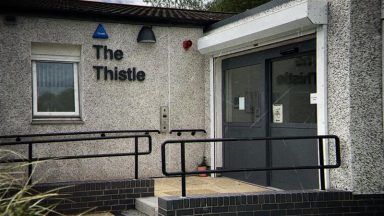
The service will operate from Hunter Street, where Scotland’s first drugs consumption room opened last year and will allow people to submit drugs for rapid checking and receive harm reduction advice.
It comes as more potent synthetic opioids, such as nitazenes, have been implicated in 247 drug deaths last year.
Public Health Scotland said last year different types had been detected, with some “hundreds of times” stronger than heroin.
The service will open in Glasgow on October 5, with similar services planned for Aberdeen and Dundee in the coming months. A fourth facility in Edinburgh is currently preparing its licence application to the Home Office.
Samples taken will be sent to the newly established national testing and research laboratory, hosted by the Leverhulme Research Centre for Forensic Science at the University of Dundee.
Todd said: “I am very pleased that this facility will open next month, and I thank our Glasgow partners for their hard work to deliver this pilot, which will be vital in helping us respond to emerging threats.
“Establishing new drug-checking facilities will help people make safer decisions and provide vital information on the risk of emerging substances.
“That is why we have consistently impressed upon the UK Government the importance of approving these facilities.
“We are working hard with partners to respond to an increasingly toxic supply.
“A key part of our action is early identification of emerging risks, and this new service is particularly important in light of the current dangers posed by new synthetic opioids like nitazenes, which raise the risk of overdose and death.
“We are committed to strengthening our RADAR early warning system and using data, evidence and innovation to ensure services can adapt quickly to new threats and protect people and communities.”
Follow STV News on WhatsApp
Scan the QR code on your mobile device for all the latest news from around the country