 Police Scotland
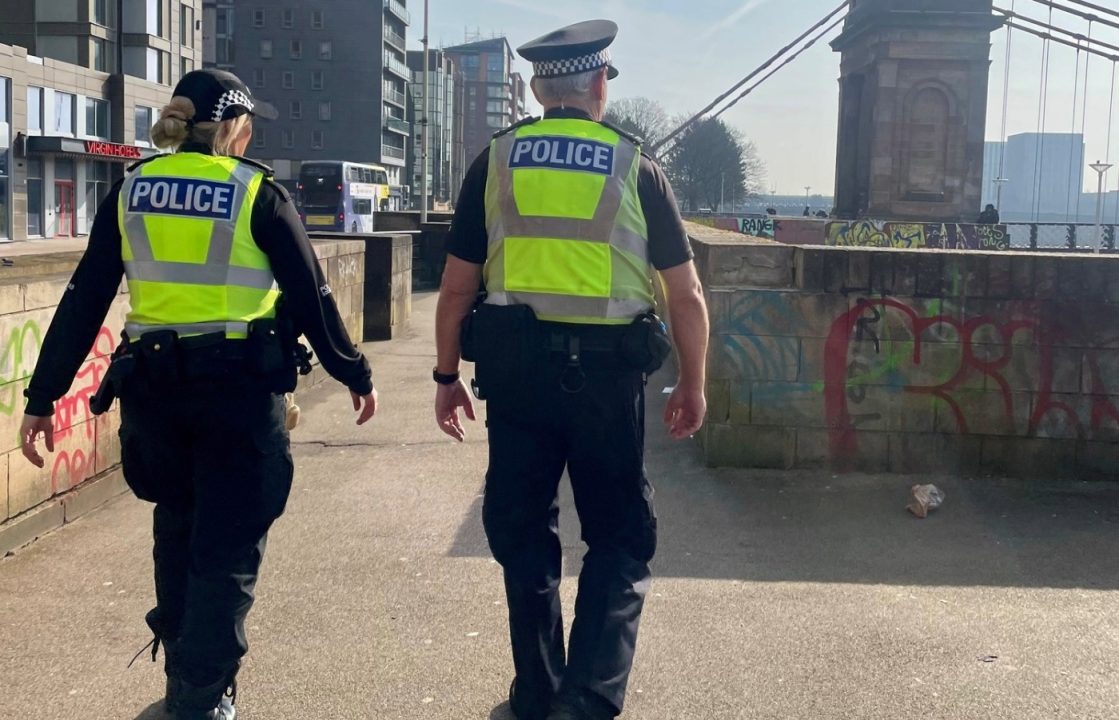
Dispersal zone powers introduced in Glasgow city centre are set to continue following a review.
The zone was approved to run from March 20 until June 20, with dispersal powers used 1,133 times and 19 arrests made during that time.
As part of the scheme, Glasgow Central Station, St Enoch Square and Union Street were identified by police as areas of particular concern for anti-social behaviour and crime that is having a “negative impact” on the city centre.
To capture the three problem areas, the zone was created, bounded by St Vincent Place, Glassford Street/Stockwell Street, the far side of the riverbank, and York Street/West Campbell Street.
The powers allow officers to direct groups of at least two people to leave the area if their behaviour is impacting the safety and well-being of others.
They are banned from returning to the zone for 24 hours.
Since the measures came into force in March, police have exercised dispersal powers 1,133 times, with 70 people reported to the procurator fiscal after returning to the area in breach of dispersal directions.
Of these, 19 people were arrested in connection with other offences, including assault, drug offences, breach of the peace, weapons offences, theft by shoplifting and two in connection with sexual assault.
Within the last month, officers used their dispersal powers 363 times, with 14 people reported to the procurator fiscal after returning to the area in breach of dispersal directions.
Police Scotland has said the timeframe of the dispersal zone will continue to be kept under review.
Superintendent Jackie Dunbar said: “Over the past three months, dispersal powers have provided officers with an important tool to help address anti-social behaviour and disorder and support the safety and well-being of those living, working, and visiting Glasgow city centre.
“Throughout this period, we have worked closely with local residents, businesses, and partners, and sought feedback on the dispersal zone and its impact, using that feedback to help shape our ongoing approach.
“The feedback we have received has been largely positive and, alongside operational data and our assessment of incidents in the area, has helped us inform our review of the dispersal zone and our next steps.
“While the dispersal zone was introduced as a temporary measure and was never intended to be a permanent solution, our review indicates that it continues to be an effective tool. As a result, the timeframe for the dispersal zone has been extended while we continue to work with partners to address the underlying causes of anti-social behaviour and disorder and develop longer-term solutions. Its use and impact will continue to be kept under review.
“Our focus remains on ensuring Glasgow city centre is a safe and welcoming place for everyone.”
Follow STV News on WhatsApp
Scan the QR code on your mobile device for all the latest news from around the country