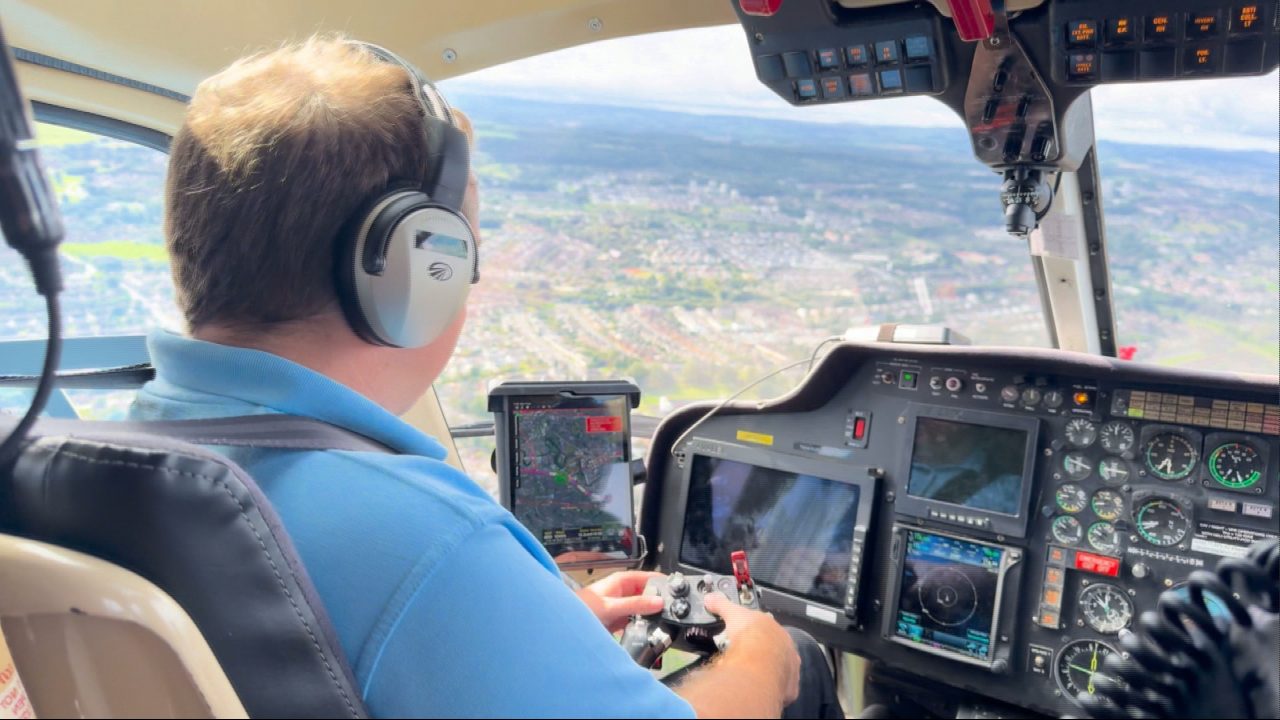
As Scotland heads into storm season, a helicopter is taking to the skies to spot problems before they disrupt journeys.
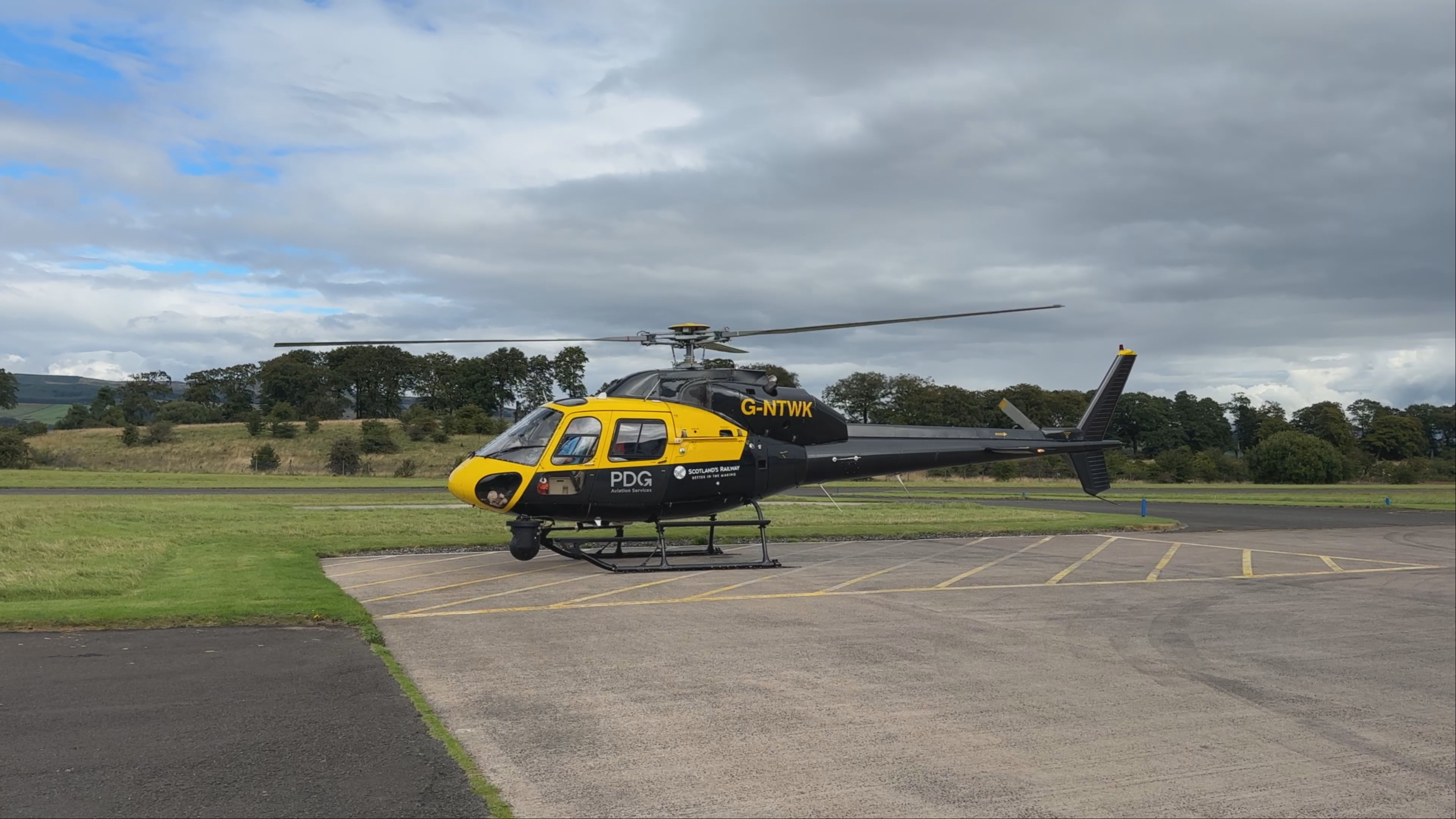
Network Rail’s aerial team has upgraded its technology, allowing staff to spot faults in greater detail and even at night.
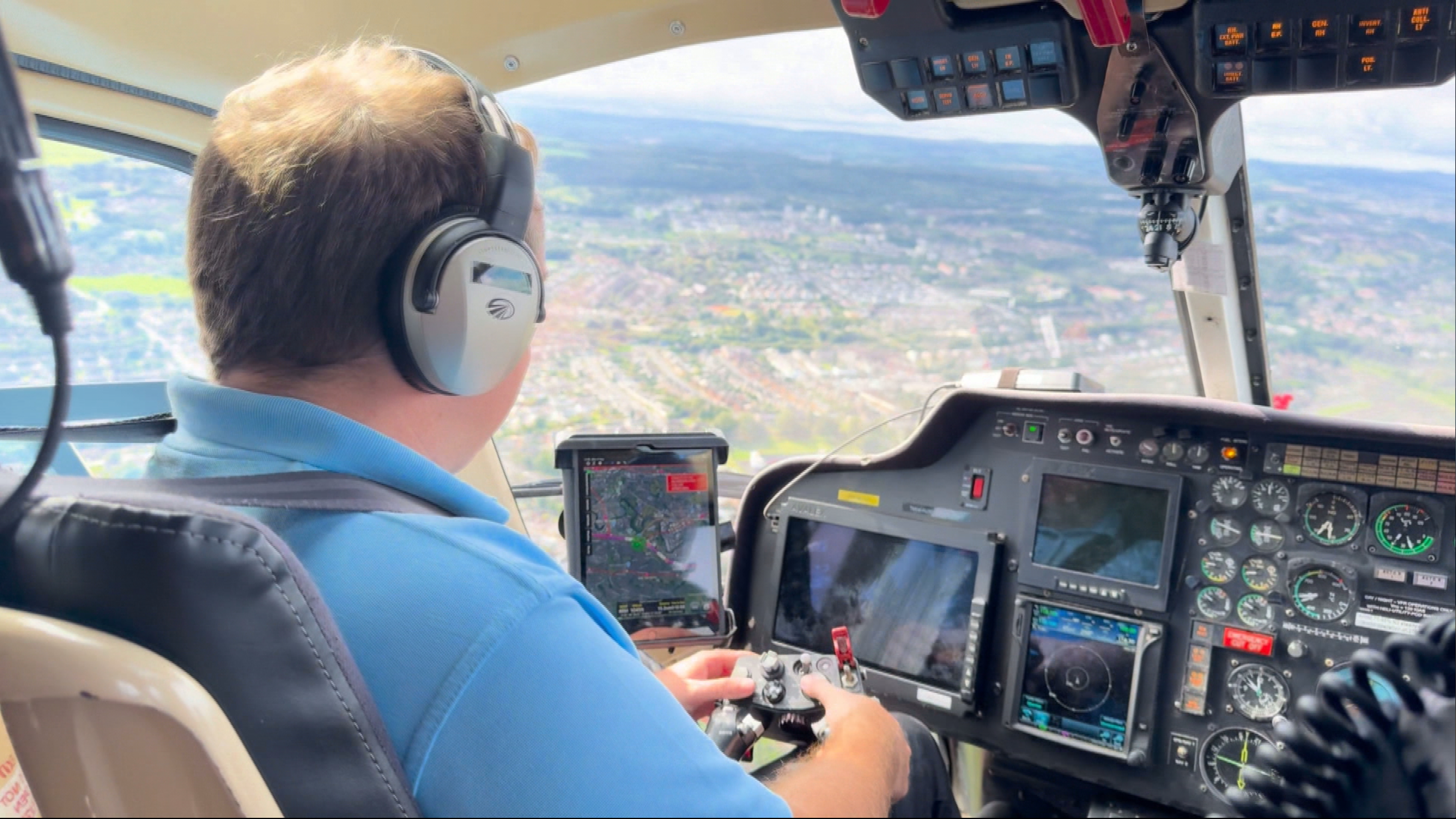
Equipped with specialist camera equipment and thermal imaging, the helicopter team monitors tracks, overhead lines and surrounding vegetation for potential hazards.
The improvements are expected to speed up responses to storm damage and help reduce disruption across the network.
“Electrical faults typically produce heat energy, thermal imaging can pinpoint potential damage so we can carry out repairs and prevent disruption,” operations manager Oliver Pinkard said.
 STV News
Staff based at Cumbernauld Airport are taking off – and STV News are joining them on the flight.
Helicopters play a role in storm monitoring, deploying teams quickly to the damage and areas affected so lines can reopen faster.
The aircraft uses heat detection to spot faults on the rail infrastructure, with Oliver highlighting one such issue on the tracks below.
“You can see the component of the overhead wires that is showing warm. You can see compared to the one on the left isn’t showing the heat – so that something we can report on.
“The quality of the camera is so good we can zoom far in from this height – this is great for us to report the location of faults.”
The impact of extreme weather can be significant. During storms, trees, wheelie bins and even trampolines can end up on railway lines.
 STV News
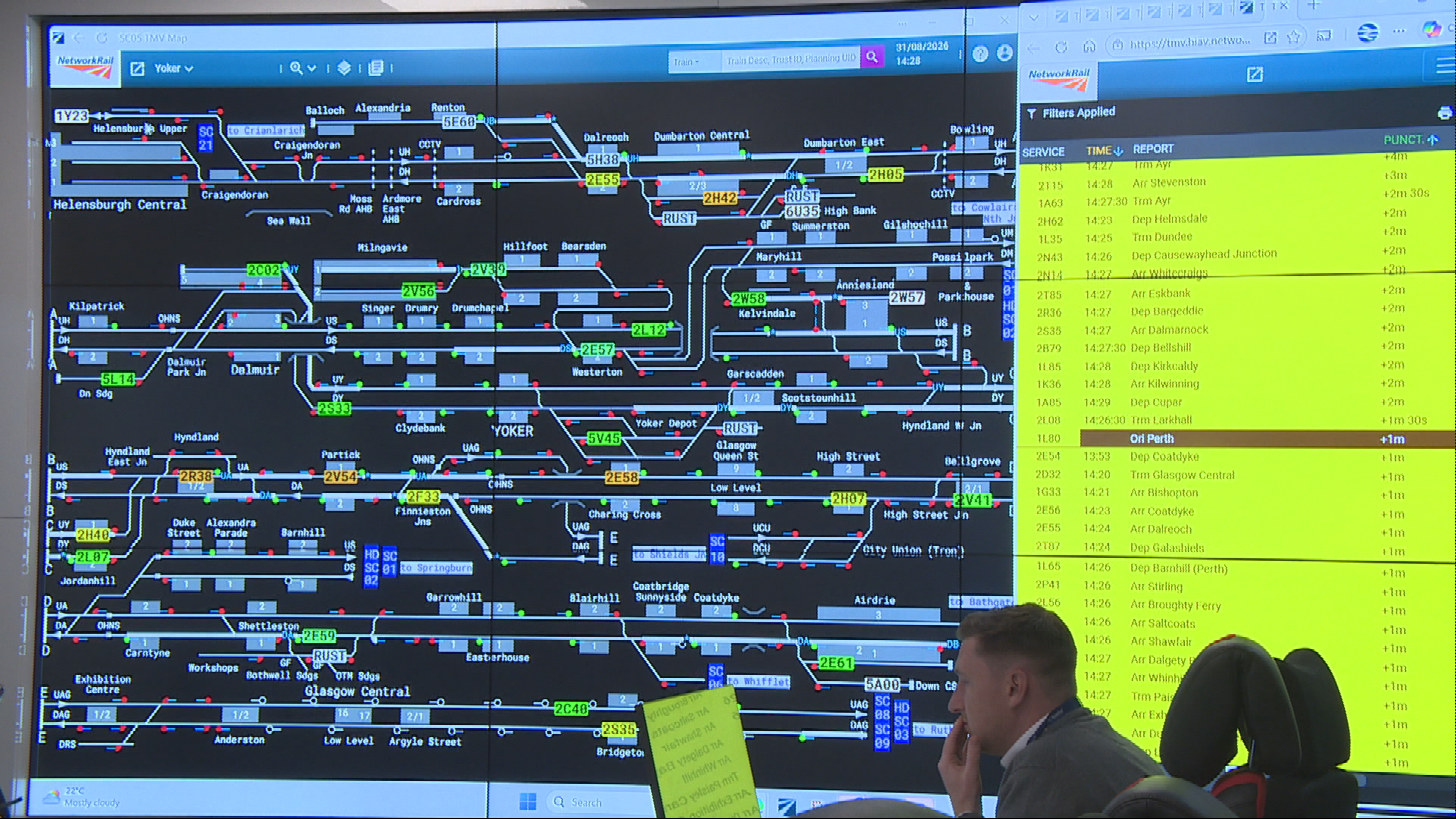
Reports are sent to the “nerve centre” of Scotland’s railway network in Springburn, where plans are co-ordinated to respond live to disruptions.
Head of control Maureen Gallagher said: “We are understanding what is impacting on the railway system, what services we can run and can’t run and whether we have resources to run all the trains we want to run and whether the infrastructure is available in reaction to those incidents.
“We try to make sure passengers are moving as much as possible.”
Staff monitor the weather at Network Rail 24 hours a day, seven days a week, 365 days a year.
 STV News
 STV News
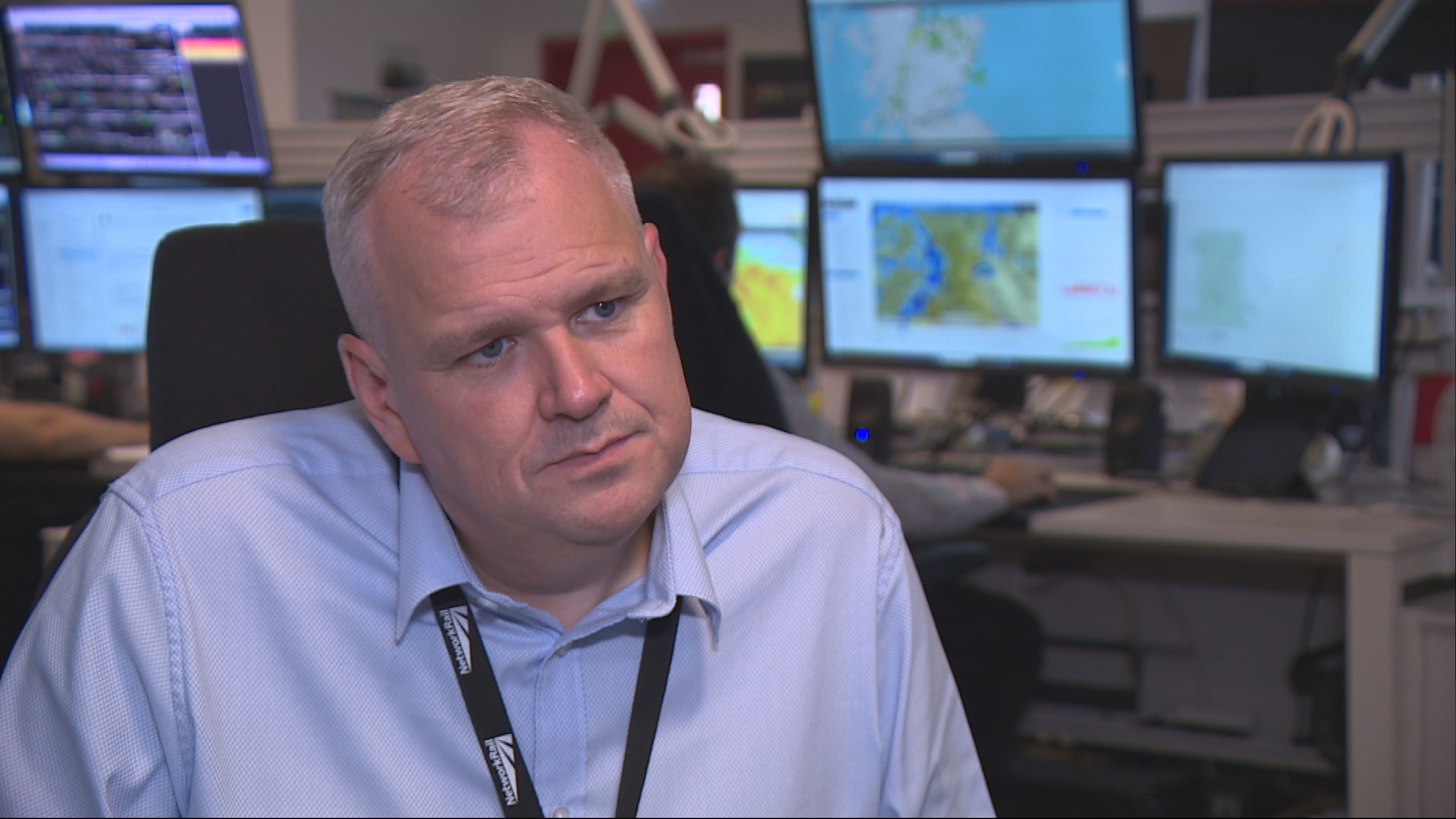
Craig Gorman, head of operational weather strategy, says September through to March is their busiest season.
“Climate change has now made storms the norm, so we have to be prepared,” he said. “These are no longer once-in-a-generation events. Some are now happening every five or ten years.
“This summer, we’ve also seen more incidents of critical rail temperatures, meaning we have to slow trains down because the rail has reached a specific temperature.
“We’ve had to reduce speeds more this summer than in any summer before.
“We adapt our plans live as conditions change and make sure we’re as agile as possible.”
Follow STV News on WhatsApp
Scan the QR code on your mobile device for all the latest news from around the country