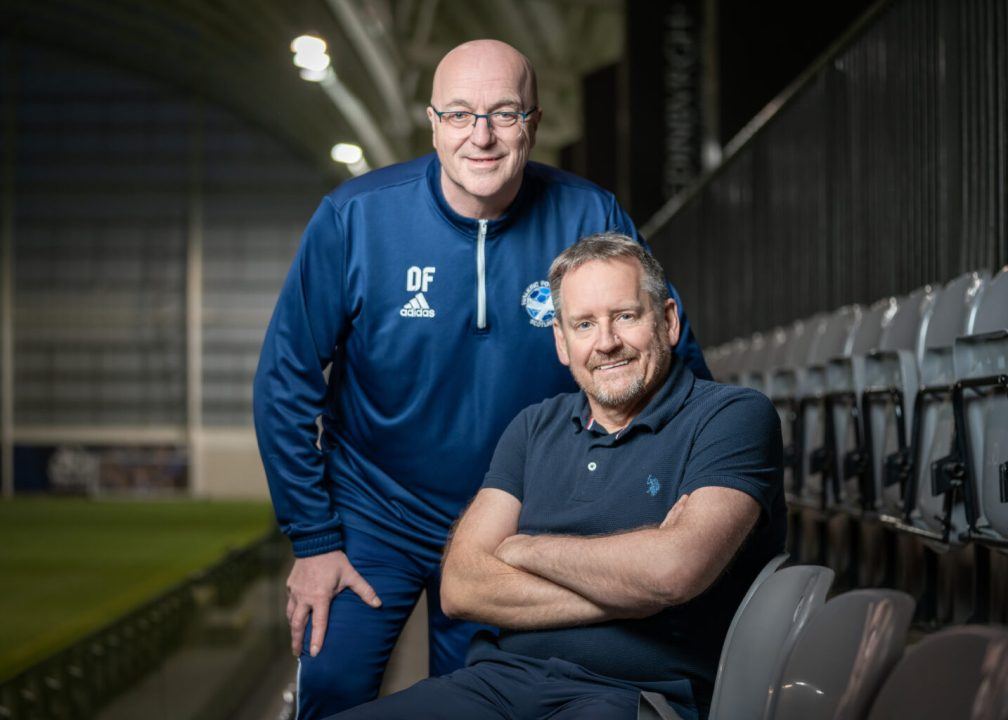
 Chest Heart & Stroke Scotland via Supplied
A man has recalled the moment “everything went black” after collapsing due to a cardiac arrest during a walking football match in Glasgow.
John McGee, 62, suffered a sudden cardiac arrest while playing at Toryglen in December 2024.
Fellow player David Fairgrieve immediately sprang into action, administering CPR, which helped keep him alive until emergency services arrived.
John, from Dundee, collapsed without warning during the game. While he has little memory of the incident, David recalls the moment vividly.
“During the game, I’d spoken to John, but he doesn’t remember,” he said. “When I turned back, he was lying on the pitch.
“I didn’t have to think about what I was going to do. I knew John needed an ambulance, but I also knew he was in trouble if we didn’t start resuscitating him. He was changing colour and going grey, so we put him in the recovery position.”
David, from Midlothian, quickly realised John was not breathing and began CPR. Drawing on previous experience, the 61-year-old remained focused until a defibrillator was brought to the scene.
“I tried not to think about anything else but what I was doing. This wasn’t the first time I’d had to do CPR, but it’s not something I’d like to get used to,” he said.
“You do your best because your best is better than what they’ve got at the time.”
John was revived after the second shock from the defibrillator, before paramedics arrived and took him to hospital.
Recalling the moment he collapsed, he said: “Everything went black and I was dizzy for a split second. The next thing I recall was waking up and there were people on top of me, trying to revive me. Then the medics were there, and they took over.
“I had no chest pains and I wasn’t out of breath. It came totally out of the blue because I’ve always been fit and well. It was a huge shock.
“By the time I was in hospital, I was sitting up, having a coffee and eating a sandwich as normal. It was surreal as if nothing had happened.”
David also spoke about the emotional impact of performing CPR, especially as one of their teammates had previously suffered a cardiac arrest himself and found the incident distressing.
“That’s where the support service from Chest Heart & Stroke Scotland can be so helpful,” he said.
“I’m lucky I could go home and talk to my family. You do worry you might have done more harm than good, so seeing someone recover makes a real difference.”
The incident highlights the life-saving importance of CPR training and the availability of defibrillators at community sports venues.
Allan White, advice and support practitioner at Chest Heart & Stroke Scotland, said: “Just talking through it with people makes a big difference.
“It can validate what they did, and we can reassure them that what they did was the right thing and that’s really important. A lot of the calls have been based around that to start with.
“Most people just haven’t experienced anything like that. Even if you were standing watching – the sounds, the noises, the smells it affects all your senses. It can be terrifying to watch.
“People think it’s a bit like the television, it’s all quite clean and safe, but in reality, it’s not. It’s visceral, it’s brutal.”
Follow STV News on WhatsApp
Scan the QR code on your mobile device for all the latest news from around the country