 iStock
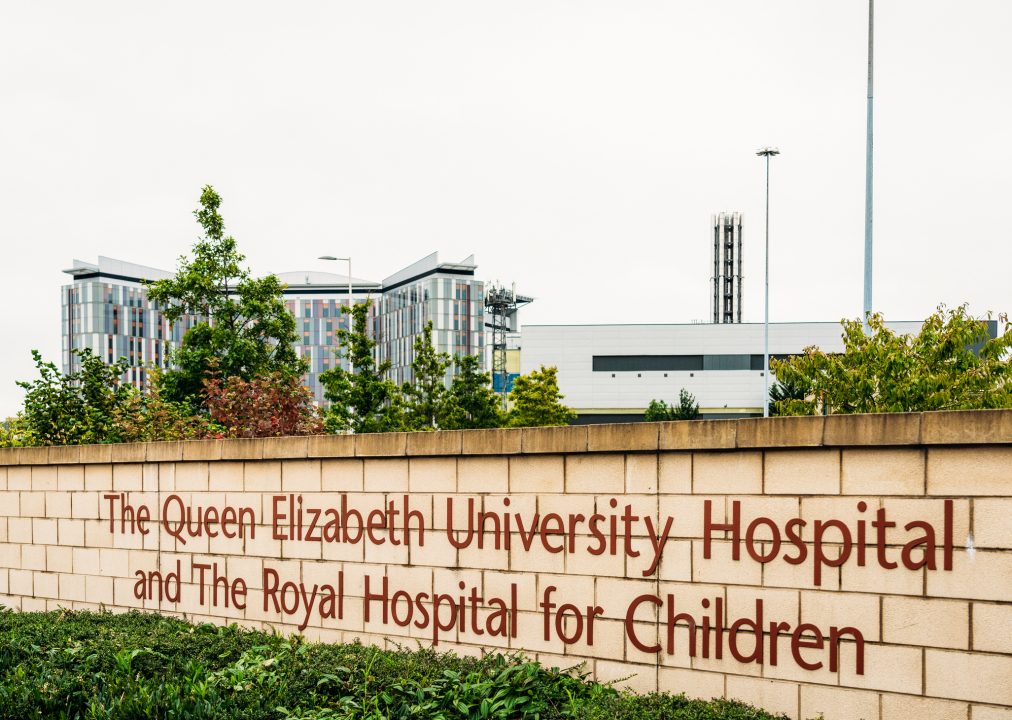
NHS Greater Glasgow and Clyde has accepted there was likely a “causal connection” between patient infections and the water system at Scotland’s flagship Queen Elizabeth University Hospital.
The admission has been made in closing submissions to the Scottish Hospitals Inquiry, which is examining the design and construction of the Queen Elizabeth University Hospital (QEUH) and the Royal Hospital for Children on the same Glasgow campus.
The inquiry was launched following a series of infection-related deaths, including that of ten-year-old Milly Main, who died in 2017 while being treated for leukaemia at the Royal Hospital for Children.
Milly was diagnosed with leukaemia aged five, but was in remission when she picked up an infection at the Queen Elizabeth University Hospital and died in August 17.
In its submissions, NHS Greater Glasgow and Clyde said it now accepts that “on the balance of probabilities” some infections suffered by patients were linked to the hospital environment, “in particular the water system”.
The health board said it was “more likely than not” that a material proportion of additional bloodstream infections among paediatric haemato-oncology patients between 2016 and 2018 were connected to the state of the hospital’s water supply.
It said infection rates fell after remedial work was carried out in 2018, including changes to the water system, and acknowledged it had revised its position after hearing expert evidence.
A spokesperson for NHS Greater Glasgow and Clyde said: “We remain fully committed to supporting the inquiry in its investigations.”
Milly’s death has been at the centre of the inquiry.
Her family have previously said they were not told about concerns over the hospital’s water supply and have claimed NHS Greater Glasgow and Clyde knew there were infection risks.
The health board has apologised to Milly’s parents, Kimberly Darroch and Neil Main, for the distress they experienced, and the family has written to the Lord Advocate seeking a Fatal Accident Inquiry.
Patrick McGuire a senior partner at Thompsons Solicitors Scotland represents many of the families affected.
He said: “Finally, after years of the most callous evasion and dishonesty, Greater Glasgow and Clyde Health Board have admitted to the failings that led to the deaths and serious illness of my client’s loved ones.
“The families have now been vindicated but only after years of being denigrated and dismissed by the health board. It is now of the highest priority that those who have been behind this disgraceful conduct are held to account. They must not be shuffled off the stage with golden handshakes.
“The Inquiry must now be extended to make absolutely sure the hospital is actually safe for the public and that nothing like this can ever happen again. “
A Scottish Government spokesperson said: “We established a statutory public inquiry so that families could get answers to their questions, and so that lessons can be learned for future hospital projects.
“As an independent core participant of the inquiry, the Scottish Government is committed to assisting the inquiry and it would be inappropriate to comment further at this time.”
Final oral hearings in the Scottish Hospitals Inquiry are due to begin next week, starting on January 20.
Scottish Conservative shadow health secretary Dr Sandesh Gulhane MSP said: “QEUH has been at the centre of several infection-related scandals from its very beginning.
“There is now a substantial body of evidence that points to a cover-up at the very top, which has only been exposed by this inquiry.
“Families like those of Milly Main, Molly Cuddihy and many others have waited years to get straight answers from those responsible.
“Those are now being extracted rather than freely given.
“That long and expensive process only became necessary because of a culture of secrecy, learned from the SNP.
“Since 2017, a succession of Scottish Government health ministers refused to intervene.
“They have all managed to escape any real repercussions for their lack of interest in a life-threatening situation, meanwhile a similarly long list of senior executives have parted ways with the board, no doubt on great pay deals.
“Members of the public will want to know why the SNP always seem to help senior management escape scrutiny.”
Scottish Labour leader Anas Sarwar vowed to establish Milly’s Law which he said “would create an independent public advocate with the authority to investigate incidents and establish the truth”.
Mr Sarwar said: “For years, families have been forced to fight for the truth about what happened to their children at the Queen Elizabeth University Hospital. Whistleblowers were gaslit, lied to and punished for telling the truth.
“They have been ignored, dismissed, patronised, and made to feel like they were ‘making a fuss’; attacked and victimised by NHS managers paid for by taxpayer money, they have lost jobs, and seen their personal lives targeted by institutions more interested in covering up their failures than the truth.
“Every step of the way they have been supported by SNP ministers, who never stopped lying to hide the truth of their failure.
“The SNP and the board did not put patient safety and families first.
“Instead, they – led by John Swinney – closed ranks.
“The QEUH scandal is one of the worst failures in modern Scottish public life.
“Since the hospital opened, there has been a litany of serious problems: concerns about water safety, environmental risks, governance failures, and infections that devastated families.
“NHS Greater Glasgow and Clyde has been named as a suspect in a corporate homicide investigation relating to the deaths of patients including 10-year-old Milly Main.
“In my opinion, so should the SNP ministers responsible for the cover up, because this is a serious criminal matter.
“This latest admission by NHSGGC should be a turning point.
“It should be the beginning of the end for the SNP’s secret Scotland.
“Families deserve answers. They deserve accountability. And they deserve justice.
“The question now is simple.
“Will John Swinney finally take responsibility for the criminal failures of his government, of NHSGCC and the conspiracy to lie to parents, patients, and Scotland.
“The families have waited long enough. Now it’s time for Scotland to do the right thing.”
Follow STV News on WhatsApp
Scan the QR code on your mobile device for all the latest news from around the country