 University of Edinburgh via Supplied
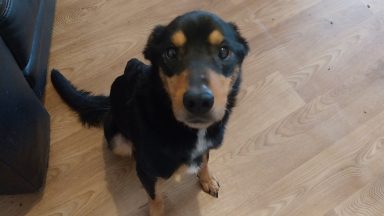
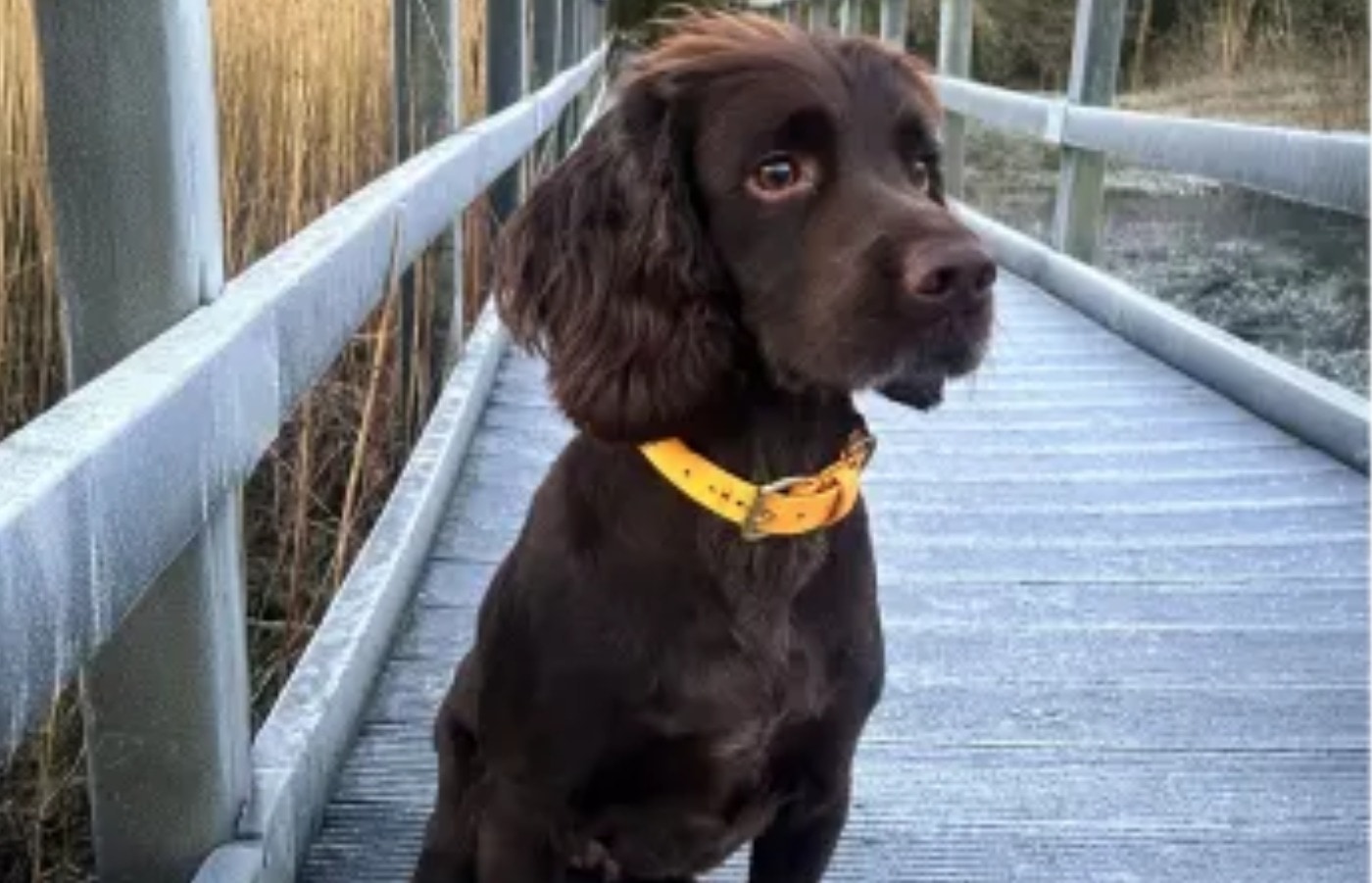
The owner of a young springer spaniel has said she will be “eternally grateful” to the vets who saved her dog after he swallowed a fish hook.
Chip grabbed discarded fishing bait containing a three-pronged fishing hook while out walking by a loch in Dumfriesshire, before his owner, Sheila, could react.
Almost immediately, the three-year-old began coughing and had blood in his mouth.
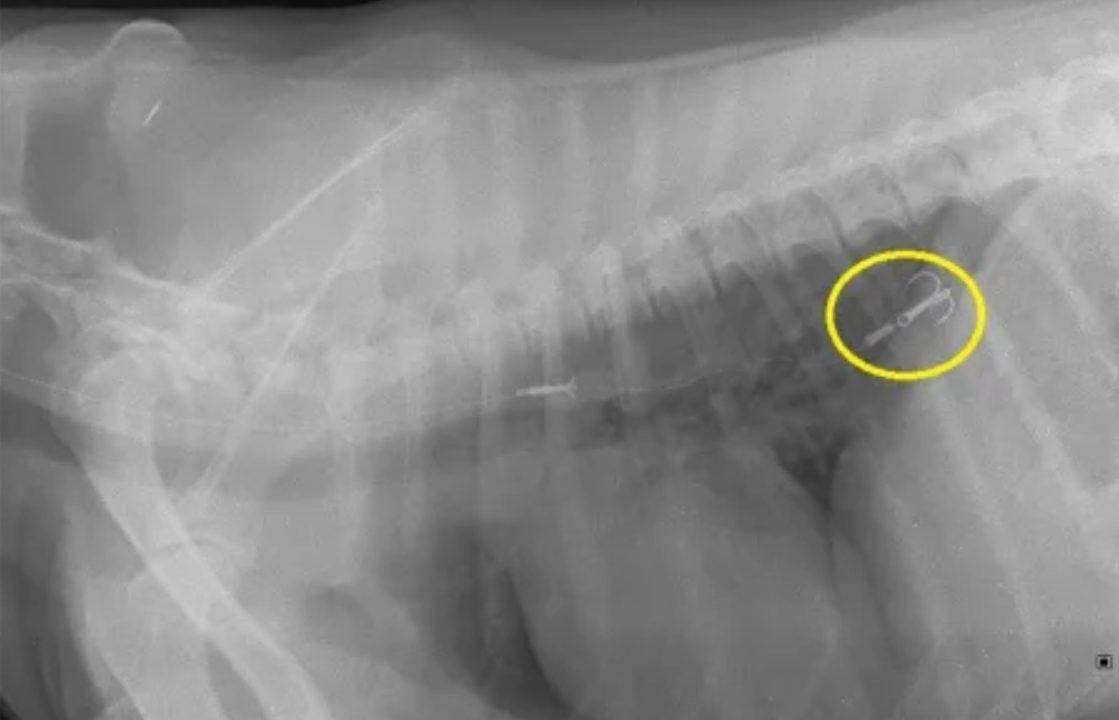
At the local vet, X-rays revealed the hook lodged in his oesophagus, and the dog was urgently referred to the Royal (Dick) Hospital for Small Animals, where it was found that the barb had travelled into Chip’s stomach.
 University of Edinburgh via Supplied
But the veterinary team were able to remove it using a protective cup attached to an endoscope, avoiding abdominal surgery. Chip was discharged the following day.
Sheila praised the veterinary team who saved her pooch.
“I am delighted that Chip was seen by the excellent team at the Dick Vet”, she said.
“The knowledgeable team put us at ease and explained all the different options available, before working their magic to enable Chip to quickly bounce back to full fitness. For that, I will be eternally grateful.”
Veterinary experts say fish hook injuries in dogs can be “potentially life-threatening” if not treated quickly and correctly.
Within the same week as Chip’s treatment, the internal medicine team treated two other dogs that had swallowed fish hooks.
In one case, two hooks were involved, one embedded in the dog’s lip and another swallowed.
Dr Marisa Ferreira said many dogs do recover fully, but has called on dog owners to remain aware of the dangers.
“Although dogs who have swallowed fish hooks often go on to make a full recovery, success depends on rapid recognition, appropriate first response, and timely definitive management,” she said.
“With greater awareness among dog owners, veterinary teams and the fishing community, many fish hook injuries are preventable.”
Dr Ben Lloyd-Bradley, from the Hospital for Small Animals, warned that fish hooks rarely pass safely through a dog’s digestive system.
He said: “Chip’s case required out-of-hours emergency care and management by a multidisciplinary team at the Hospital including staff from Emergency and Critical Care, Anaesthesia and Analgesia, Internal Medicine, Soft Tissue Surgery, and Diagnostic Imaging.
“We are delighted that, due to the expertise of multiple teams, the fish hook could be retrieved by endoscopy which saved Chip from requiring abdominal surgery.”
Follow STV News on WhatsApp
Scan the QR code on your mobile device for all the latest news from around the country