 STV News
A portion of Scotland’s busiest motorway could be demolished and replaced with a ground-level transport corridor after five years of roadworks and spiralling costs.
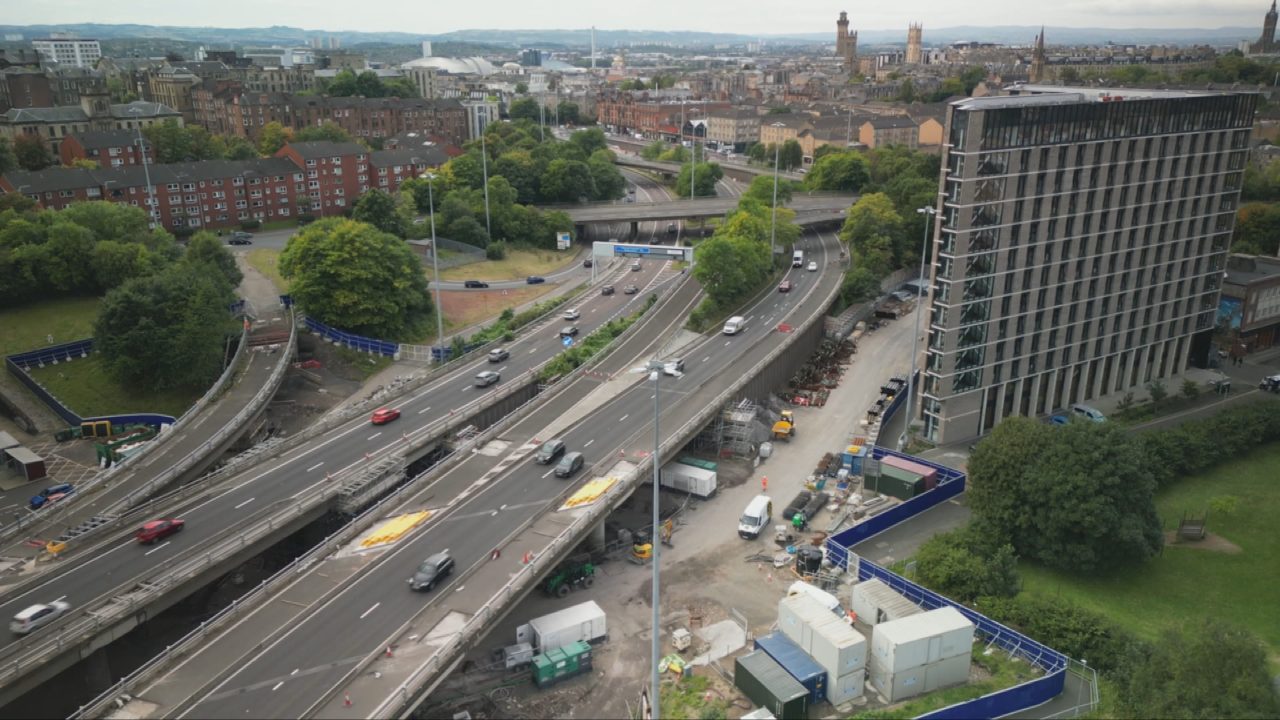
The M8’s Woodside Viaduct carries around 150,000 vehicles a day, but has been under emergency repairs since March 2021.
It’s been described as the biggest job on Transport Scotland’s books after inspections revealed the bridge supports were in significantly worse condition than expected.
Over £150m has been spent on temporary propping over the last five years alone.
‘A huge opportunity’
New figures have revealed a stark choice for the future of the M8.
Replacing the viaduct could cost up to £500m of public money, while removal is estimated at less than £125m.
In a letter to Transport Scotland, a Glasgow City Council spokesperson said removing the viaducts could be “consistent with the council’s position”.
However, officials warn that while removal is the most cost-effective option, it would have a “major impact” on journey times and would see traffic rerouted onto other roads including the M74.
City transport convenor Angus Millar says the council supports tearing the viaduct down and replacing it with a new road and transport corridor at ground level.
“It offers a huge opportunity for regeneration, reducing the impact of the motorway on city centre communities while also saving public money,” he told STV News.
 STV News
He says removing the elevated motorway would help “reconnect the city and surrounding areas” after the “devastation” caused by its construction during the 1960s.
“Glasgow City Council has long recognised the impact of that stretch on communities in the city centre and surrounding areas when it was built in the 60s and 70s. The M8 tore through those areas, causing a large degree of severance.
“[A ground level transport corridor] could help restitch the city, open up land and possibilities for new housing, regeneration and green space.
“Whether we replicate those solutions or take the opportunity to do something different and correct the mistakes of the past, we’re asking the question now: what should that corridor look like for the coming 40, 50, 60 years?
“If we don’t take the opportunity to explore feasibility now, that opportunity could be lost for decades to come.”
What do the current works involve?
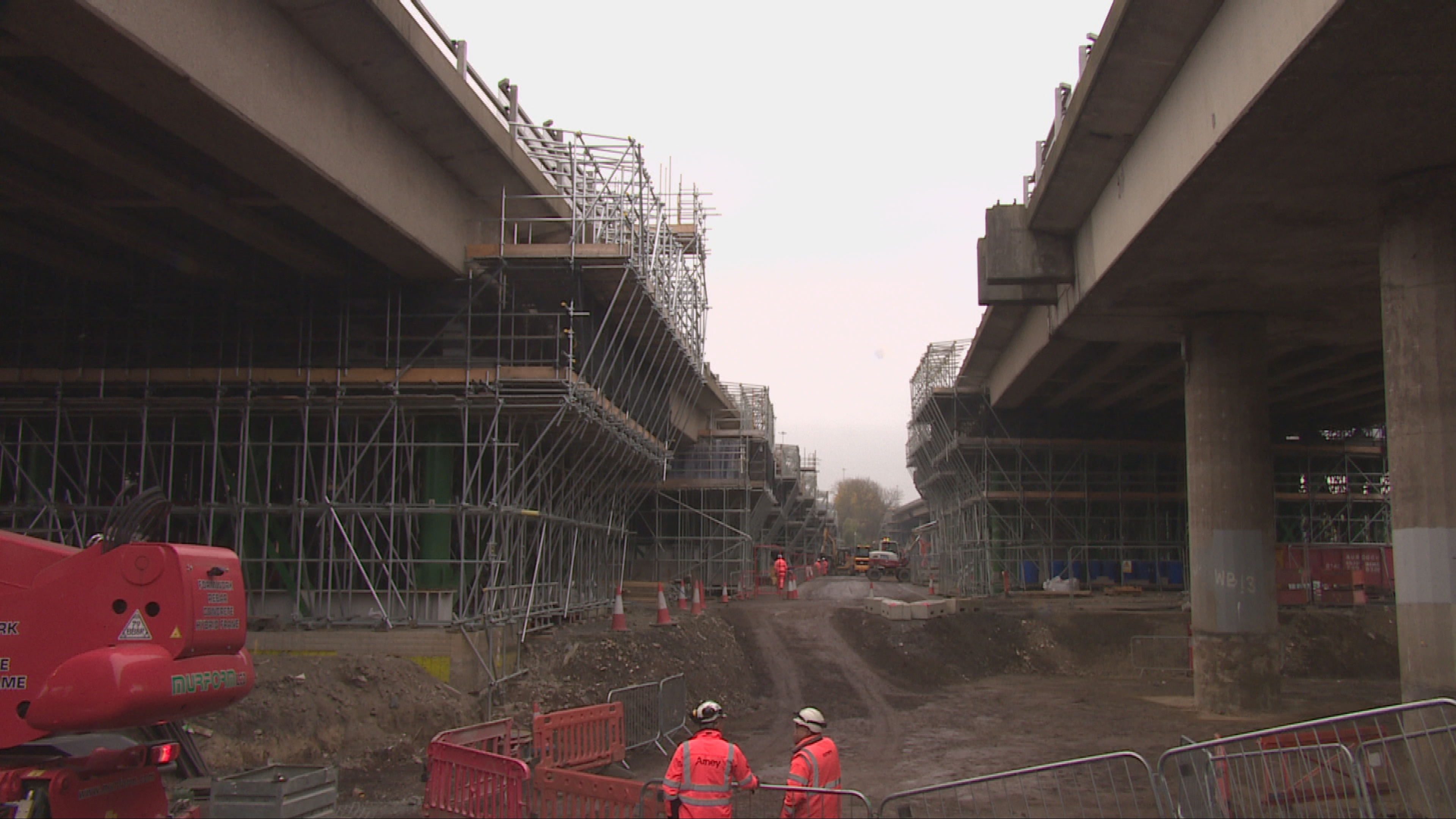
Inspections in 2020 found the motorway bridges’ supports were in worse condition than expected, requiring significant emergency strengthening work to the viaducts, including the triangular crossheads and associated propping steelwork.
Transport Scotland says progress has been slower than anticipated, with only limited new propping installed since late 2024 due to the complexity of the site.
The viaduct also sits directly above Glasgow’s Subway tunnels, meaning engineers must avoid adding weight to the underground network, a constraint described as creating an “unusual level of complexity”.
Further delays have been caused by unexpected infrastructure, including a major sewer found to be in a different location than planned.
 Transport Scotland
While the eastbound carriageway is due to be completed this autumn, work on the westbound side is not expected to finish until the second half of 2027.
Transport Scotland said it is keen to hear the views of local communities and road users on a permanent solution.
Opposition politicians have criticised the proposals.
Scottish Conservative finance spokesman Craig Hoy said: “After years of brutal roadworks, this decision would be a hammer blow to Glaswegians and hard-pressed motorists.
“The SNP pledged to complete this upgrade by 2023, but in true Nationalist fashion costs have spiralled and now this ageing stretch of road may be permanently closed.
“Commuters are sick of hellish traffic jams and delays.
“SNP ministers must get their act together and ensure that motorists have a road they can actually use.”
Follow STV News on WhatsApp
Scan the QR code on your mobile device for all the latest news from around the country