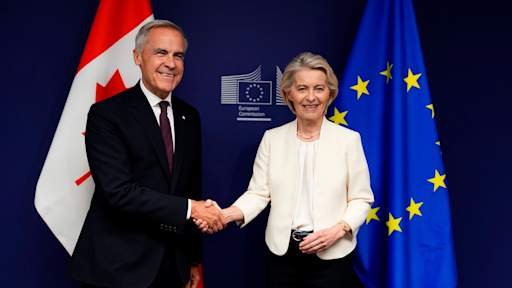
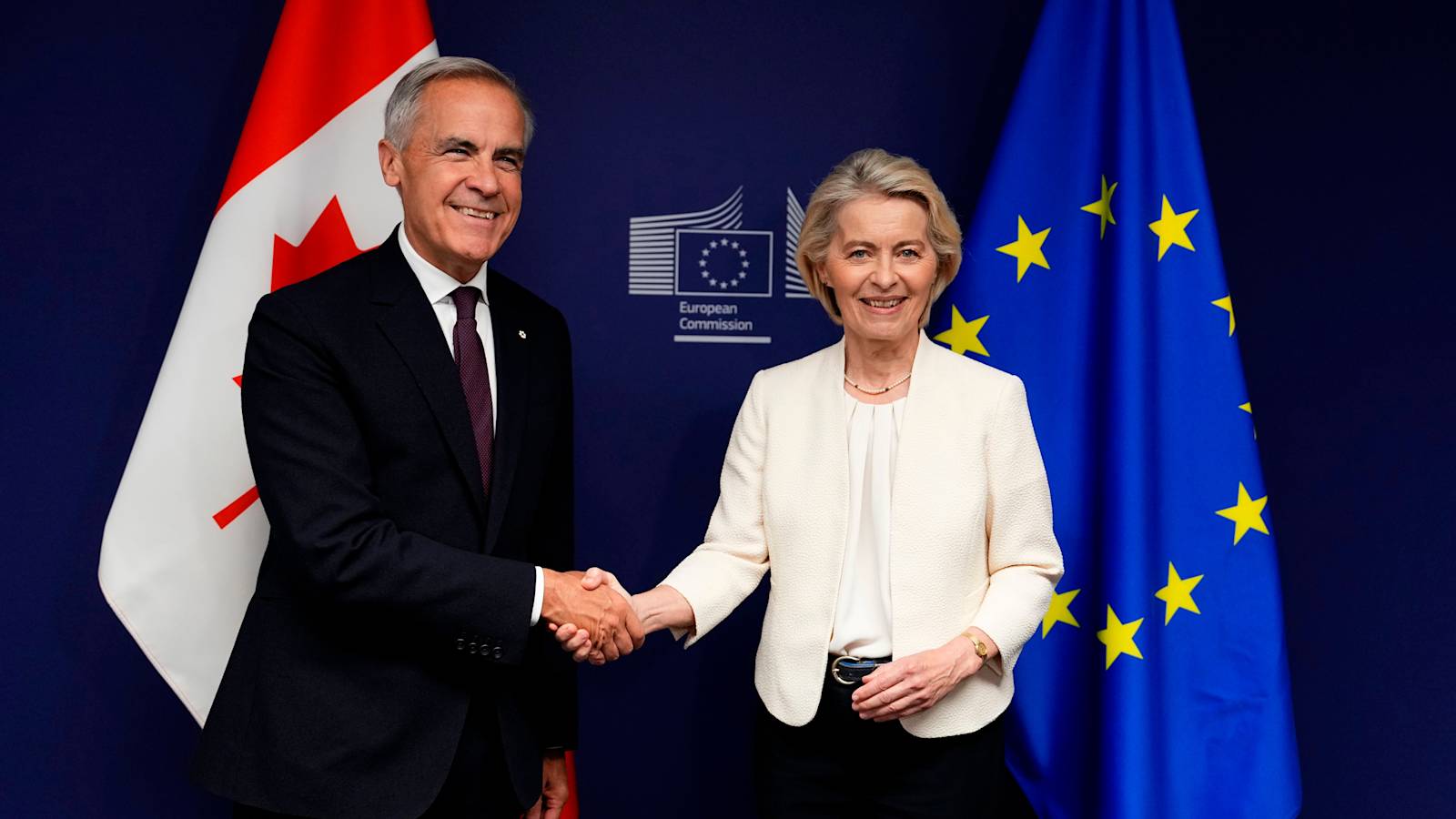
European Commission President Ursula von der Leyen on Wednesday proposed making Canada the European Union’s first associate member.
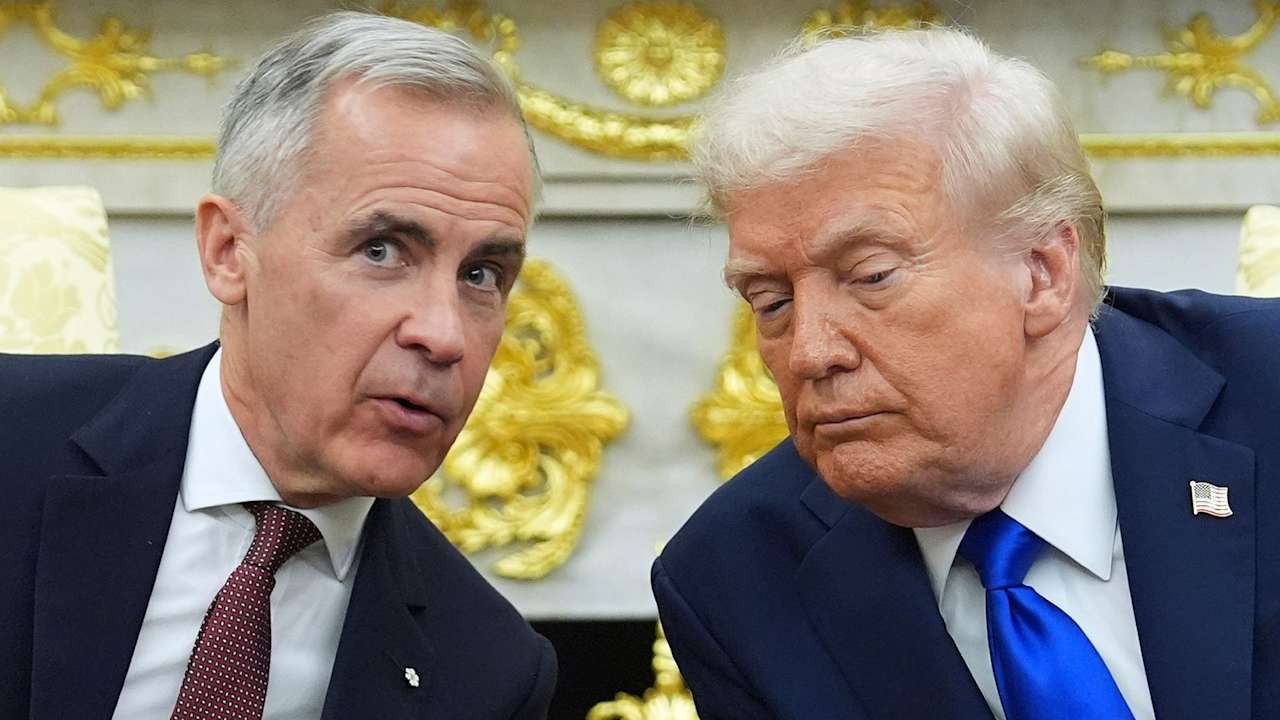
It was a move aimed at bolstering ties between the two powers as president Donald Trump upends relationships with allies and makes the United States harder and harder to depend on.
Canada is seeking to reduce its dependence on the US, the destination for roughly 70% of its exports, and the nation’s prime minister Mark Carney has called for a “unique alliance” with the EU.
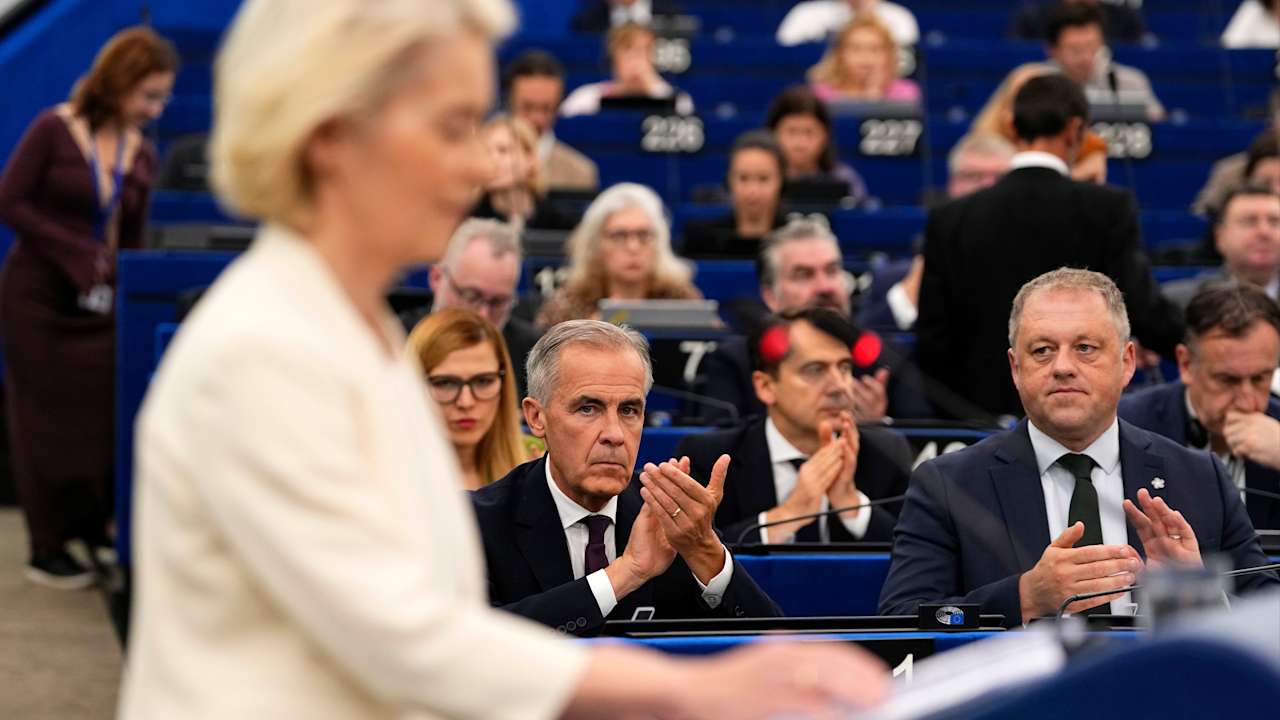
“Collectively, Canada and Europe are each strong. Europe and Canada are stronger together,” Carney said on Thursday in an address to European parliamentarians.
In her annual State of the European Union address, von der Leyen said Canada and the EU would build on their existing free trade agreement, known as CETA, with a broader “Alliance for the Future” aimed at creating “a common prosperity and economic security space”.
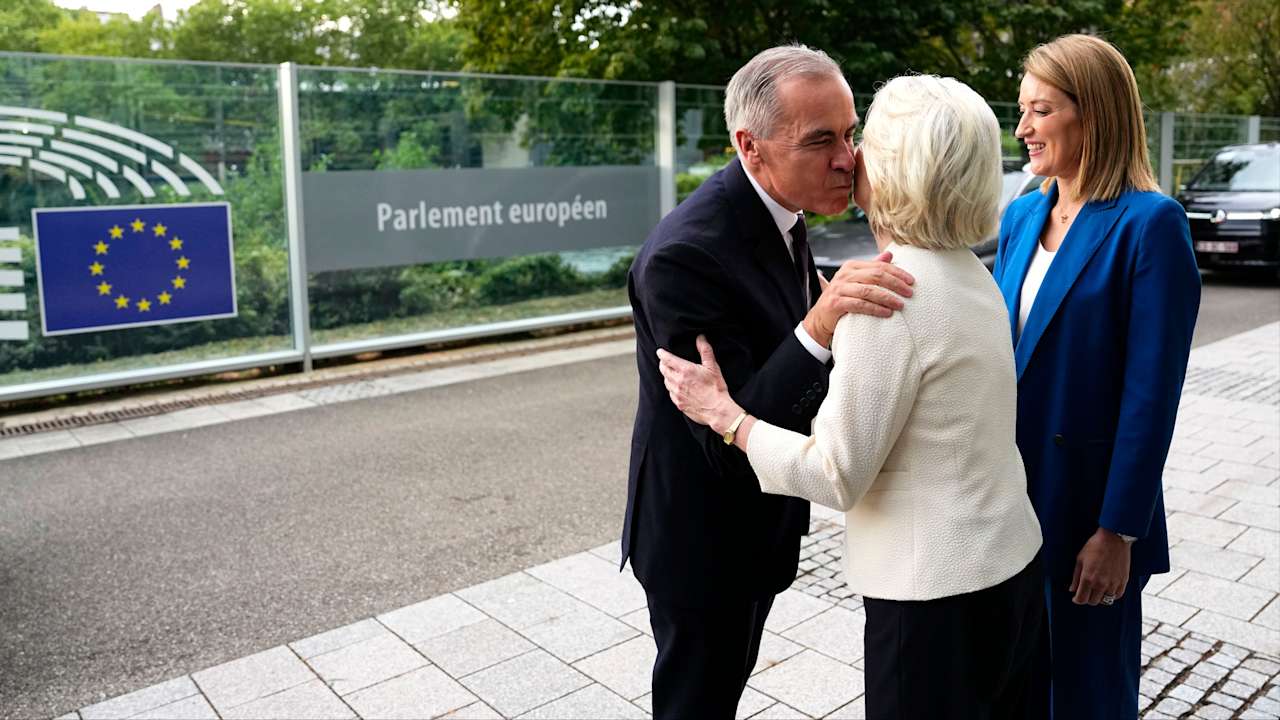
She cast that closer relationship as rooted not just in trade but in shared democratic values.
“Above all, dear Mark, Europe and Canada believe in democracy,” von der Leyen said to Carney, who received a standing ovation at the European Parliament in Strasbourg.
Is this what Canada wanted?
A Canadian official familiar with the discussions told last week that Ottawa was exploring ties with the EU that could stop just short of membership.
The official said Canada would seek an arrangement allowing its citizens to live and work in Europe without visas as part of a broader strategic partnership.
Jonathan Wilkinson, Canada’s ambassador-designate to the EU, said Wednesday that Ottawa had discussed associate membership with European officials before von der Leyen’s speech and “knew that that was something that was on the table”.
He said Canada had talked to the EU about an “Alliance for the Future,” while European officials had raised associate membership.
Wilkinson said Canada is not seeking full EU membership because it would require surrendering some sovereignty.
Instead, Ottawa wants “to get as close as we possibly can” to the bloc in a way that strengthens Canadian sovereignty rather than diminishes it, he said.
Carney’s office welcomed von der Leyen’s proposal, saying Canada was deepening ties with the EU “to strengthen our sovereignty” and supported a move beyond CETA.
Canada this year became the first non-European country to join the EU’s 150-billion-euro SAFE defence program, giving Canadian companies access to joint procurement as Europe seeks to increase its defence readiness.
What is associate membership?
The term associate EU member has never been used before, with von der Leyen making the first offer of such an arrangement on Wednesday.
Von der Leyen said the expanded partnership would cover advanced manufacturing, technology, defence production, the Arctic, energy, critical minerals, batteries, artificial intelligence, quantum computing, cybersecurity and economic security.
“This is a partnership not against anyone else, but for our common strength,” she said. “In short, we want to bring the relationship with Canada to the highest level possible.”
Because Canada joining the EU as an associate member would be a first, there is no rulebook on how that would work or what it would mean in practice.
It is unclear who would need to approve membership, and how long that could take.
Wilkinson said Ottawa and Brussels are deliberately focusing first on the substance of the relationship rather than what to call it.
“Before you actually get to the point where you decide what you’re going to call something, you should actually know the shape,” he said.

He said the shape is likely to become clearer at the Canada-EU summit in October, when the two sides expect to make an announcement and may settle on how to describe it.
Currently, all steps toward EU membership must be approved unanimously by the 27 member countries.
Could the UK become an associate member?
The idea of associate membership has been floated in the past for Ukraine, or for post-Brexit Britain, but no concrete steps have been taken.
Andy Burnham has said he wants to bring the UK closer to the EU after Brexit, following in the footsteps of his predecessor, Keir Starmer.
But with so little of what exactly it means defined, it is hard to say whether the UK will get a similar offer.
A diplomat speaking to POLITICO said it was unlikely the UK would get an offer, claiming associate membership would only be offered to nations outside of Europe.
The anonymous senior official said: “Unlike Ukraine, Moldova, Georgia, Norway and the UK, Canada is not in Europe.
“It cannot join the EU. Norway shouldn’t be looking at this and thinking, ‘oh we want more.’ This isn’t for them. Their route to that is to join the EU. Same for the UK.”
The UK is due to hold a summit with the EU by the end of the year to finalise details of the relations reset begun by Starmer.
No firm date has been set for the summit, and numerous disputes have emerged trade rights from fish to steel.
Follow STV News on WhatsApp
Scan the QR code on your mobile device for all the latest news from around the country