More than 2,000 people have died from Ebola in the Democratic Republic of Congo, in what is now the fastest-growing outbreak of the disease on record.
This comes as rebel conflict, bad roads, and work stoppages over payment issues are hampering relief efforts in remote parts of the country.
Government data showed the outbreak has recorded 4,381 confirmed cases, including 2,011 deaths.
The death toll has risen almost three times faster than during the 2014-16 Ebola outbreak in West Africa, the deadliest on record.
The current outbreak was declared on May 15, but health authorities say testing of the virus’ genetic material shows it began months earlier, in February.
It took about nine weeks for the death toll to reach 1,000, but just three weeks for it to double to more than 2,000.
Experts warn the outbreak is spreading faster than efforts to track and contain it.
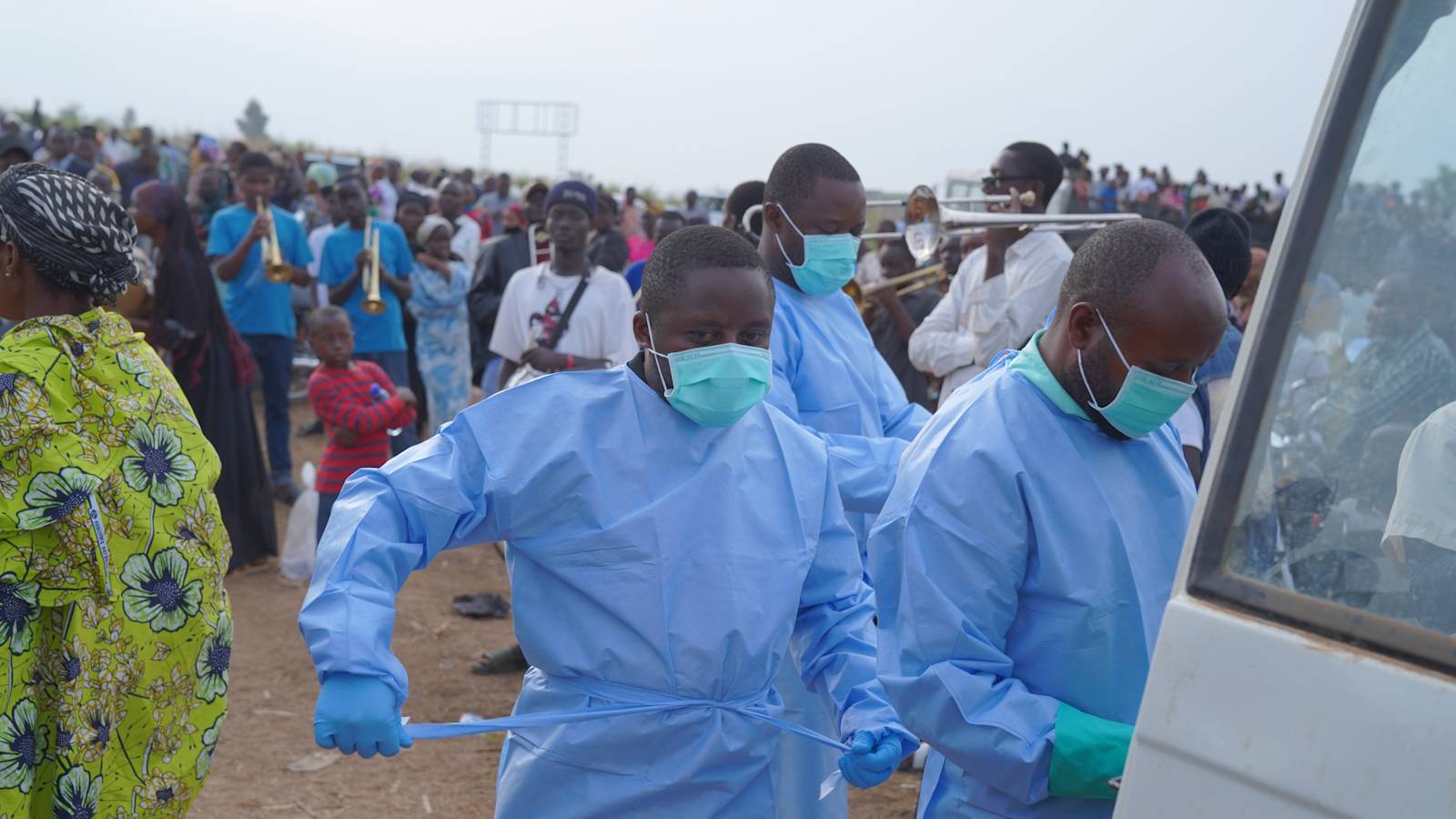
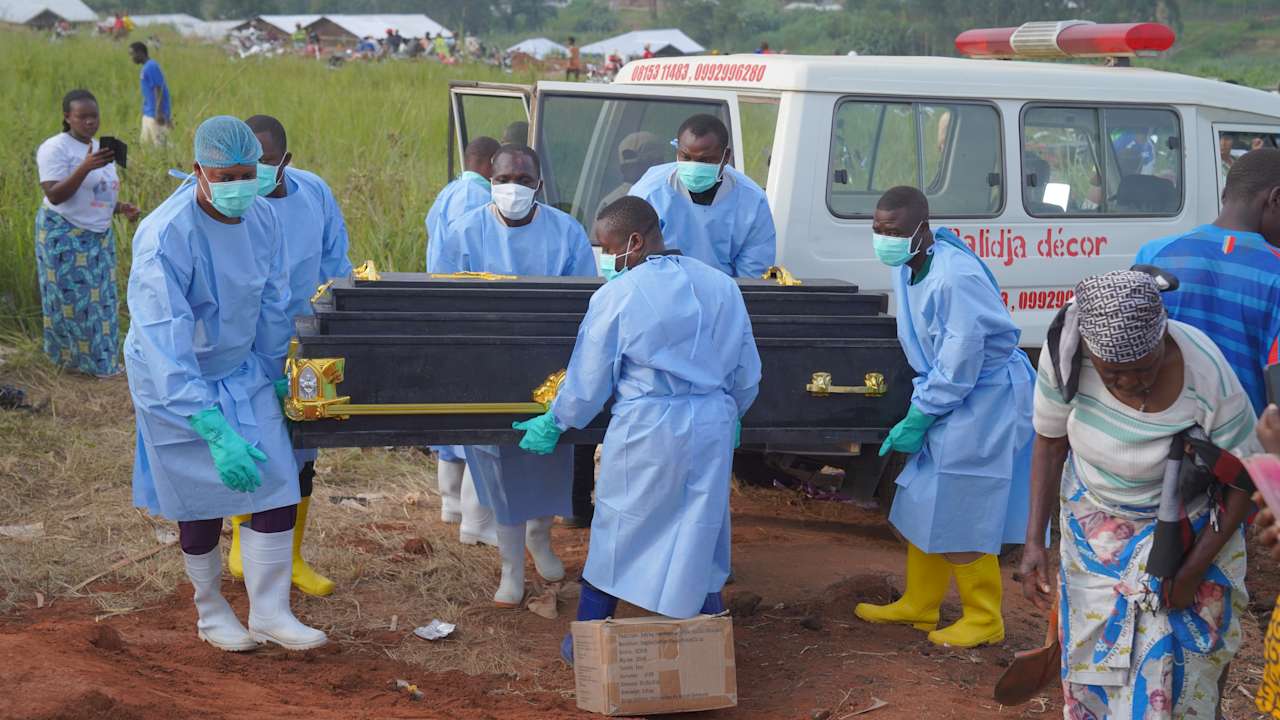
In the epicentre, in DR Congo’s Ituri province, friends and relatives gathered on Tuesday for the burial of 38-year-old Jeannine Katusabe, one of the latest victims.
The outbreak is already the second-largest in history, behind the 2014-16 outbreak in West Africa, which recorded more than 28,000 cases and 11,000 deaths.
It has spread across five provinces in eastern Congo, near the borders with South Sudan, Uganda, and Rwanda.
The current outbreak has a death rate of 45.9% among confirmed cases, higher than the 39.6% recorded during the 2014-16 outbreak.
This outbreak is also different from most previous ones.
It is caused by the rare Bundibugyo strain of Ebola, for which there are no approved vaccines or treatments.
Clinical trials for both have now begun in Ituri province.
Although the strain behind the 2014-16 outbreak is considered the deadliest, government figures show the current outbreak has killed a higher proportion of those infected.
Experts say this is partly because patients are not receiving care quickly enough, while many people are reporting symptoms late or not seeking help at all.
“In the absence of an effective vaccine, control (for the outbreak) rests on identifying cases and then nursing them in secure facilities until they recover or sadly perish,” Paul Hunter, a professor of medicine at the University of East Anglia, said.
He added that surveillance was particularly difficult in remote areas affected by conflict and poor communications, making it “impossible” in some cases to identify people early enough to prevent the virus from spreading.
Authorities in eastern Congo have restricted public gatherings and closed Ituri’s main airport in an effort to limit the spread.
But people continue to move through the region for trade and mining, while conflict has forced many others from their homes.
The World Health Organisation on Monday said some cases early in the outbreak were wrongly attributed to malaria and typhoid, and that early testing was conducted for the more common type of Ebola, delaying the realisation of what was unfolding
Officials are “chasing the virus; the virus is ahead of us,” the WHO regional director for Africa, Dr Mohamed Yakub Janabi, told a news conference.
Follow STV News on WhatsApp
Scan the QR code on your mobile device for all the latest news from around the country