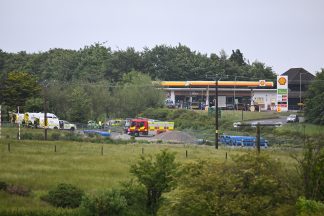
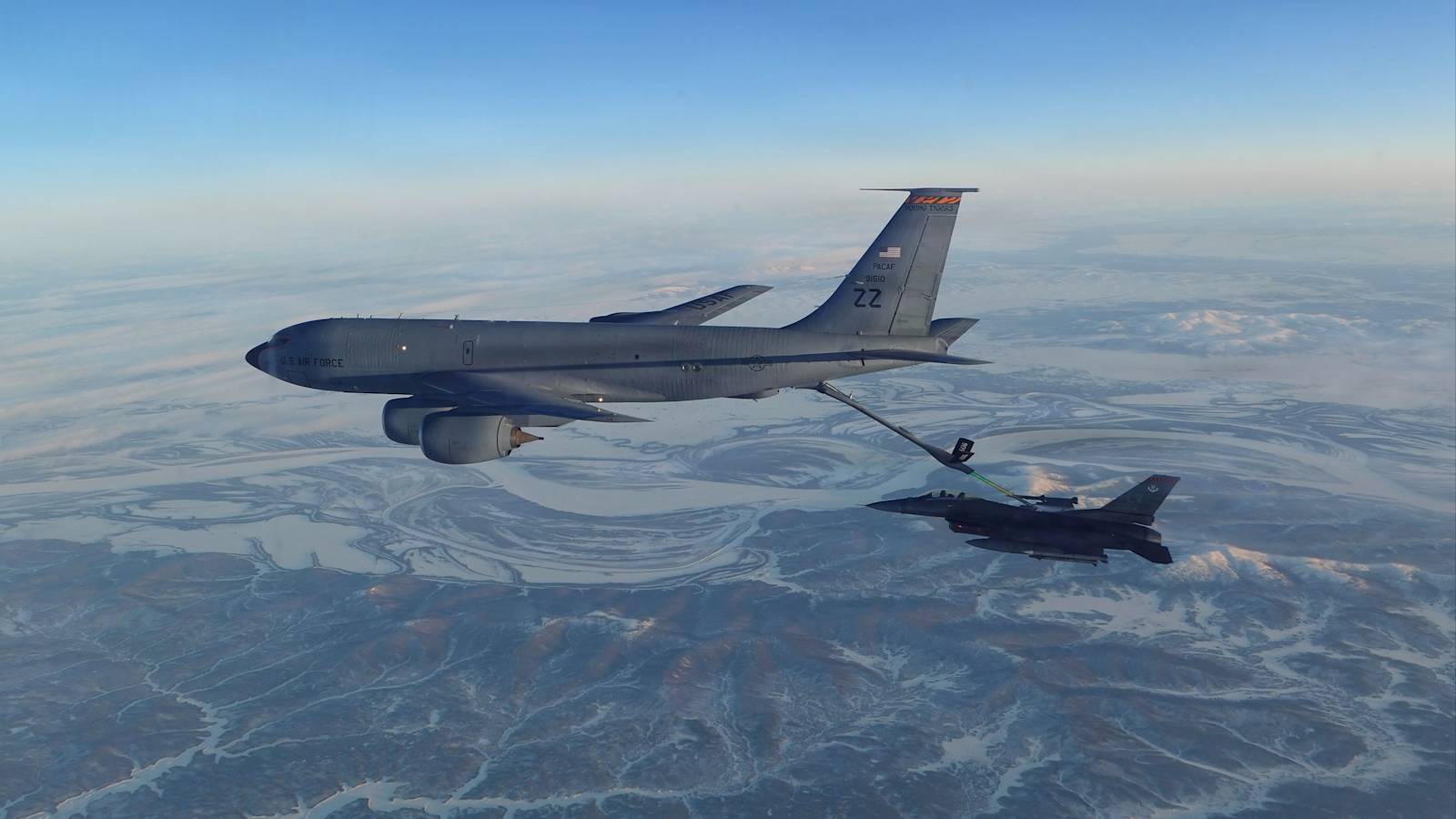
Four US service members have been killed after a military refuelling plane crashed in Iraq.
US Central Command (CentCom) said the crash on Thursday was not caused by enemy or friendly fire, but it is believed a collision in Iraqi airspace with another plane caused it. The other plane landed safely at the base.
Six US service members were on board the KC-135, and CentCom has now confirmed four of them have died. It did not reveal any of the details about the other two members.
The Middle East conflict showed no signs of slowing down on Friday, with US President Donald Trump issuing a new threat, saying: “Watch what happens to these deranged scumbags today.”
He said it was a “great honour” to be killing the Iranian regime after it had “been killing innocent people all over the world for 47 years.”
Israel said it had launched 200 strikes on Iran on Friday morning, as Iranian retaliation led to two foreigners being killed in Oman and a building at the Dubai International Financial Center sustained damage after a projectile was intercepted by missile defences.
Heavy airstrikes hit Iran’s capital, Tehran, on Friday morning just before rallies were to begin for the annual Quds, or Jerusalem Day, which saw demonstrators chanting “Death to Israel” and “Death to America”.
Israel also continued to launch numerous strikes on Lebanon on Friday, killing at least two people.
US eases oil sanctions on Russia to calm markets
The US has eased its sanctions on Russia in response to spiking oil prices, allowing nations to buy from Moscow to “promote stability in global energy markets”.

Trump’s decision comes as Iran’s continued attempts to stop shipping in the Strait of Hormuz have led to trade in the critical shipping lane all but collapsing.
Oil crept back up over $100 a barrel on Thursday, leading to a fall in stock markets and putting pressure on Trump to stop the conflict before serious economic damage is dealt.
Before the war, a barrel of oil was trading for between $60-$70.
US Treasury Department Secretary Scott Bessent said the easing of sanctions was a temporary measure to “promote stability in global energy markets” and would last until April 11.
He said: “This narrowly tailored, short-term measure applies only to oil already in transit and will not provide significant financial benefit to the Russian government.”

The pressure on the global oil market led to all 32 International Energy Agency’s (IEA) members, including the UK, the US, and many of the world’s richest nations, agreeing to release 400 million barrels of oil from their reserves to combat the rise in prices, but it only equates to around four days’ of the world’s global supply.
The pressure in the market has also led Chancellor Rachel Reeves and Energy Secretary Ed Miliband to issue stern warnings against profiteering from fuel forecourts.
The government has already promised to intervene if companies engage in “unfair” practices that would hit customers facing a rise in the price of home heating oil, which is not covered by Ofgem’s energy price cap.
Subscribe free to our weekly newsletter for exclusive and original coverage from ITV News. Direct to your inbox every Friday morning.
France also confirmed its first casualty overnight on Thursday, with French President Emmanuel Macron confirming Chief Warrant Officer Arnaud Frion had been killed by a drone in Iraq.
From Westminster to Washington DC – our political experts are across all the latest key talking points. Listen to the latest episode below…
Follow STV News on WhatsApp
Scan the QR code on your mobile device for all the latest news from around the country