
Warning: This article contains references to suicide and mental health issues
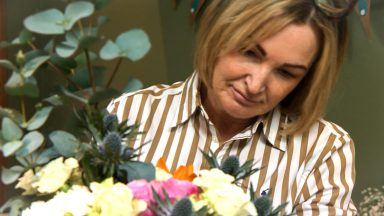
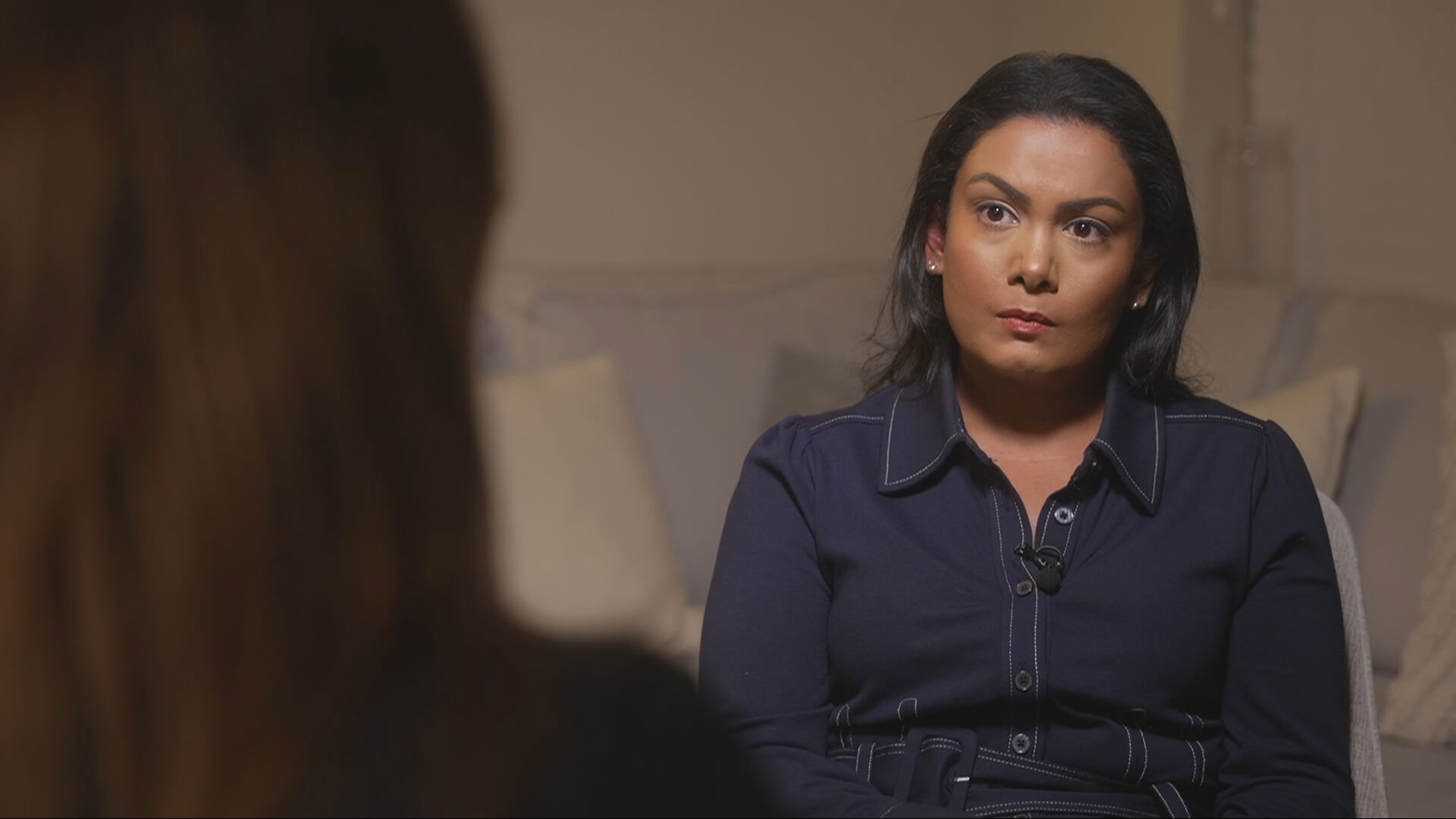
“It’s dark, you know, when you’re up against Goliath,” Rachael Beedow-Davison says wistfully.
“I went from hero to zero. I tried to play the game but I was losing money all the time.”
Rachael is reflecting on her career with Vodafone, which began in 2013 when she was recruited to manage the company’s shop in Skegness.
She did a good job and was promoted. In 2017, Vodafone gave her an Outstanding Contribution award for the performance of the Lincoln store she was running.
Have your say
Have you been impacted by these events? Tell us your story.
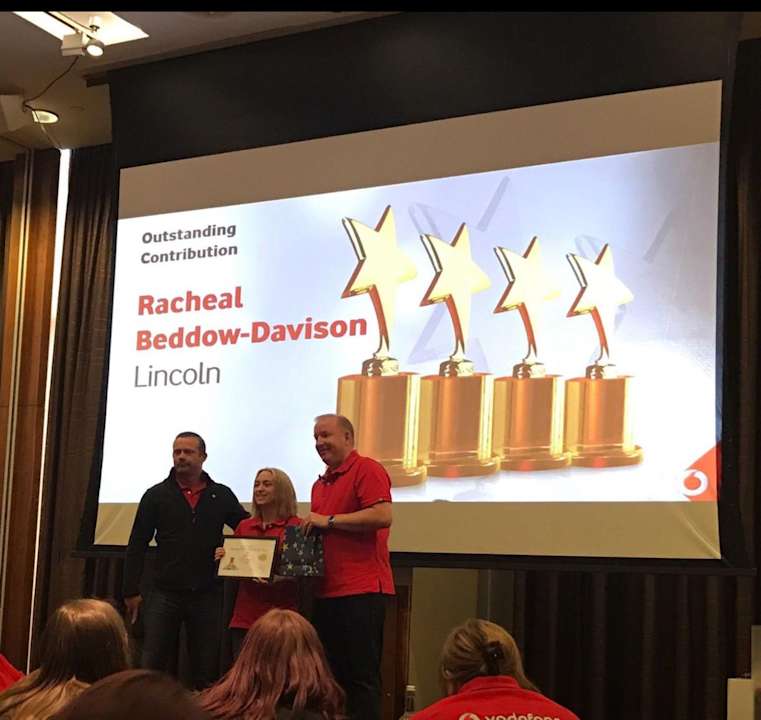
That same year, she says, the company began encouraging her to set up her own company and go into business as a franchisee.
“It was uncapped commission and you had the backing of the global brand,” she told ITV News. “So I took the risk. I was excited.”
Her first year in business was a great success. Her company was highly profitable and she was earning twice what she had taken home as a Vodafone employee.
But during the pandemic, Vodafone suddenly decided to cut the commission it paid to its franchise operators.
“My whole world changed overnight,” Rachael said.
Within months, her shops were struggling. For two and a half years – from early 2022 until July 2024, when Vodafone took back her last shop – her business posted monthly losses.
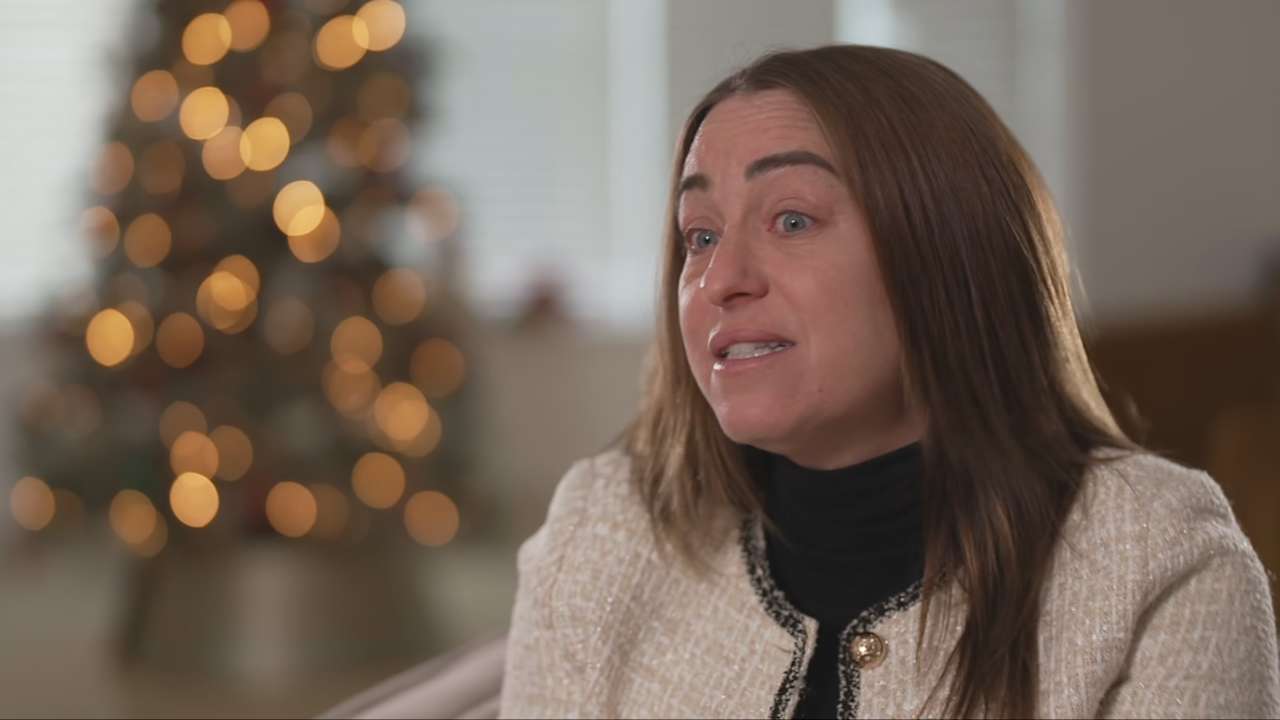
During this time, Rachael says Vodafone could see she was in difficulty. She depleted her savings, exhausted the insurance money she had received for a Covid claim, took out a Bounce Back Loan and borrowed heavily from Barclays in order to remain solvent.
The pressure of watching her debts rise and her business fail pushed her into despair.
“I just lost it, you know, for a minute, I thought it would be better – because nobody was listening to me – that actually financially my kids would probably be better off if I were dead,” she told ITV News.
“Which obviously isn’t the right thing to be thinking at all.”
In 2017, Vodafone moved to franchise the 400 shops it owned across the UK, employing more than 2,500 staff.
Store managers like Rachael were encouraged to start their own companies and take over the shops – taking responsibility for rent, wages, overheads and their own salaries.
In return, Vodafone agreed to pay commission on every sale made in-store: of contracts, phone upgrades, broadband, insurance and accessories.
But in July 2020 – just as the UK emerged from the first Covid lockdown – Vodafone abruptly slashed those commission rates.
Sixty-two franchisees claim their revenues fell by around 35% as soon as the lower rates were introduced. They are now suing Vodafone for “unjustly enriching” itself at their expense.
Many former franchise operators say they were losing money and had to borrow heavily just to stay afloat. None of the 62 still operates a Vodafone franchise. All say they’ve been left with large debts – and some have even sold their homes.
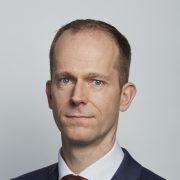
Dan Attwal ran Vodafone’s franchise shops in Cannock and Burton.
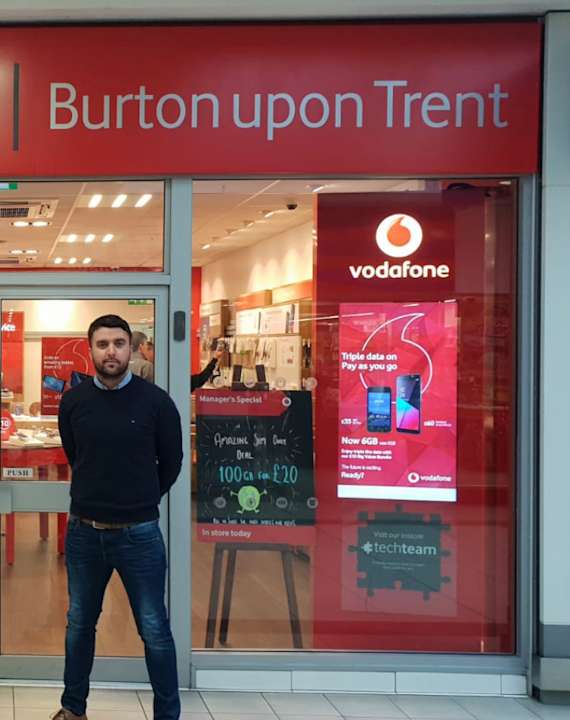
Initially, he says his business was “flying” but began losing money immediately after the commission cut.
Vodafone, he says, encouraged him to “scale” by taking on a larger shop in Derby. Instead, his losses deepened.
Dan fell into rent arrears, took out business loans, extended his overdraft and borrowed from family. His franchise agreement ended in 2023. He still owes £160,000 to lenders – excluding what he owes Vodafone.
“In one fell swoop, [the commission cut] decimated our business,” he says. “I assumed there would be support – that I’d be looked after.”
He adds: “My message to Vodafone was clear… we were in dire straits. We needed help.”
Some MPs have compared Vodafone’s treatment of its former franchise operators to the Post Office IT scandal.
John Hayes MP sought a Commons debate after meeting a constituent who was previously a Vodafone franchisee.
In a debate in July, he told the Commons that franchisees had been left “high and dry. No lifeline, no dialogue – just silence from the corporations that they once trusted.”
“I cannot believe that this minister does not feel as I do about corporate malpractice – about greedy, soulless, heartless firms that act irresponsibly and hide behind the high wall of their substance.”
Vodafone declined our request for an interview.
In a statement, the company said: “This is a complex commercial dispute between Vodafone and some ex-franchisees and while we fully reject the claims against us, we are sorry if any franchisee had difficulty in operating their business.
“A review in 2020 found the commission payments for customer renewals were higher than in our other retail channels and not sustainable. This is the model still used by our franchisees across the UK who continue to run successful businesses. We have engaged in discussions to resolve this matter and remain open to further talks.”
Worried about your mental health? If you or someone you know needs help
- The charity Samaritans operates a 24/7 helpline (116 123) for anyone who needs somebody to talk to. Further resources can also be found on its website.
- Mind offers mental health support between 9am and 6pm, Monday to Friday. You can call them on 0300 123 3393 or text them on 86463. There is also lots of information available on their website.
Have your say
Have you been impacted by these events? Tell us your story.
Follow STV News on WhatsApp
Scan the QR code on your mobile device for all the latest news from around the country