- Household energy bills could jump by £332 a year in July, latest forecasts show
- Iran’s foreign minister has warned the UK it is participating in aggression in a call with Foreign Secretary Yvette Cooper, but Downing Street has defended the PM’s position
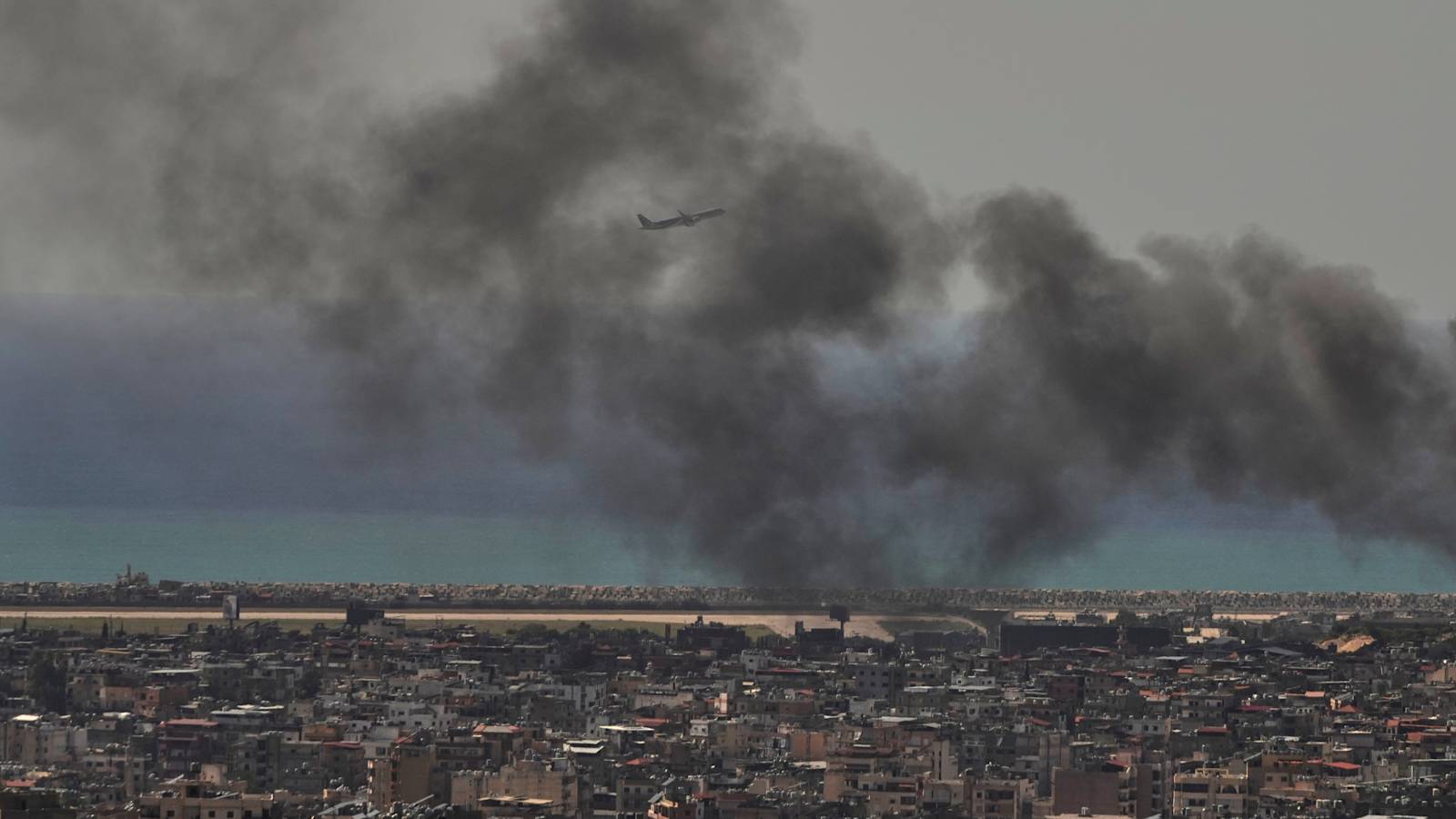
- Israel hit Tehran with airstrikes on Friday morning, as Iranians prepared to mark Persian New Year
- Missile attacks on Qatar’s natural gas plant have reduced capacity by 17% and the damage will take up to five years to recover from, the country’s minister of energy said
- Explosions heard in Dubai, as Kuwait and Saudi Arabia intercept Iranian fire overnight, as many people observed Eid al-Fitr, the end of Ramadan – while Israel hit Tehran during Nowruz, the Persian New Year
- More than 3,100 people have been killed in Iran according to the Human Rights Activist News Agency (HRANA), and more than 1,000 in Lebanon, the Lebanese Ministry of Health said
Household bills could jump by £332 a year from July amid the ongoing war in Iran, experts have said.
Oil and gas prices have spiked since the start of the war, with attacks sending the price of brent crude oil up by 7% on Thursday to reach $114 – around £86 – a barrel, before it dropped to $109 (about £75) on Friday.
Forecasts for Ofgems price cap between July and September have now surged to £1,973 a year for a typical dual fuel households, analysts Cornwall Insight said – an increase of 20% on April’s cap.
It comes after Iranian foreign minister Seyyed Abbas Araghchi spoke to Foreign Secretary Yvette Cooper on the phone, warning her of “consequences of the war” and that letting the US use British bases is viewed as “participation in aggression”.
“Our country’s foreign minister also described the country’s defensive measures in confronting the American and Israeli aggression, and criticised the negative and biased approach of Britain and some European countries towards this blatant aggression, which violates international law,” the Iranian foreign ministry said in a Farsi statement posted on Telegram.
Iran launched further attacks on neighbouring countries overnight, with Kuwait and Saudi Arabia intercepting fire and shrapnel striking a warehouse in Bahrain, as many people observed Eid al-Fitr, the end of Ramadan, while Israel hit Tehran during Nowruz, the Persian New Year.
The war continues to send stock prices plummeting, with Qatar’s energy minister stating that Iranian missiles had damaged its liquefied natural gas (LNG) export capacity to the point it could need five years to recover.
Israel’s Prime Minister Benjamin Netanyahu pledged on Thursday to refrain from further strikes on a key Iranian gas field at US President Donald Trump’s request.
Iran’s death toll now stands at 3,100 people, HRANA said, while more than 1,000 people have died in Lebanon, and 15 in Israel. Thirteen US service members have been killed.
UK Prime Minister Keir Starmer said on Friday he recognised the “pressure rising costs puts on families” amid the “uncertainty” of the conflict.
Starmer has said that the “best way forward is a negotiated settlement with Iran” amid the closure of the Strait of Hormuz – a critical shipping route for oil and gas on which Iran has effectively placed a blockade.
Tehran has said it is only blocking off passage through the strait to Iran’s “enemies”.

Household bills to jump by 20%, forecasts show
Household energy bills could jump by £332 a year in July as sharp increases in wholesale prices feed through into Ofgem’s price cap, forecasters have said.
Predictions for Ofgem’s price cap from July to September are up £1,973 a year for a typical dual fuel households – an increase of £332 or 20% on April’s cap – according to analysts at Cornwall Insight.
Even if wholesale prices drop to levels seen before the war some of the recent volatility will trickle over into the next price cap, which covers July to September, the forecasters said.
Wholesale energy prices have been high since the conflict started on February 28, but the final cap will depend on the last 10 weeks before the end of May, so is subject to change.
“The ultimate scale of any increase will depend on how long the disruption continues, and while the cap can shield consumers from short term fluctuations in the market, it cannot offset a sustained rise in wholesale market prices,” Dr Craig Lowrey, principal consultant at Cornwall Insight, said.
UK warned against its actions are being viewed as ‘participation in aggression’
The UK’s foreign secretary has been warned that letting the US use British bases in the ongoing conflict is being viewed by Iran as “participation in aggression”, Iran’s foreign ministry has claimed.
In a post on Telegram, Iran’s foreign ministry said its minister Abbas Araghchi told Cooper by phone: “These actions will definitely be considered as participation in aggression and will be recorded in the history of relations between the two countries.
“At the same time, we reserve our inherent right to defend the country’s sovereignty and independence.”
It also said Araghchi had emphasised Iran’s right to self defence in the region under the UN Charter.
ITV News has contacted Cooper and the UK Foreign Office for comment.
Starmer has been cautious over the UK’s involvement in the ongoing Iran war, angering Trump by refusing to allow British bases to be used by US forces during the nation’s initial offensive airstrikes.
He later granted permission for the US to use RAF Fairford in Gloucestershire and Diego Garcia in the Indian Ocean for “defensive” action against Iranian missile sites.
The UK prime minister said the move was “in line with international law” as it was an action in the “collective self-defence of longstanding friends and allies” and would protect British lives.
On Friday, Downing Street defended the UK’s position, with the PM’s official spokesperson stating: “We’re not getting drawn into the wider war.”
“We have authorised the US to use our bases for a specific defensive and limited purpose in response to Iran’s continued and outrageous aggression, and we’ve always said that this is the best way to eliminate the urgent threat and restore a path to diplomacy,” the spokesperson said.
Qatar’s LNG export capacity reduced
Ras Laffan Industrial City was struck by Iran overnight into Thursday, with the attacks damaging two of the site’s 14 trains – the term for large industrial processing units.
The units produce 12.8 million tons per annum, representing 17% of Qatar’s exports, the energy minister said, with the damage expected to take between three to five years to repair.

“The impact is on China, South Korea, Italy and Belgium. This means that we will be compelled to declare force majeure for up to five years on some long-term LNG contracts,” Sherida Al-Kaabi said.
The attacks also targeted the Pearl GTL (gas-to-liquids) facility, that converts natural gas into high-quality cleaner burning drop-in fuels and produces base oils used to make premium engine oils and lubricants, and paraffins and waxes.
The damage caused to one of the two trains at Pearl GTL is being assessed and is expected to be offline for a minimum of one year, Sherida Al-Kaabi said.
Gulf states under fire during Eid
Heavy explosions shook Dubai in the United Arab Emirates early Friday as air defenses intercepted incoming fire over the city.
The Dubai Media Office, the sheikhdom’s government communication’s arm, said no one was injured.
Kuwait reported two waves of drone strikes at its Mina Al-Ahmadi oil refinery, one of three in the country, which sparked a fire at several of its units.
The refinery, which can process some 730,000 barrels of oil per day, was already damaged on Thursday in another Iranian attack.
Bahrain’s Interior Ministry also reported a fire erupting on Friday morning after shrapnel fell on a warehouse in the island kingdom.
Saudi Arabia said it had shot down multiple Iranian drones targeting its oil-rich Eastern Province.
United Nations Security Council held an urgent closed meeting on Thursday, during which Gulf countries stressed the need for Iran to halt attacks on them.

Netanyahu vows not to attack natural gas field
Israel will hold off on any further attacks on Iran’s giant natural gas field, at Trump’s request, Netanyahu said during a televised address late on Thursday.
Netanyahu also denied that Israel had pressured the United States into going to war, amid growing US domestic concerns about the country’s involvement.
“This canard that we dragged the United States into this is not just a canard, it’s ridiculous,” the prime minister said.
“I didn’t have to convince President Trump about the need to prevent Iran from developing its nuclear programme, putting it underground, and being able to launch nuclear-tipped missiles at the United States. He understood that.”
“The world owes a debt of deep indebtedness to President Trump for leading this effort to safeguard our future”, he said.
Netanyahu also claimed Iran now has “no ability to enrich uranium at the moment and no capability of manufacturing ballistic missiles” due to the conflict.

Iran’s Revolutionary Guard spokesperson killed after saying missiles still being made
The spokesperson for Iran’s paramilitary Revolutionary Guard has been killed in an airstrike, with his death announced shortly after he told a state-run newspaper that the war was not yet over.
Gen. Ali Mohammad Naeini also told the IRAN newspaper Tehran is still building missiles, despite Israel and the US both stating that the country’s weapons stock is depleting.
“There is no concern in this regard because we are producing missiles even during war conditions, which is amazing, and there is no particular problem in stockpiling,” Naeini said.
“These people expect the war to continue until the enemy is completely exhausted. This war must end when the shadow of war is lifted from the country,” he continued.
Naeini’s death was announced by Iranian state television.
EU leaders demand Strait of Hormuz reopens
The leaders of the 27 European Union countries, known collectively as the European Council, have issued a joint statement expressing their concern over the energy crisis and calling for “de-escalation and maximum restraint” from all sides.
They also demanded “freedom of navigation in the Strait of Hormuz”, asked Iran to stop striking neighbouring countries and sought international cooperation to prevent a large-scale refugee crises in the Middle East.
“The European Council deplores the loss of civilian life and is closely monitoring the far-reaching impact of the hostilities, including on economic stability,” the statement, published late on Thursday, said.
Ahead of the European Council meeting, Belgian Prime Minister Bart De Wever said the EU countries are “very worried about the energy crisis”, noting that prices were already high before the war began.
“If that becomes structural, we’re in deep trouble,” De Wever said.
Follow STV News on WhatsApp
Scan the QR code on your mobile device for all the latest news from around the country