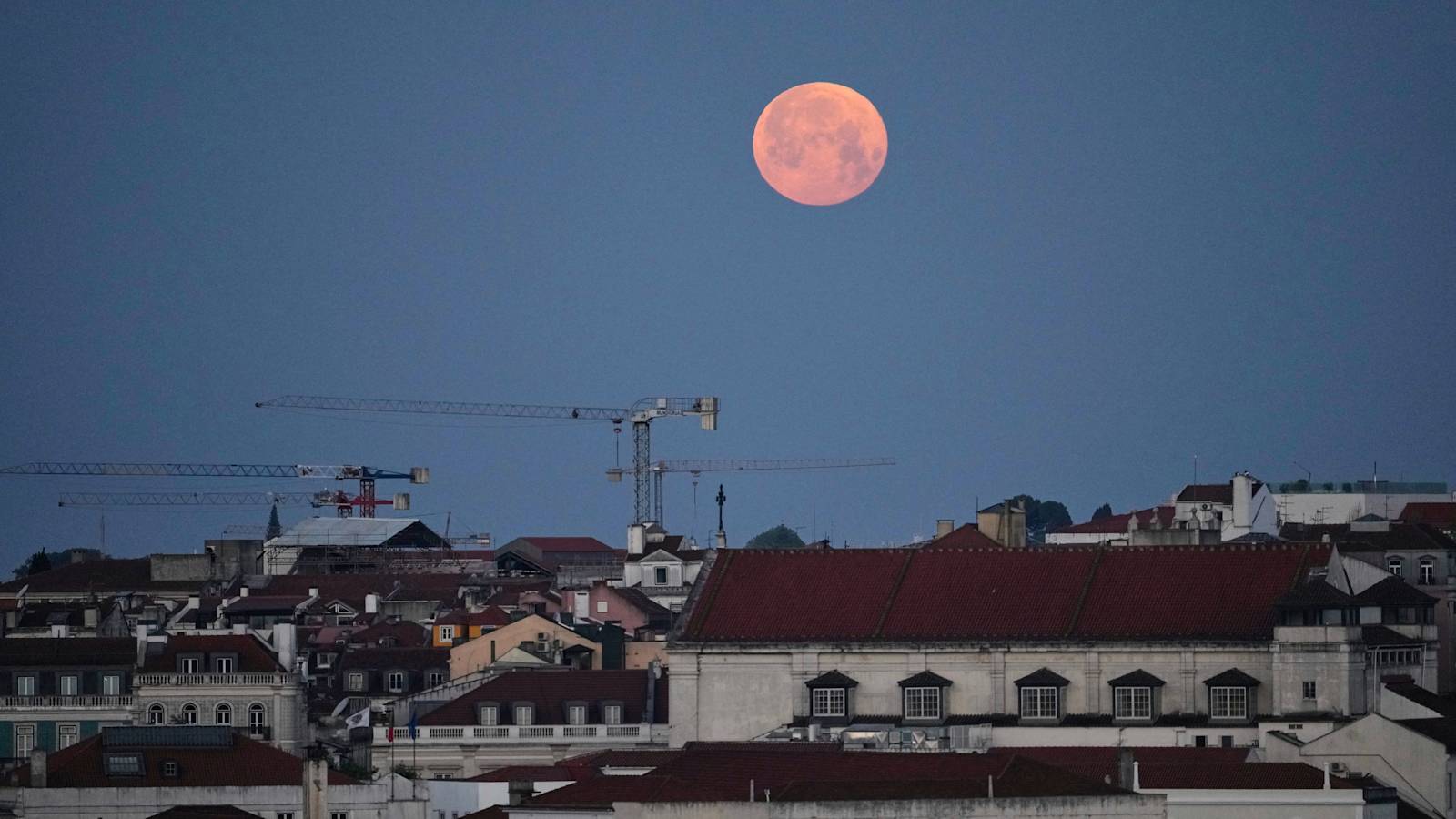
Our fifth full moon of the year happens tonight.
Known as the “Flower Moon”, May’s first full moon is named after the abundance of spring flowers.
What actually is a full moon?
A full moon occurs because of the changing positions of the sun, Earth, and moon.
The moon orbits the Earth, and the sun lights up half of the moon at all times. However, when the moon moves into the position with Earth directly between the Sun and the Moon, we see the fully lit side and it appears “whole”.
Does a full moon have any effect on the Earth?
Interestingly, full moons (and also new moons) tend to give us stronger tides because, simply put, the gravitational pull of the moon and the sun line up and reinforce each other (like two people pulling in the same direction rather than against each other).
This creates “spring tides” (nothing to do with the season, but instead this refers to rising up or “springing up”) where the tides rise higher than usual.
What is unusual about this full moon?Tonight’s “Flower Moon” is actually a “micromoon” as it will appear slightly smaller and dimmer than usual.
This is because the full moon happens when the moon is near its furthest point from Earth in its orbit.
Remember that the moon’s journey around the Earth is not a perfect circle, it’s slightly oval.
This means that sometimes the moon is closer to Earth – which makes it appear bigger (supermoon) and sometimes, like tonight, it’s further away which makes it appear smaller (micromoon). How many full moons do we get each year?
We get a full moon about once every 29.5 days – so roughly once a month (we call this cycle the synodic month), but not perfectly aligned with calendar months.
Most months have one full moon but occasionally timing lines up so we get two full moons in one calendar month.
This is what will happen this month and the second full moon on May 31 is called a “Blue Moon”. So most years we get twelve full moons, but this year an extra one just happens to fit into a calendar year.
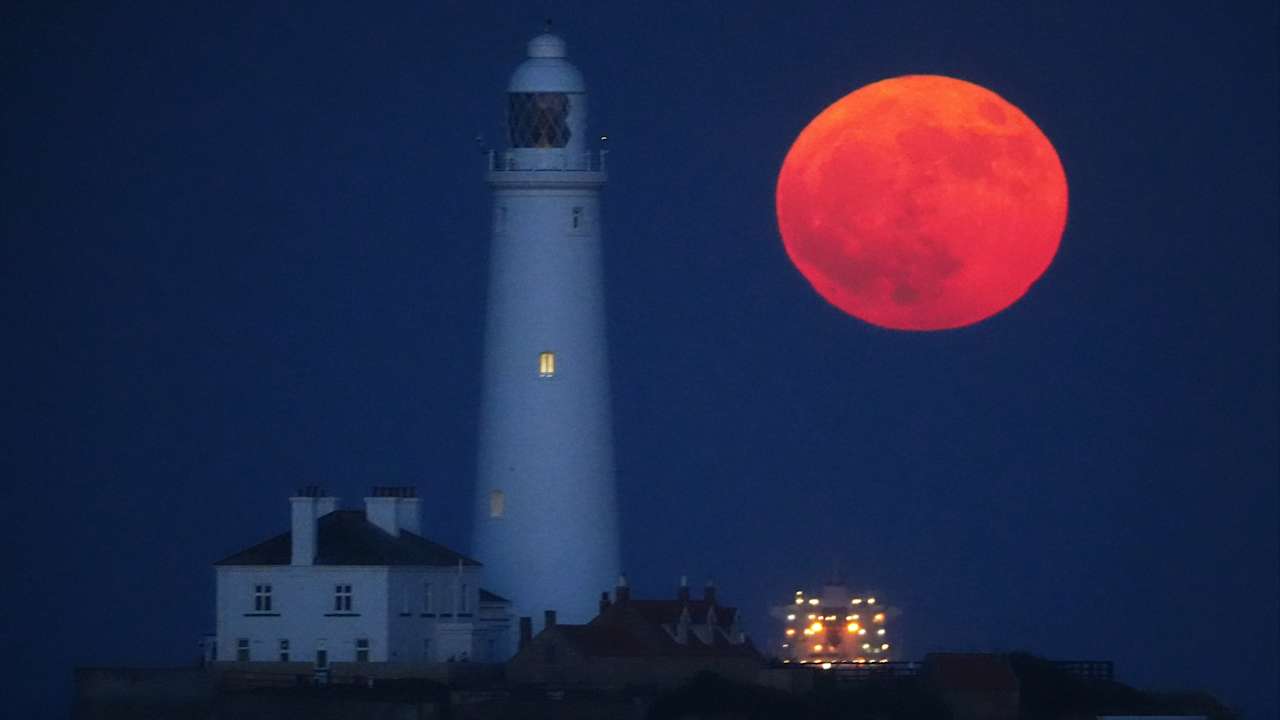
Are there any traditions or folklore connected with this full moon?
In medieval England, May’s full moon was sometimes called the Milk Moon – perhaps because cows were producing plenty of milk again after winter and thus, this full moon symbolised nourishment, prosperity, and comfort after the lean months.
In fact, the Flower Moon or Milk Moon has a surprisingly rich mix of folklore from different cultures, most of it tied to growth, fertility, and the turning point into early summer.
One poetic belief says that anything begun under the Flower Moon – whether planting crops, starting relationships, or making plans – has an increased chance of flourishing.
Where is the best place to get a good view?
Clear skies over southern and eastern England will give the clearest view earlier in the night – although fog patches developing could obscure the view somewhat later.
Further north and east, patchy cloud should still enable sight of the Flower Moon but the view will be less clear.
Experts advise to look east just after sunset away from city light pollution. No equipment needed but binoculars can make it more detailed.
Here is a list of the remaining full moons of 2026:May 31 — Blue Moon
Jun 29 — Strawberry Moon
Jul 29 — Buck Moon
Aug 28 — Sturgeon Moon
Sep 26 — Corn/Harvest Moon
Oct 26 — Hunter’s Moon
Nov 24 — Beaver Moon
Dec 23 — Cold Moon
Follow STV News on WhatsApp
Scan the QR code on your mobile device for all the latest news from around the country