Passengers without EU passports will be required to have their fingerprints and photographs taken, as senior correspondent Jonathan Swain reports
A new Entry/Exit system will be fully implemented across all EU airports and ports from Friday, meaning British travellers will no longer need to have their passports stamped.
Physical stamps from passport officers are being phased out in place of a digital biometric system in a bid to make entering the EU from non-Schengen area countries quicker.
It has been introduced to strengthen border security, detect overstays and is supposed to improve processing speeds at airports.
However, concerns remain that the new system could bring delays, however, as airports adjust to the new system.
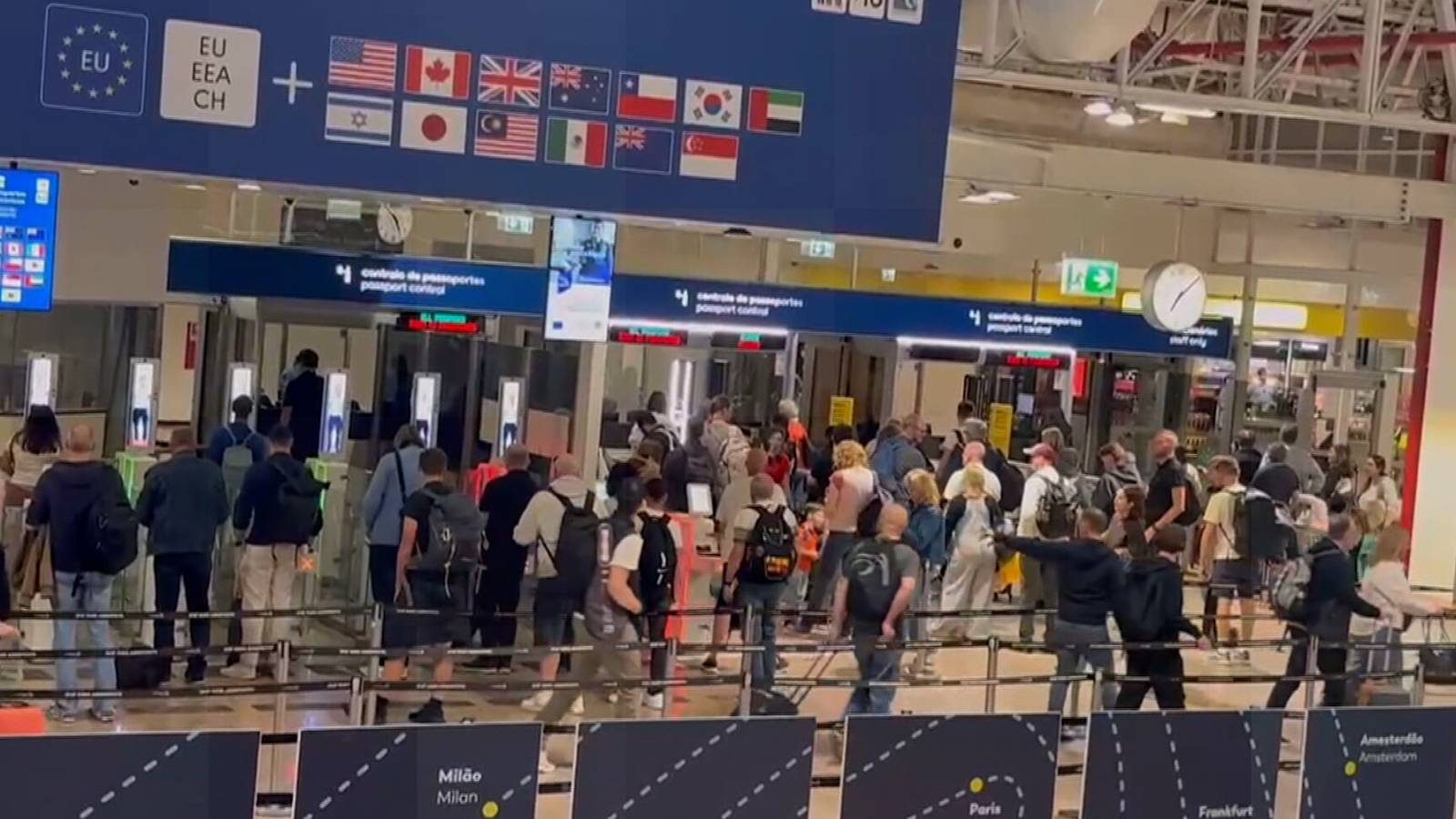
Until now many airports were effectively running a double system, with both passport stamps being taken and the new biometric digital EES (Entry/Exit system) also being carried out.
This double-entry recording has led to numerous delays at airports across the bloc, with Brits complaining of multi-hour waits to get through airports, and there are concerns that the changes could cause further delays for travellers.
ITV News explains how the new system will work.
What is the Entry/Exit system?
Non-EU nationals wishing to enter the Schengen area will now go through biometric checks instead of getting a passport stamp when entering the area.
These checks will involve face scans and fingerprint recording. Children under the age of 12 will not need to have their fingerprints scanned.
Travellers will also go through the same check when leaving the area, meaning countries can track when visitors overstay.
Once registered, subsequent entries to the bloc will be quicker, as the biometrics will only need to be scanned rather than registered. The digital record will be valid for three years.
Travellers will not need to take any action before their journey.
Who will be affected?
The changes will mostly affect people from non-EU countries, including those from the UK.
It affects all countries in the Schengen area, which includes France, Spain and Germany. Ireland is not within this area and travel there is not be impacted by the new rules.
For travellers using the Eurostar at St Pancras, Eurotunnel LeShuttle at Folkestone, or the Port of Dover, EES registration takes place before leaving the UK. Otherwise, registration happens on arrival in the destination country.
Cruise ship journeys starting and ending at UK ports are exempt from the EES rules unless passengers disembark to continue their holiday within the Schengen area.
It should only take a few minutes, but there have been reports of significant delays as airports struggle with the new system.
There is a small list of other exceptions for UK nationals, which can be found on the EES website.
Why has the EU introduced the new system?
The EES is designed to give border authorities a more accurate record of who enters and leaves the Schengen area, and to automatically spot people who overstay their visas.
The EU also says the system should help tackle document and identity fraud, strengthen security by giving authorities more reliable real-time information, and make border checks more efficient through greater use of automated controls and self-service systems.
Full list of countries using the EES system:
Austria, Belgium, Bulgaria, Croatia, Czech Republic, Denmark, Estonia, Finland, France, Germany, Greece, Hungary, Iceland, Italy, Latvia, Liechtenstein, Lithuania, Luxembourg, Malta, Netherlands, Norway, Poland, Portugal, Romania, Slovakia, Slovenia, Spain, Sweden, and Switzerland.
Ireland and Cyprus are not within the Schengen area, and therefore EES is not applicable when travelling to either of these countries.
Follow STV News on WhatsApp
Scan the QR code on your mobile device for all the latest news from around the country