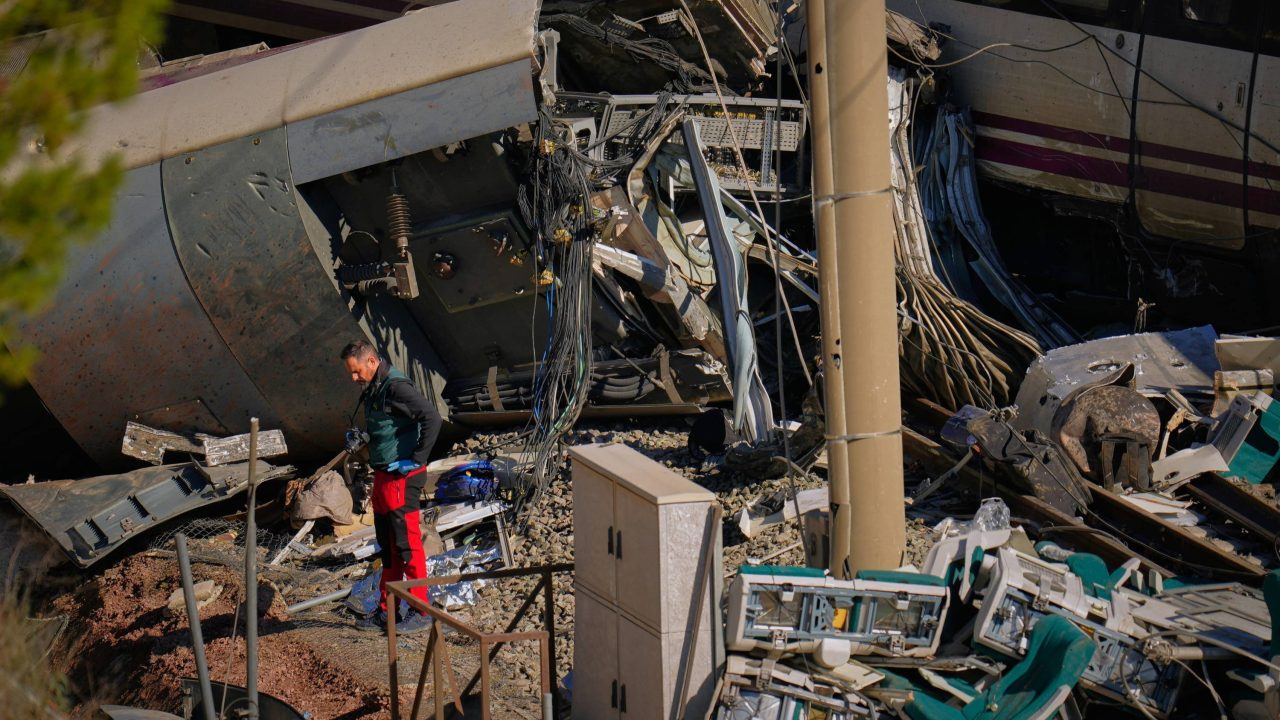
A Barcelona commuter train crashed on Tuesday after a retaining wall fell onto the tracks, Spanish regional authorities said, killing one person and injuring 15 others.
The crash in Catalonia in north-eastern Spain came two days after a separate deadly train collision killed at least 42 people in the country’s south and injured dozens more.
Emergency workers were still searching for more victims in the wreckage from Sunday’s deadly train accident that took place some 497 miles (800km) away as the nation began three days of mourning.
Emergency services in Catalonia said of the 15 people affected in Tuesday’s crash, three were seriously injured. Five others were in less serious conditions. Emergency services said 11 ambulances had been sent to the site of the crash.
The commuter train crashed near the town of Gelida, located about 35 minutes outside of Barcelona.
Spain’s railway operator ADIF said the containment wall likely collapsed due to heavy rainfall that swept across the north-eastern Spanish region this week.
 PA Media
Antonio Sanz, the regional health minister of Andalusia, where Sunday’s accident occurred, told Spanish media that the official toll from the collision had risen after another body was discovered in a severely damaged car.
Amid the tragedy, it emerged that a six-year-old girl survived the wreck without major injury, while her parents, brother and cousin all perished.
Health authorities said 39 people remained in hospitals on Tuesday morning, while 83 people were treated and discharged.
The crash happened at 7.45pm when the tail end of a train carrying 289 passengers on the route from Malaga to the capital, Madrid, derailed and crashed into an incoming train travelling from Madrid to Huelva, another southern city, according to rail operator Adif.
The front of the second train, which was carrying 184 people, took the brunt of the impact, which knocked its first two carriages off the track and down a four-metre (13ft) slope. Some bodies were found hundreds of metres from the crash site, according to Andalusia regional president Juanma Moreno.
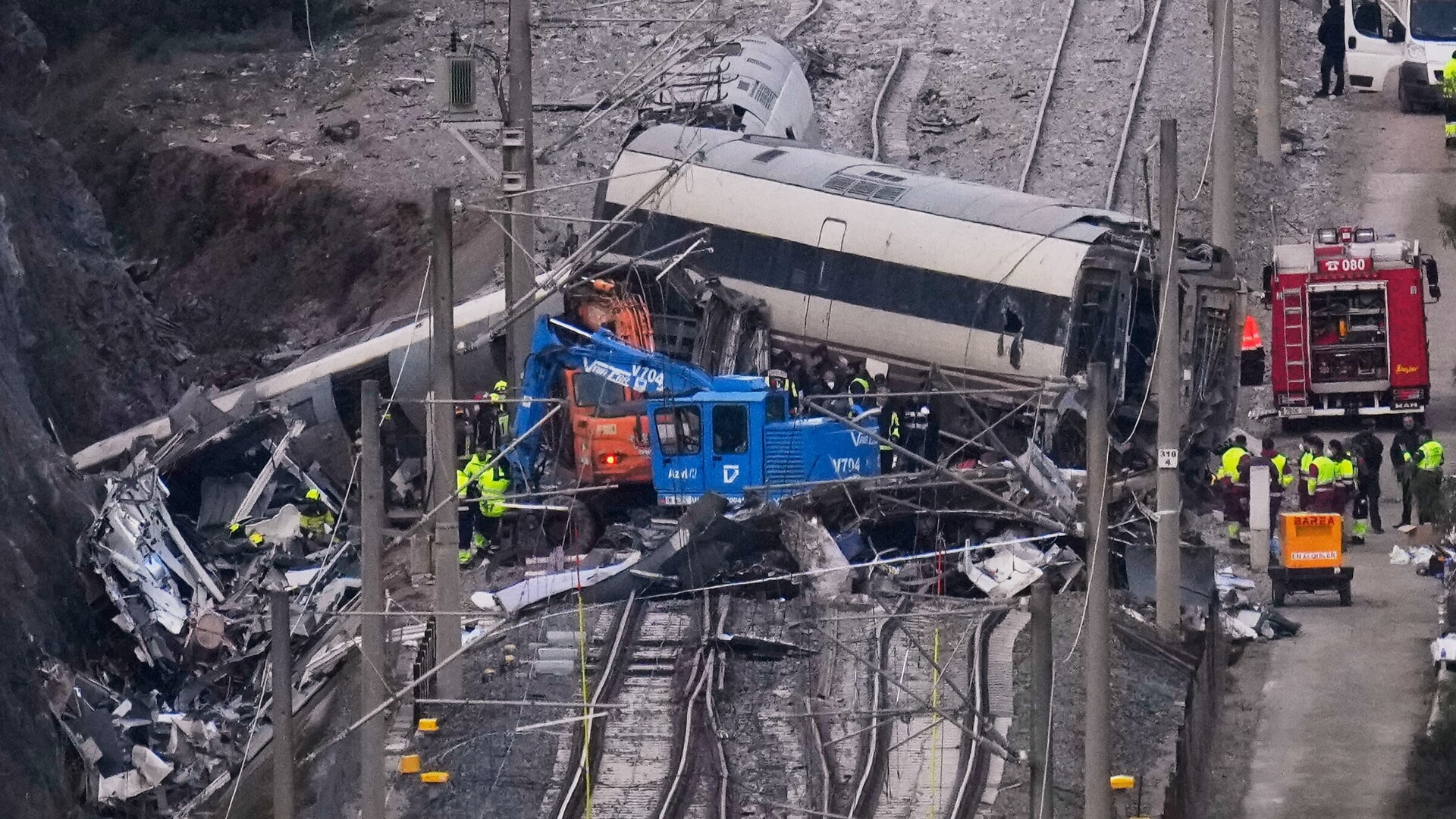
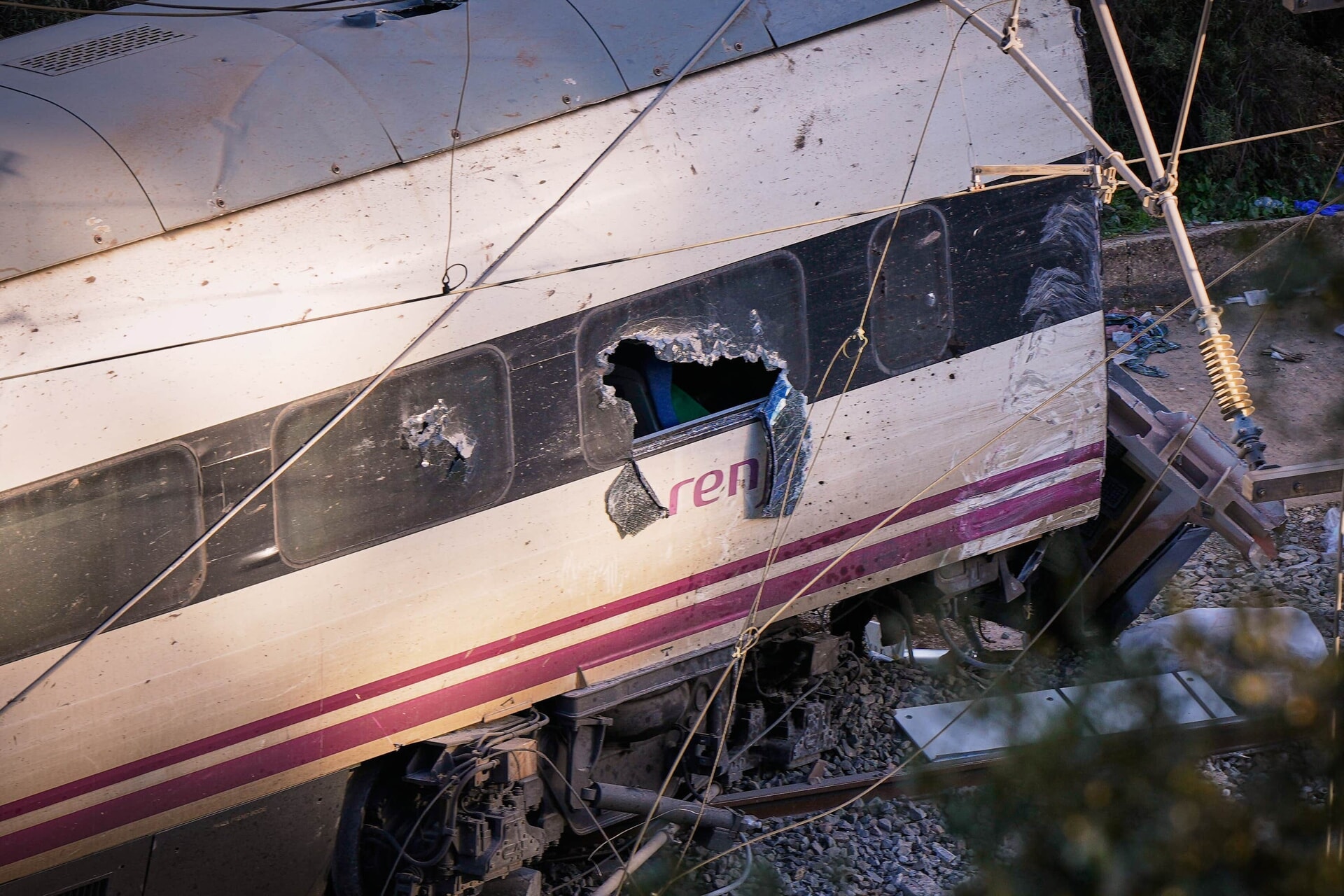
Associated Press images taken on Tuesday showed the remains of the first two cars of the second train, severed from the rest of the train and lying beside the tracks. Train seats had been ejected onto the rocks that provide packing under the rails.
Further along the tracks, civil guard officers inspected the interior of the first train with dogs as passengers’ belongings lay scattered on the floor, according to the video distributed by authorities.
 PA Media
The last carriage was lying on its side on the tracks, and the second-to-last carriage was leaning to one side with all its windows shattered.
Officials are continuing to investigate the causes of the accident that transport minister Oscar Puente has called “truly strange” since it occurred on a straight line and neither train was speeding.
Mr Puente said officials had found a broken section of track that could possibly be related to the accident’s origin, while insisting that was just a hypothesis and that it could take weeks to reach any conclusions.
“Now we have to determine if that is a cause or a consequence (of the derailment),” Mr Puente told Spanish radio Cadena Ser.
At this time, “all hypotheses are open”, interior minister Grande Marlaska told a press conference.
Accident investigators would analyse “the rails at the point where the derailment began and inspect the wheels” of the first train in a laboratory, he added.
 PA Media
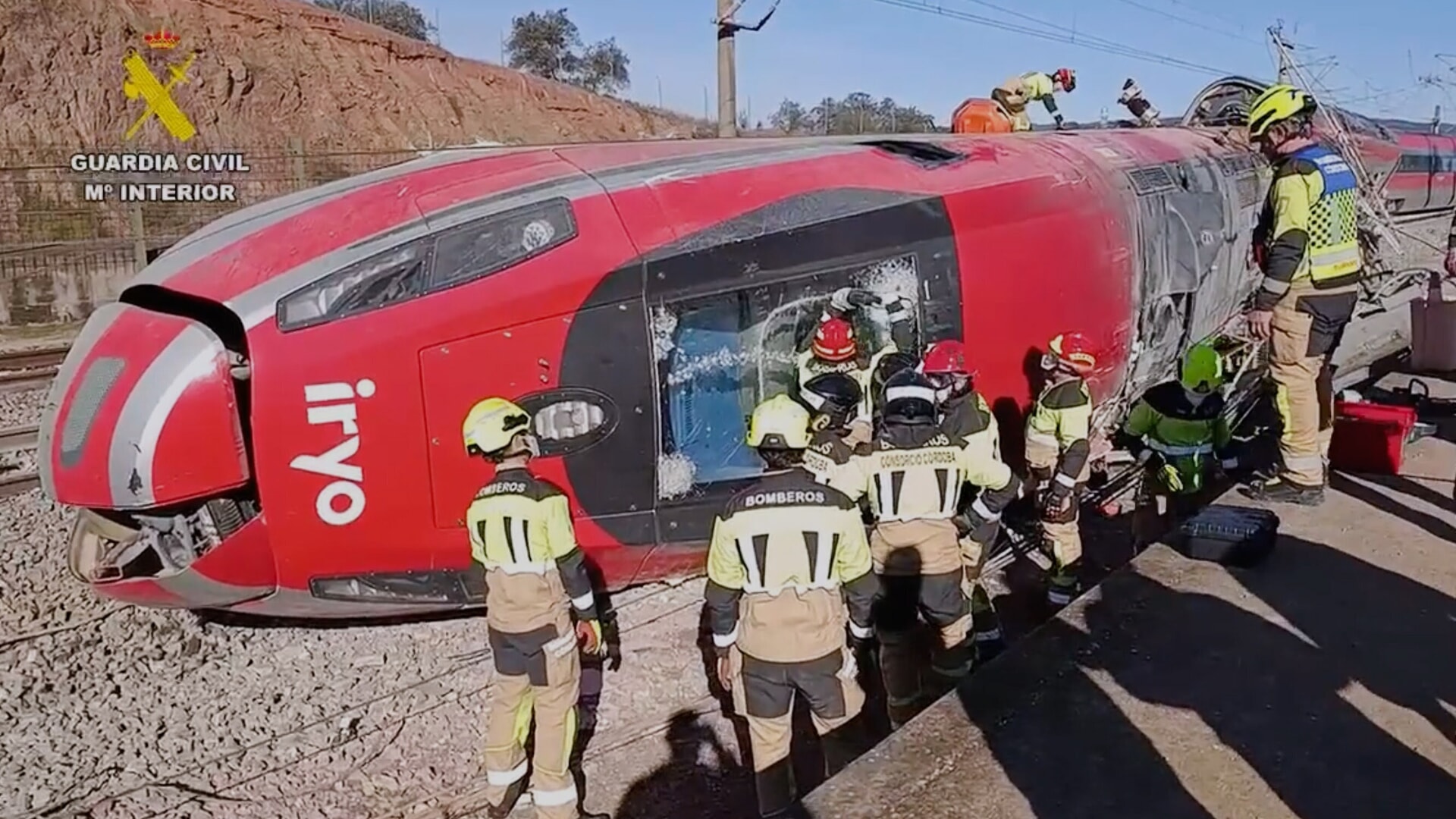
The train that jumped the track belonged to the private company Iryo, while the second train belonged to Spain’s public train company, Renfe.
Iryo said in a statement on Monday that its train was manufactured in 2022 and had passed a safety check on January 15.
Mr Puente and Renfe president Alvaro Fernandez said that both trains were traveling well under the speed limit of 155mph (250kph) and “human error could be ruled out”.
The accident shook a nation that leads Europe in high-speed train mileage and takes pride in a network that is considered at the cutting edge of rail transport.
 PA Media
“It is undoubtedly a hard blow, and I have to work so it doesn’t affect the credibility and strength of the network,” Mr Puente told Spanish national radio RNE on Tuesday when asked about the damage to the reputation of the rail system.
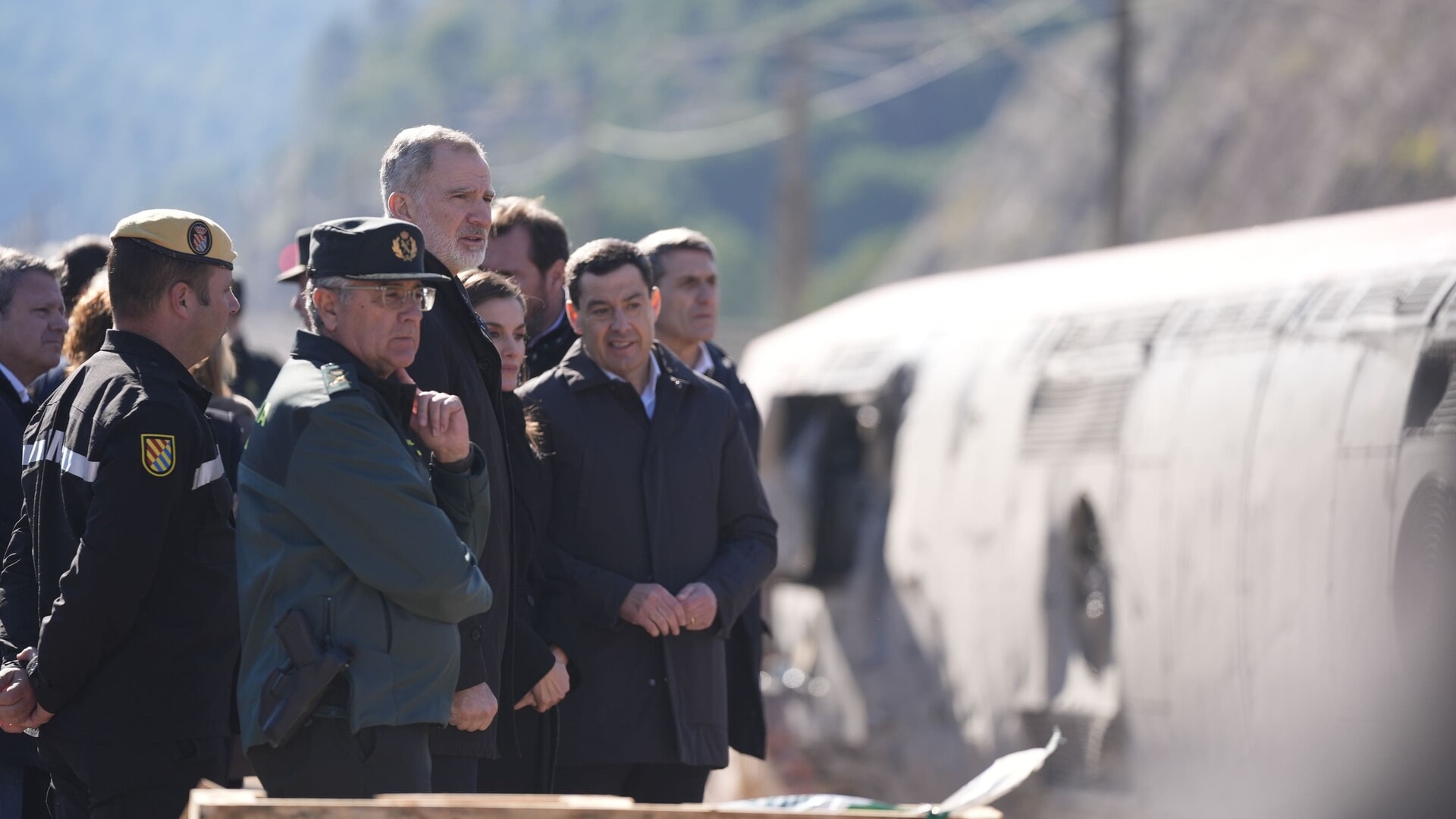
Spain’s King Felipe and Queen Letizia visited the scene of the accident, where they greeted emergency workers as well as some local residents who helped in the initial stages of the rescue. Afterwards, they went to hospital in Cordoba where many of the injured remain under care.
“We are all responsible for not looking away when the debris of a catastrophe is being cleared away,” Letizia said to reporters after the visit.
Follow STV News on WhatsApp
Scan the QR code on your mobile device for all the latest news from around the country