ITV News political editor Robert Peston is travelling with the Prime Minister on his trip to the Middle East following the ceasefire between the US and Iran
There is still “a lot of work to do” to ensure the US-Iran ceasefire lasts and to restore oil and gas supplies through the Strait of Hormuz, the prime minister has said.
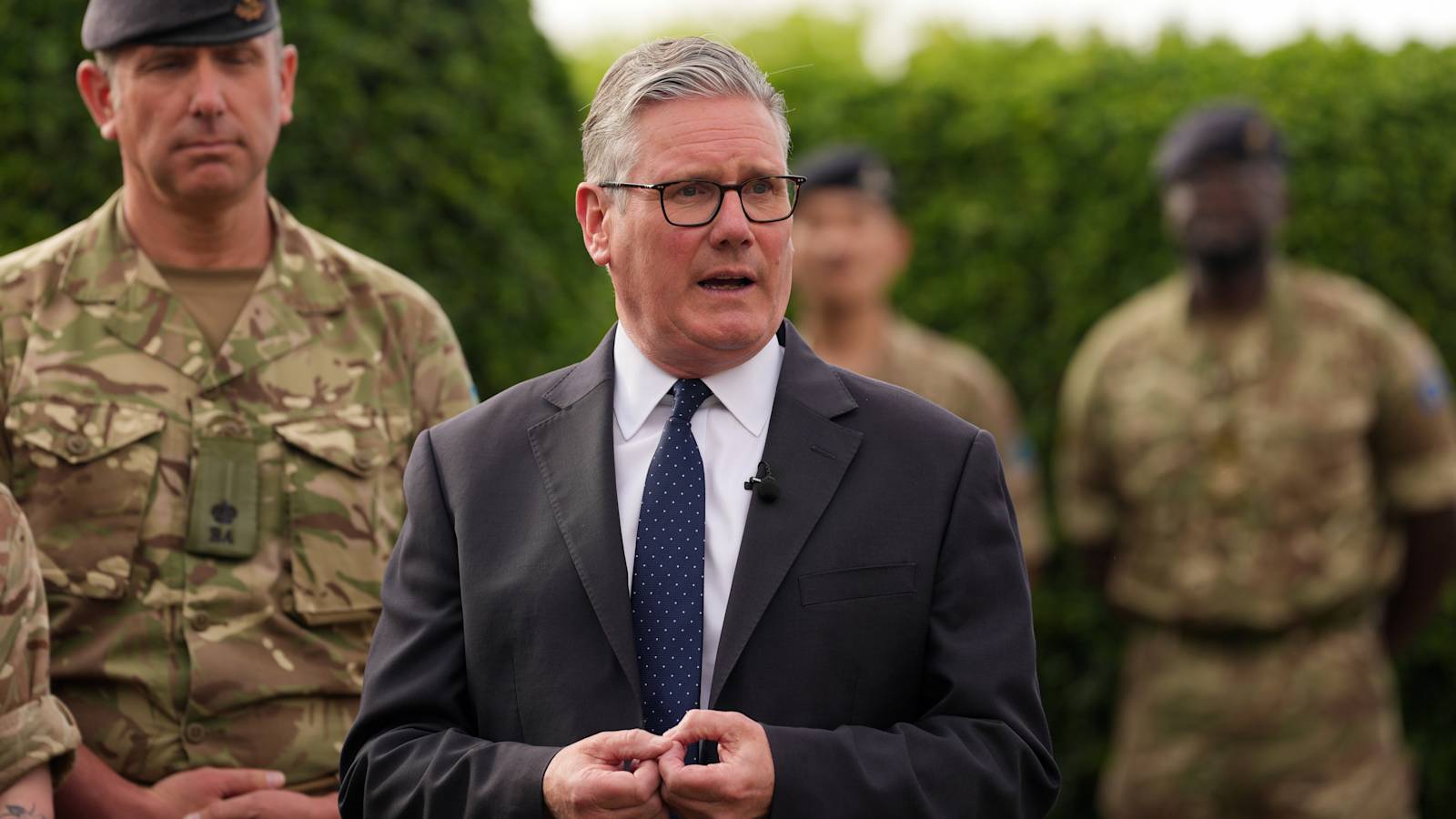
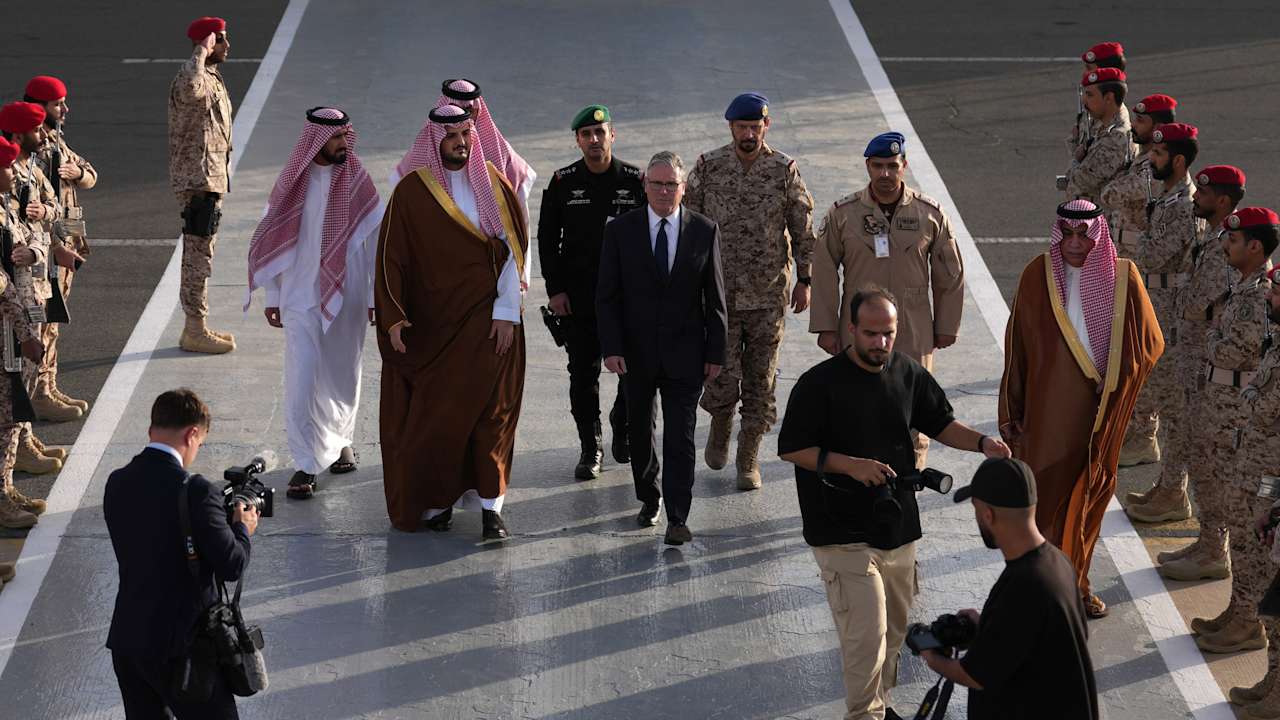
Sir Keir Starmer, speaking from an air base in Saudi Arabia, told broadcasters there was a “real sense of relief” across the region and in the UK, following the news that the US and Iran have agreed to a temporary peace deal.
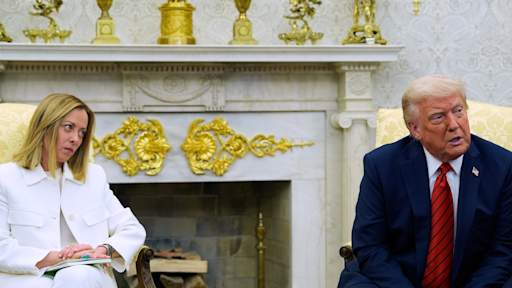
However, he declined to comment when asked if his relationship with US President Donald Trump was “in tatters”, after the UK refused to let the US have free rein on the use of British bases to launch raids against Iran.
He replied: “I’ve acted as you would expect of a British prime minister, which is by being absolutely focused on what is our national interest, and that’s why I’ve applied my principles and my values throughout.
“And my principles and values made sure that our decisions were that we wouldn’t get involved in the action without a lawful basis, without a viable, thought-through plan…
“I act in the British national interest and nothing, nothing, is going to deflect me from that.”
The PM, who is aiming to use his visit to the Gulf to make clear the UK’s commitment to de-escalation, said he wanted to ensure the economic impact of the war was minimised by getting the Strait of Hormuz open again.
Trump had threatened to obliterate Iran’s power plants and bridges if a deal could not be reached to reopen the route to shipping, but less than two hours before his deadline he said a ceasefire had been agreed.
Starmer said it was still “early days” and that there was still work to do to ensure “this ceasefire should be not a temporary ceasefire but a permanent ceasefire”.
He added: “On top of that, we have to acknowledge that this war was not our war, but my job is to protect the UK.
“It’s already had an impact on the UK, and it’s very important we get the Strait of Hormuz open. There’s a lot of work to do there.”
The ceasefire announcement triggered a fall in global oil prices and stock markets rallied after weeks of economic turmoil.
The US-Israeli strikes on Iran and Tehran’s response, including targeting Gulf states and effectively closing the Strait of Hormuz, had sent fossil fuel prices soaring around the world.
Petrol and diesel costs for motorists in the UK rose sharply after Trump launched his military action.
The average price of diesel was 190.6p on Wednesday morning, up 34% since February 28 when the US-Israeli campaign began, while average unleaded prices reached 157.7p, up 19%, the RAC said.
A joint statement by world leaders, including Starmer, said they would “contribute to ensuring freedom of navigation in the Strait of Hormuz”.
The statement, signed by the leaders of the UK, France, Italy, Germany, Canada, Denmark, the Netherlands and Spain and the presidents of the European Commission and European Council, welcomed the ceasefire.
“We strongly encourage quick progress towards a substantive negotiated settlement,” they said.
“This will be crucial to protect the civilian population of Iran and ensure security in the region.
“It can avert a severe global energy crisis.
“We support these diplomatic efforts. To this end, we are in close contact with the United States and other partners.
“We call upon all sides to implement the ceasefire, including in Lebanon.”
Israel maintained its attacks on Lebanon, the base for Iran-backed Hezbollah, claiming it was not covered by the ceasefire deal.
US vice president JD Vance said there was now a “fragile truce”, with reports from the Gulf of missile or drone raids on Kuwait and the United Arab Emirates, while Iran claimed its Lavan Island oil refinery had come under attack.
Announcing the two-week pause in the bombing campaign, Trump said Tehran had proposed a 10-point plan that provided “a workable basis on which to negotiate”.
But he wrote that US forces would be “hangin’ around in order to make sure that everything goes well”.
Tehran believes the deal will keep the strait under Iranian control, allowing it to levy tolls on shipping.
Pakistan’s prime minister Shehbaz Sharif said he had invited Iranian and US officials to Islamabad for talks on Friday.
Follow STV News on WhatsApp
Scan the QR code on your mobile device for all the latest news from around the country