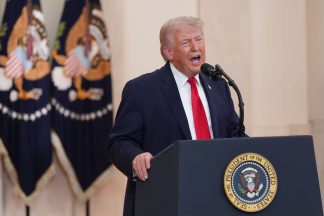
US President Donald Trump has announced that countries doing business with Iran will face 25% tariffs from the United States, apparently in response to the rising number of people killed during recent protests.
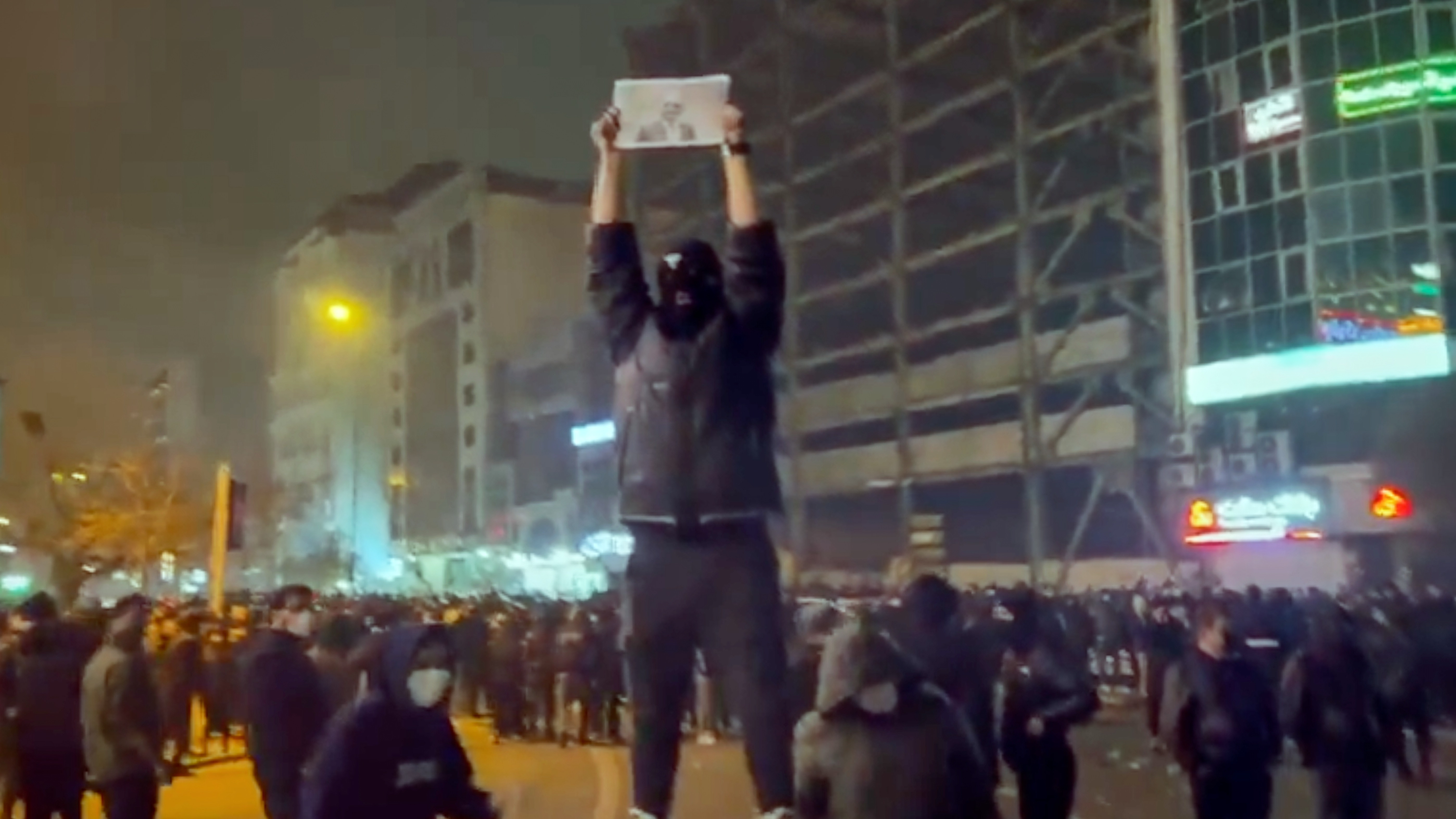
Activists said the number of people killed during the Islamic Republic’s crackdown on protesters has risen to at least 646 people. The official number is expected to be much higher.
Posting on social media, Trump said the tariffs would be would be “effective immediately.”
Brazil, China, Russia, Turkey and the United Arab Emirates are among the economies that do business with Tehran.
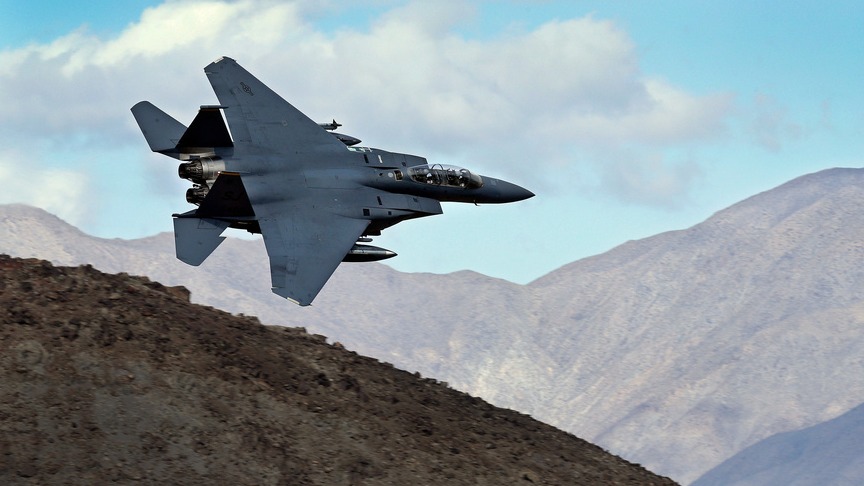
Trump has repeatedly threatened to take military action to protect protesters, and on Monday said that airstrikes remain “on the table”.
However the US President also said that Iran were “ready to negotiate” with Washington.
Iran’s Foreign Minister Abbas Araghchi, speaking to the Qatar-funded satellite news network Al Jazeera in an interview aired Monday night, said he continued to communicate with US envoy Steve Witkoff.
It remains unclear just what Iran could promise in negotiations, particularly as Trump has set strict demands over its nuclear program and its ballistic missile arsenal, which Tehran insists is crucial for its national defence.
On Tuesday, some Iranians were able to call abroad after a crackdown on the protests led to internet and international calls were cut. But Iranians said text messaging appeared to remain down, and witnesses said the internet remained cut off from the outside world.
Witnesses in Tehran were able to tell the Associated Press that there was a heavy security presence in the city which had increased over the four-and-a-half days since being cut off from the outside world.
They said anti-riot police officers, wearing helmets and body armour carried batons, shields, shotguns and tear gas launchers. Nearby, the witnesses saw members of the Revolutionary Guard’s all-volunteer Basij force, who similarly carried firearms and batons. Security officials in plainclothes were visible in public spaces as well.
Several banks and government offices were burned down, and ATMs had been smashed as banks struggled to complete transactions without the internet.
The witnesses spoke on condition of anonymity for fear of reprisal.
Meanwhile, pro-government demonstrators flooded the streets Monday in support of the theocracy, a show of force after days of protests directly challenging the rule of 86-year-old Supreme Leader Ayatollah Ali Khamenei.
Iranian state television aired chants from the crowd, which appeared to number in the tens of thousands, who shouted “Death to America!” and “Death to Israel!”
Others cried out, “Death to the enemies of God!” Iran’s attorney general has warned that anyone taking part in protests will be considered an “enemy of God,” a death penalty charge.
White House press secretary Karoline Leavitt said Iran’s public rhetoric diverges from the private messaging the administration has received from Tehran in recent days.
“I think the president has an interest in exploring those messages,” Leavitt said. “However, with that said, the president has shown he’s unafraid to use military options if and when he deems necessary, and nobody knows that better than Iran.”
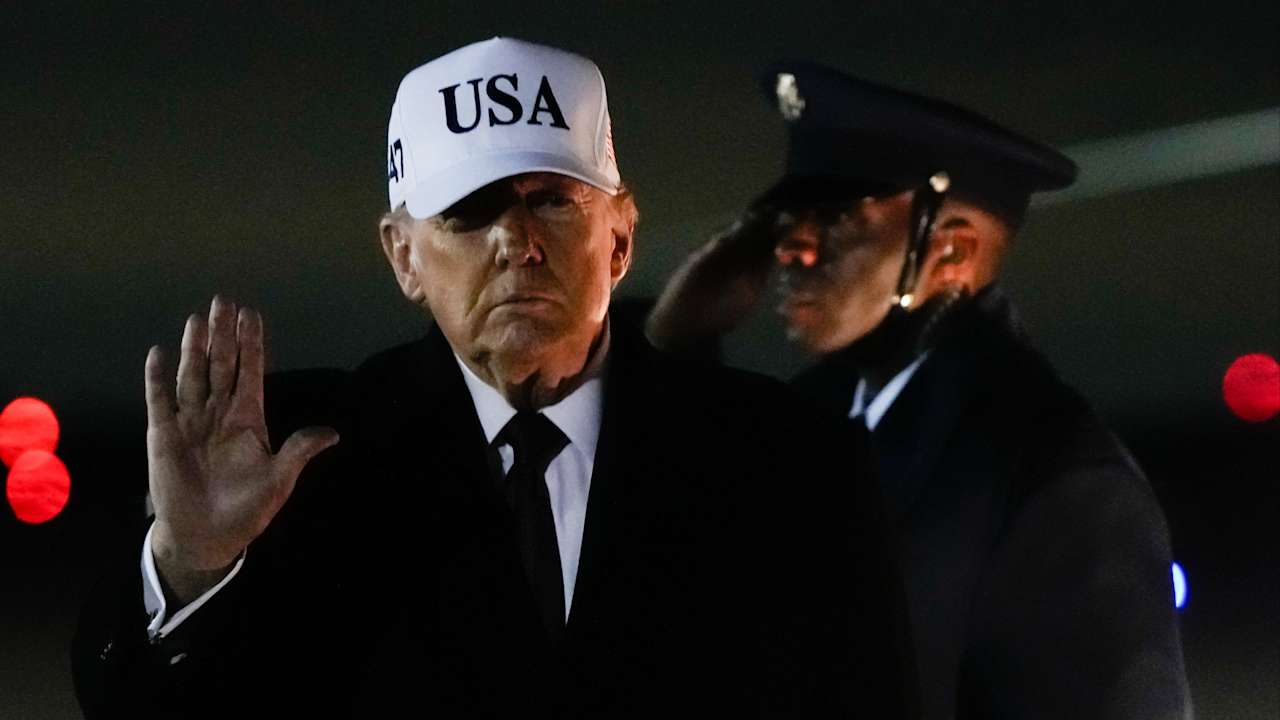
Trump and his national security team have been weighing a range of potential responses against Iran, including cyberattacks and direct strikes by the US or Israel, according to two people familiar with internal White House discussions who weren’t authorised to comment publicly and spoke on condition of anonymity.
“The military is looking at it, and we’re looking at some very strong options,” Trump told reporters on Air Force One on Sunday night. Asked about Iran’s threats of retaliation, he said, “If they do that, we will hit them at levels that they’ve never been hit before.”
>> Why are there protests in Iran, and how are the UK and US involved?
Trump said Sunday that his administration was in talks to set up a meeting with Tehran, but cautioned that he may have to act first as reports of the death toll in Iran mount and the government continues to arrest protesters.
“I think they’re tired of being beat up by the United States,” Trump said. “Iran wants to negotiate.”
Iran, through the country’s parliamentary speaker, warned on Sunday that the US military and Israel would be “legitimate targets” if Washington uses force to protect demonstrators.
More than 10,700 people have also been detained over the two weeks of protests, according to US-based Human Rights Activists News Agency, which has been accurate in previous unrest in recent years and gave the latest death toll early Tuesday.
It relies on supporters in Iran to cross-check information. It said 512 of the dead were protesters and 134 were security force members.
>> Reza Pahlavi: Iran’s exiled crown prince is rallying protesters, but who is he?
But with the internet down in Iran and the majority of communication cut off, gauging the demonstrations from abroad has grown more difficult. Journalists have been unable to independently assess the toll and Iran’s government hasn’t offered overall casualty figures.
Those abroad fear the information blackout is emboldening hard-liners within Iran’s security services to launch a violent crackdown. Online videos purported to show more demonstrations on Sunday night into Monday, with a Tehran official acknowledging them in state media
In efforts to quell the uprising, police sent the public a text message that warned: “Given the presence of terrorist groups and armed individuals in some gatherings last night and their plans to cause death, and the firm decision to not tolerate any appeasement and to deal decisively with the rioters, families are strongly advised to take care of their youth and teenagers.”
Another text, which claimed to come from the intelligence arm of the paramilitary Revolutionary Guard, also directly warned people not to take part in demonstrations.
The demonstrations began on December 28 over the collapse of the Iranian rial currency, which trades at more than 1.4 million to $1, as Iran’s economy is squeezed by international sanctions, in part levied over its nuclear program.
The protests intensified and grew into calls directly challenging Iran’s theocracy.
Follow STV News on WhatsApp
Scan the QR code on your mobile device for all the latest news from around the country