Sir Keir Starmer was “not aware” the Foreign Office had granted Lord Peter Mandelson vetting clearance against recommendations until a meeting on Tuesday night, according to an email from the prime minister’s principal private secretary (PPS).
Downing Street on Friday released a “readout” of the meeting, which was sent via email by Starmer’s PPS Dan York-Smith on Wednesday, summarising discussions said to have involved the Cabinet Secretary Dame Antonia Romeo and permanent secretary at the Cabinet Office Catherine Little.
The memo appeared to add credence to the PM’s defence that Foreign Office officials were responsible for clearing Mandelson’s appointment without his knowledge.
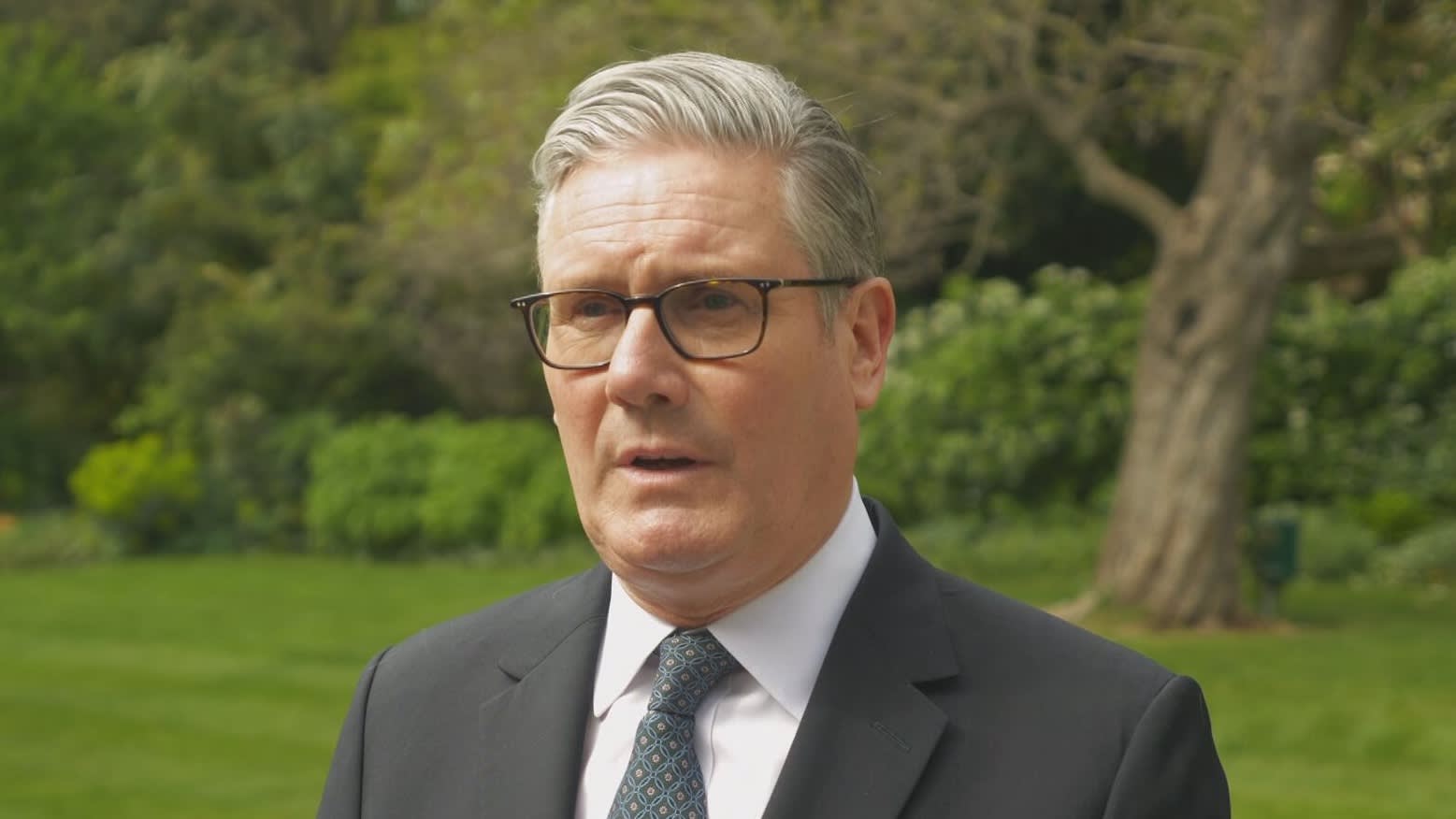
Starmer on Friday said it was “staggering” and “unacceptable” that he was not told the former US ambassador had failed his security vetting.
Speaking from Paris, the PM said: “That I wasn’t told that Peter Mandelson had failed security vetting when he was appointed is staggering.
“That I wasn’t told that he had failed security vetting when I was telling Parliament that due process had been followed is unforgivable.
“Not only was I not told, no minister was told, and I’m absolutely furious about that.”
The prime minister is due to give a statement on the matter to MPs in parliament on Monday, after sacking the top civil servant in the Foreign Office on Thursday night.
“What I intend to do is to go to Parliament on Monday to set out all the relevant facts in true transparency so parliament has the full picture,” Starmer said.
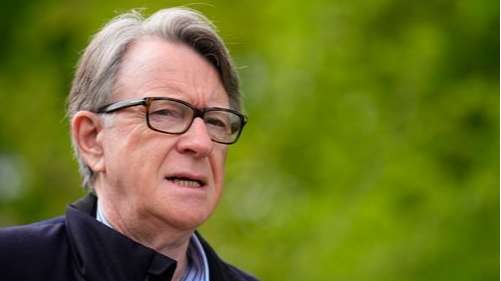
The email released by Downing Street in an attempt to show a paper trail that backs up Starmer’s version of events, said Ms Little learned of the recommendation that Mandelson should not be granted developed vetting (DV) when reviewing his file as part of the government’s response to the humble address, which was passed by parliament.
It read: “As part of the humble address process, that file had been shared with Cat. On reviewing the file, she had therefore learned that the recommendation from the vetting officer had been that DV should not be granted to Peter Mandelson.
“There is some discretion for departments to proceed with clearance and the FCDO had exercised it in this case, granting Mandelson vetting clearance. Cat had not seen the audit trail for this decision so we did not yet know on what basis the decision had been taken, contrary to the recommendation.
“The PM was not aware of any of this before the meeting, including that it was even possible to grant clearance against the advice of UKSV.
“There is no evidence that the decision to grant DV despite the UKSV advice had been disclosed to anyone outside FCDO and UKSV before the document was shared with CO to comply with the humble address.”
“That I wasn’t told that Peter Mandelson had failed security vetting when he was appointed is staggering,” the PM told reporters in Paris
On Friday morning, Darren Jones, the chief secretary to the prime minister, said it was “beyond comprehension” that the Foreign Office had the “unacceptable” power to override the security vetting process.
Speaking to Good Morning Britain, Jones said he had now suspended the power of the Foreign Office – or any other organisation – to overrule the advice of the UK’s vetting body.
The revelation that Mandelson had been appointed to the role, despite failing the process, has brought the crisis back to the centre of government and has led to renewed calls for the prime minister to resign.
Jones told GMB he did not believe Starmer had misled parliament over the issue while making statements about the affair, which would be a breach of the ministerial code.
Starmer has repeatedly told MPs that “due process” was followed in Mandelson’s appointment. He also told a press conference in February that Mandelson had been given the necessary security clearance.
ITV News understands the latest revelations caused both Starmer and Foreign Secretary Yvette Cooper to lose confidence in the Foreign Office’s top civil servant, Sir Olly Robbins, shortly before his effective sacking.
Speaking to ITV News, Darren Jones said the PM has not considered resigning over the allegation he misled Parliament.
“This is a failure of the state,” said Jones.
“Your viewers, as much as I, will be astonished to know there are a small number of organisations that are allowed to ignore security advice when vetting individuals.
“I put an end to that practice immediately last night.”
Jones also said the vetting papers could be released to parliament under the terms of the motion passed by MPs demanding access to the files relating to Lord Mandelson’s appointment.
Asked why information showing Mandelson had failed security vetting was not included in the first batch of documents released as part of the Mandelson files, Jones said: “The process hasn’t concluded, and further documents will be published in due course.”
On Friday, Chair of the Foreign Affairs Select Committee, Dame Emily Thornberry, wrote to Robbins requesting he attend a committee session on Tuesday April 21.
In her letter, she said reports from the Guardian “called into question” the answers he had previously given them about Mandelson’s appointment.
She wrote: “Conscious that as a committed public servant you would not willingly mislead the House, your attendance at the committee next week would allow the opportunity for you to correct the record.”

Calls for the prime minister to resign have continued to grow from opposition figures with Conservative leader Kemi Badenoch calling it “preposterous” to claim he did not know Lord Mandelson failed security vetting.
She said: “If the prime minister doesn’t know what’s happening in his own office, he shouldn’t be in charge of our country. He should go.”
Liberal Democrat leader Sir Ed Davey said Sir Keir should have told Parliament “at the earliest opportunity” when he learned what had happened earlier this week, rather than having “waited for the media to force the truth out”.
Davey’s party have also reported the PM to his own ethics adviser, Sir Laurie Magnus, calling for an investigation into whether Starmer breached the ministerial code.
The code calls for ministers to resign if found to have breached the rules, but the decision over what the punishment for rule breakers should be ultimately lies with the PM.

The Green Party and Reform UK have also called for Starmer to resign.
Those within the prime minister’s own party have renewed calls for his resignation too.
Scottish Labour leader Anas Sarwar had previously called for the PM to go, and when asked about the latest development on Friday, said there were “questions that of course have to be answered”.
Referencing his previous calls for Starmer’s resignation, he said: “I stated my position back in February, I stand by my position – I don’t recoil from it.
“Many people will know that the Mandelson scandal was the tipping point for me.”
Labour MP John Trickett said the PM’s version of events did not “sound credible”, adding: “If the PM did not know, it raises gravely serious issues about the way we are governed.
“Either way, the excuses coming from Downing Street won’t cut it on the doorstep in the run-up to the local elections.”
Other figures have also joined the chorus, with Maryam Eslamdoust, General Secretary of the Labour-affiliated TSSA union, saying: “Labour is in danger of being irreversibly tainted by this latest instalment in the Mandelson scandal and Keir Starmer’s handling of it.
“As a party, we are losing the right to be heard on the doorstep when we are out campaigning for the elections.
Keir Starmer’s claim that he knew nothing about Mandelson’s failed security clearance is a very hard sell to voters.
“It’s clearly not good enough, and at the very least, Keir has lost control by presiding over such reckless conduct.
Labour needs a leadership contest.”
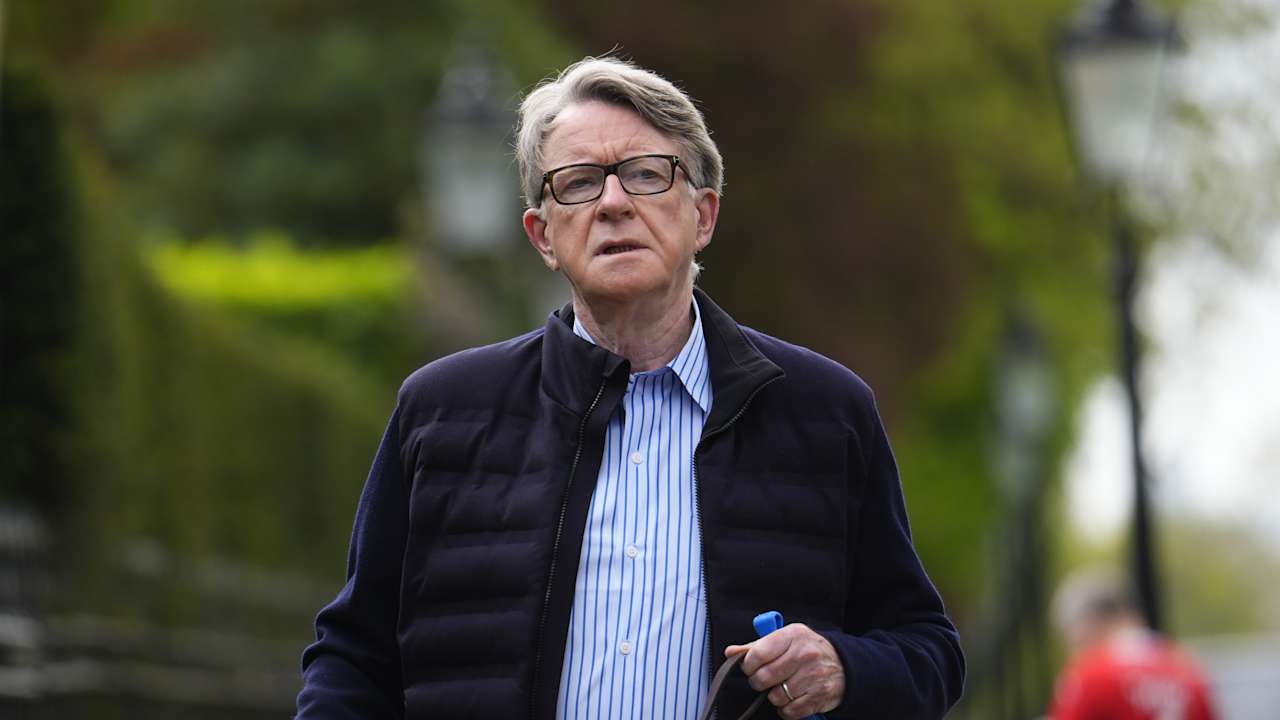
Mandelson, a political appointment rather than a career diplomat, was sacked from his Washington role last September when more details emerged about his relationship with paedophile financier Jeffrey Epstein, who died in 2019.
Starmer has been under fire over the decision to give Lord Mandelson the job despite it being known that his dealings with Epstein continued after the financier’s conviction for child sex offences.
Questions over his judgment intensified after the first batch of documents related to the decision published last month showed that he was warned before announcing Lord Mandelson’s ambassadorship of a “general reputational risk” over his association with Epstein.
That warning stemmed from the first part of the checks, carried out by the Cabinet Office, which was based on information in the public domain at the time.
The second was the highly confidential background vetting by security officials, which followed the announcement but came before Lord Mandelson took up his role in February 2025.
Information unearthed in this process – including any concerns – is never shared with ministers, and the result is binary, either clearing the candidate or barring them.
Downing Street on Friday said parliament had “a right to know” that Mandelson had failed his security vetting.
The prime minister’s official spokesperson insisted nobody in No 10 was told Mandelson had failed his security vetting despite repeated requests for “assurances”.
“Nobody in No 10, officials or otherwise, had this information.”
He added: “The Foreign Office have run this vetting process, and at no point, at any point in any part of this process was anyone in No 10, PM or otherwise, informed by the Foreign Office that the recommendation of UK Security Vetting was for him not to pass his developed vetting.”
Downing Street said it does not accept that the Foreign Office felt pressure to overrule UK Security Vetting’s recommendation that Lord Peter Mandelson not receive developed vetting clearance.
Follow STV News on WhatsApp
Scan the QR code on your mobile device for all the latest news from around the country