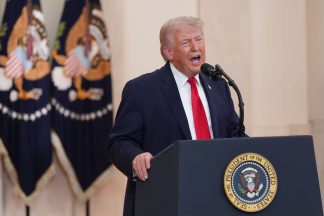
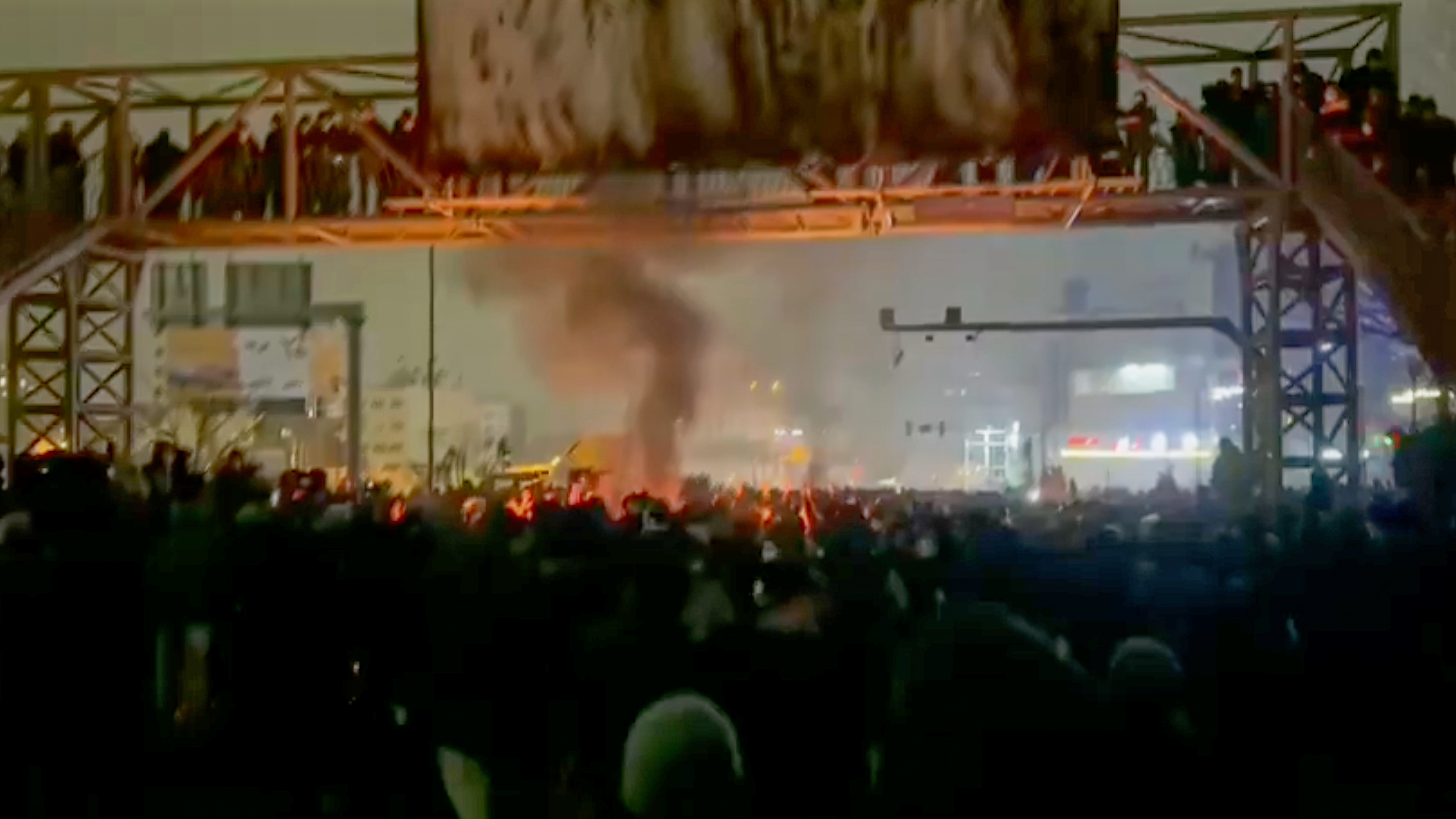
President Donald Trump says the US ‘stands ready to help’ as the number of protesters defying government crackdowns killed in Iran has risen to over 500, as Good Morning Britain’s Jay Akbar reports
President Donald Trump has said the US is considering “some very strong” military options against Iran, as anti-government protests which have killed hundreds continue in the country.
Activists said the number of people killed rose to at least 544 on Monday, as the Islamic Republic continued its bloody crackdown on demonstrators.
Of those killed, at least 496 are protesters and 48 are members of the security forces, the US-based Human Rights Activists News Agency said, warning the toll is likely to go up.
Trump and his national security team have been weighing a range of potential responses against Iran including cyber attacks and direct strikes by the US or Israel, according to two people familiar with internal White House discussions who spoke to the Associated Press on the condition of anonymity.
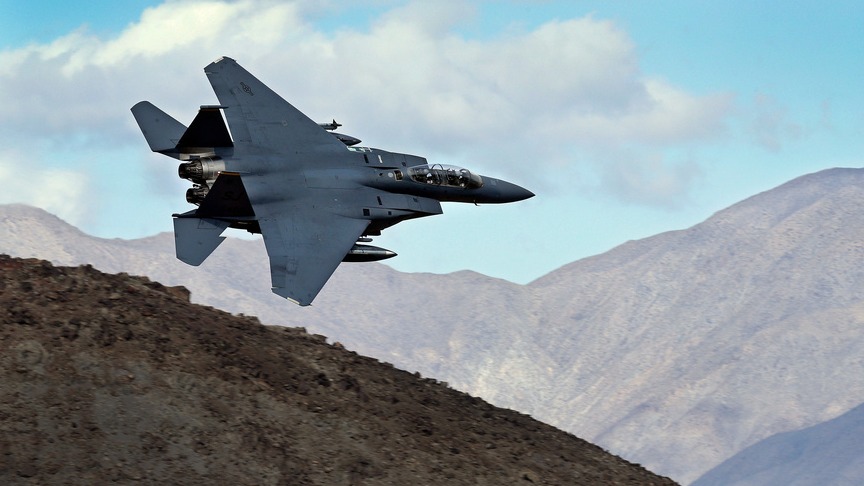
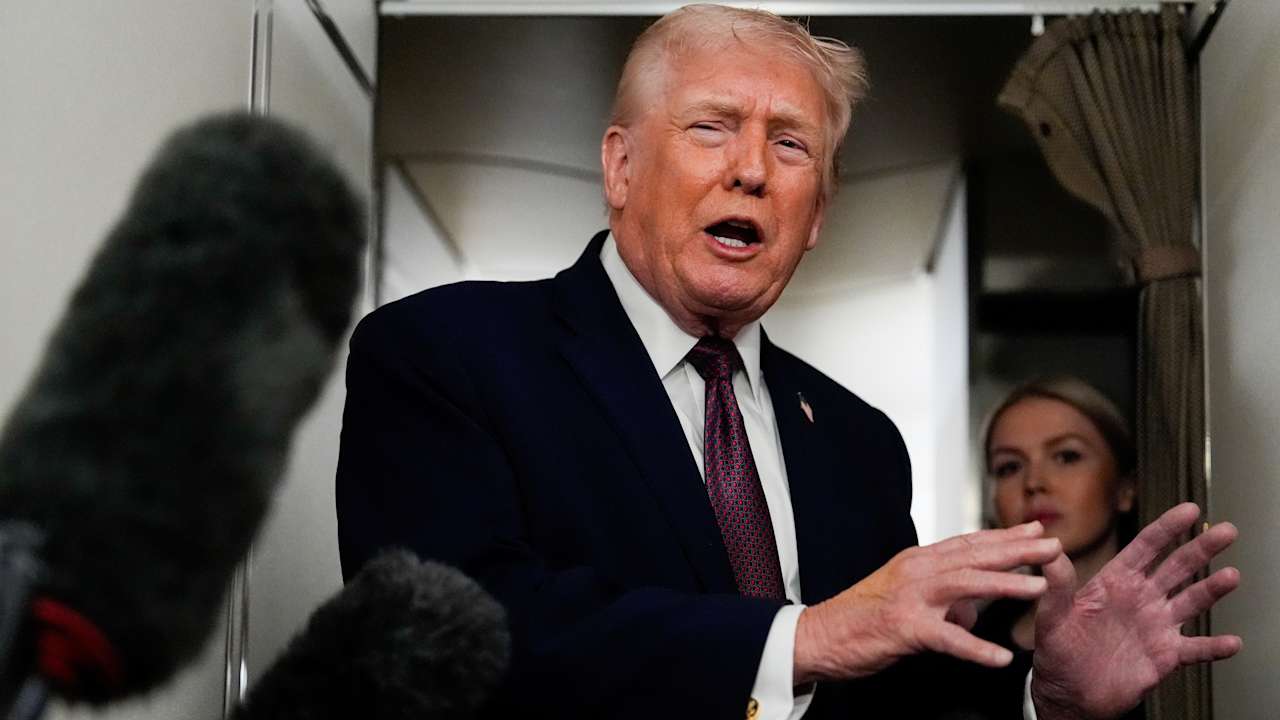
“The military is looking at it, and we’re looking at some very strong options,” the president told reporters on Air Force One on Sunday night. Asked about Iran’s threats of retaliation, he said: “If they do that, we will hit them at levels that they’ve never been hit before.”
Iran had warned it would retaliate if the US launches strikes against the Republic.
On Sunday, Mohammad Bagher Qalibaf, Iran’s parliament speaker, said that all US military and Israel would be “legitimate targets” in the event of an attack by Washington.
Speaking late on Sunday, Trump said that his administration was in talks to set up a meeting with Tehran, but cautioned that he may have to act first as reports of the death toll in Iran mount and the government continues to arrest protesters.
“I think they’re tired of being beat up by the United States,” Trump said. “Iran wants to negotiate.”
He added: “The meeting is being set up, but we may have to act because of what’s happening before the meeting. But a meeting is being set up. Iran called, they want to negotiate.”
There has been no immediate acknowledgement from Iran of the offering for a meeting.
>> Why are there protests in Iran, and how are the UK and US involved?
More than 10,600 people have been detained in Iran over the three weeks of protests, the Human Rights Activists News Agency said.
With the internet down in Iran and phone lines cut off, gauging the full scale of casualties during the demonstrations have grown more difficult.
Many fear the internet blackout is emboldening hard-liners within Iran’s security services to retaliate against demonstrators.
Protesters flooded the streets in the country’s capital Tehran, and other cities throughout the country over the weekend. Online videos purported to show more demonstrations Sunday night into Monday, with a Tehran official acknowledging them in state media.
Videos out of Tehran show the scale of the number of people killed – with one video from a forensic centre appearing to show bodies in black body bags lined up on a pavement outside.
In the video, screams of anguish can be heard, and people are seen crying beside the bodies.
Another video shows a crowd of people gathered in front of a monitor, which appears to display photos of deceased people for relatives to identify.
Information seen on the screen suggests there could be up to 250 bodies. The video indicates the date as Friday, but ITV News cannot independently verify this.
Other videos purportedly showed demonstrators gathering in northern Tehran’s Punak neighbourhood. There, it appeared authorities shut off streets, with protesters waving their lit mobile phones. Others banged metal while fireworks went off.
Other footage appeared to show demonstrators peacefully marching down a street, and others honking their car horns on the street.
In Mashhad, some 725 kilometres (450 miles) northeast of Tehran, footage purported to show protesters confronting security forces.
Iran’s president, Masoud Pezeshkian, addressed the anti-government demonstrations for the first time on Sunday, saying that officials will listen to those protesting.
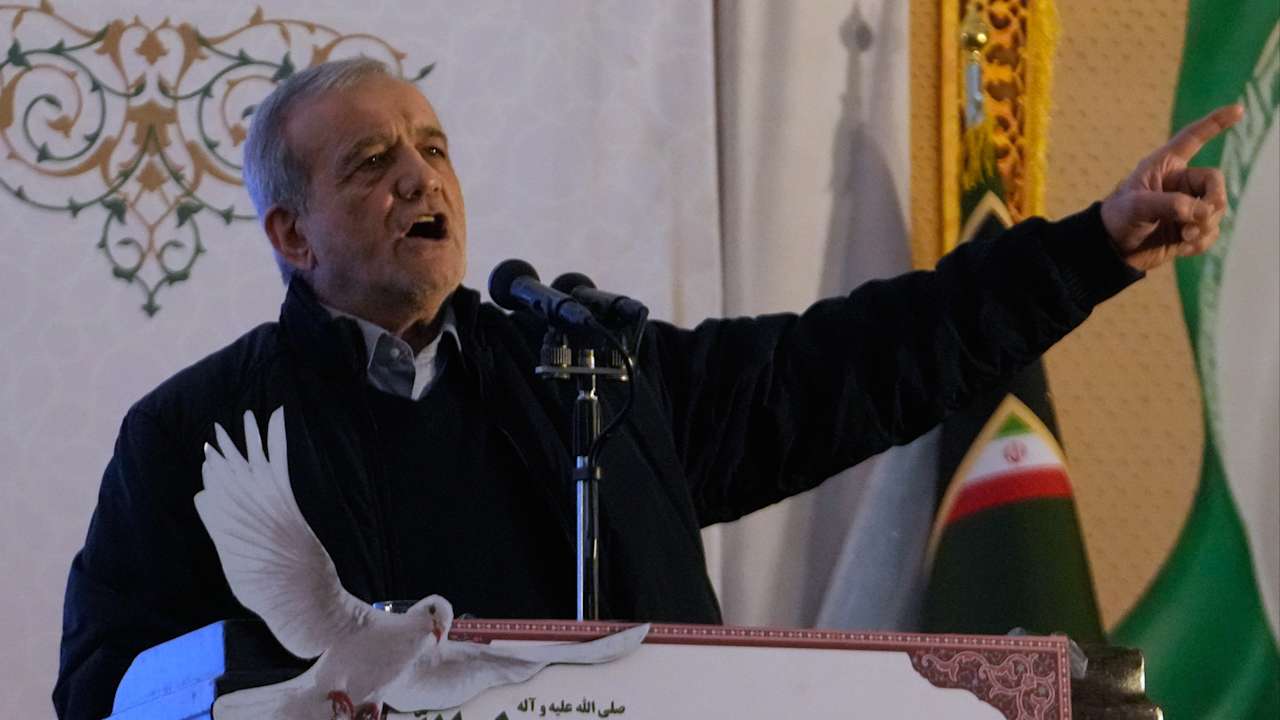
His remarks signal a hardening stance from the reformist leader, who has been unable to ease public anger as economic distress has fueled a direct challenge to the nation’s theocracy.
“People have concerns, we should sit with them, and if it is our duty, we should resolve their concerns,” Pezeshkian said. “But the higher duty is not to allow a group of rioters to come and destroy the entire society.”
Iranian state television aired the interview with Pezeshkian on Sunday, hours after Qalibaf made the retaliation threat to Washington.
Iran’s attorney general, Mohammad Movahedi Azad, warned that anyone taking part in protests will be considered an “enemy of God”, a death-penalty charge.
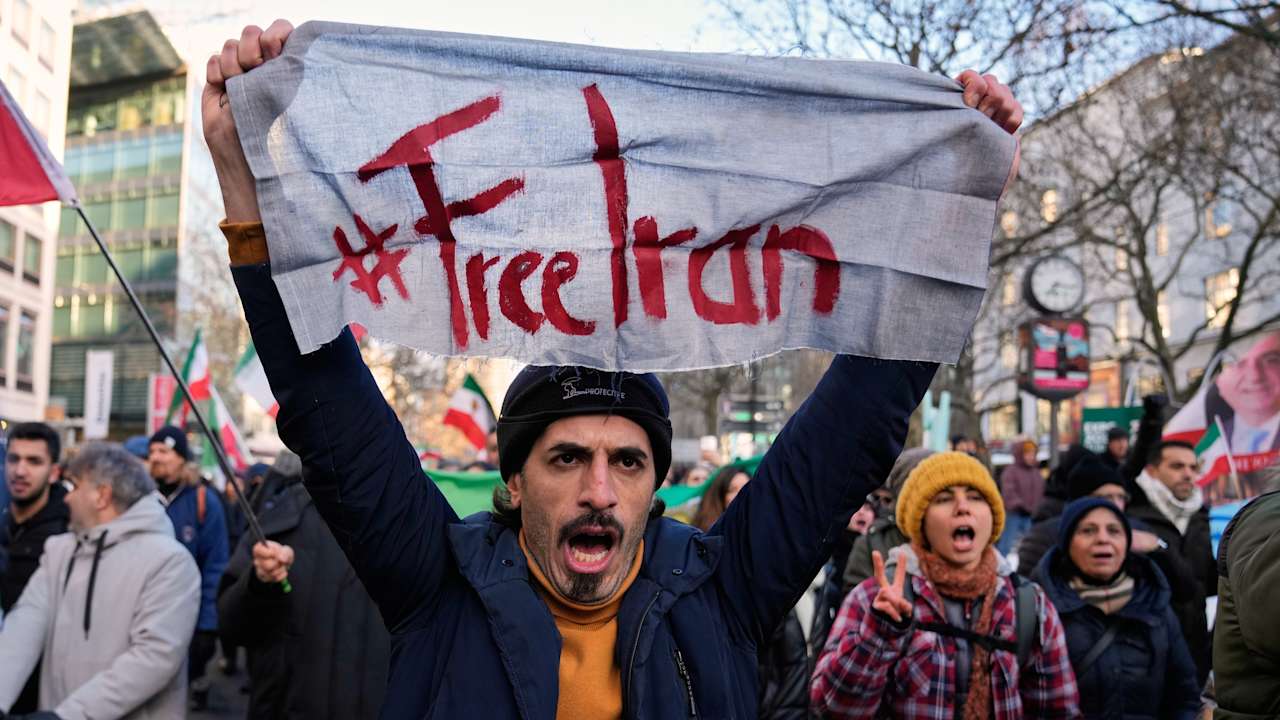
The demonstrations began on December 28, over the collapse of the Iranian rial currency, which trades at over 1.4 million to the dollar, as the country’s economy is squeezed by international sanctions in part levied over its nuclear program. The protests intensified and grew into calls directly challenging Iran’s theocracy.
Reza Pahlavi, the exiled son of Iran’s last Shah, said in a post on X that the protests had “shaken the foundations” of the Iranian government.
He encouraged protestors to continue demonstrating, writing: “The increase in gunfire against people is not a sign of strength, but of fear – fear of collapse and an accelerated downfall.”
Demonstrators have shouted in support of the shah in some protests, but it isn’t clear whether that’s support for Pahlavi himself or a desire to return to a time before the 1979 Islamic Revolution.
Follow STV News on WhatsApp
Scan the QR code on your mobile device for all the latest news from around the country