Israel and Hezbollah militants in Lebanon continue to trade blows as negotiators from the US and Iran prepare for talks in Islamabad this weekend, ITV News International Editor Emma Murphy reports
- Vance sets off to Pakistan ahead of negotiations with Iran over the weekend
- Kuwait blames Iran for overnight drone strikes
- Trump and Starmer discussed the need for a “practical plan” to get shipping through the Strait of Hormuz
- Israeli Prime Minister Benjamin Netanyahu said he had approved direct talks with Lebanon
- Tehran says the number of people killed in Iran since the start of the war has surpassed 3,000
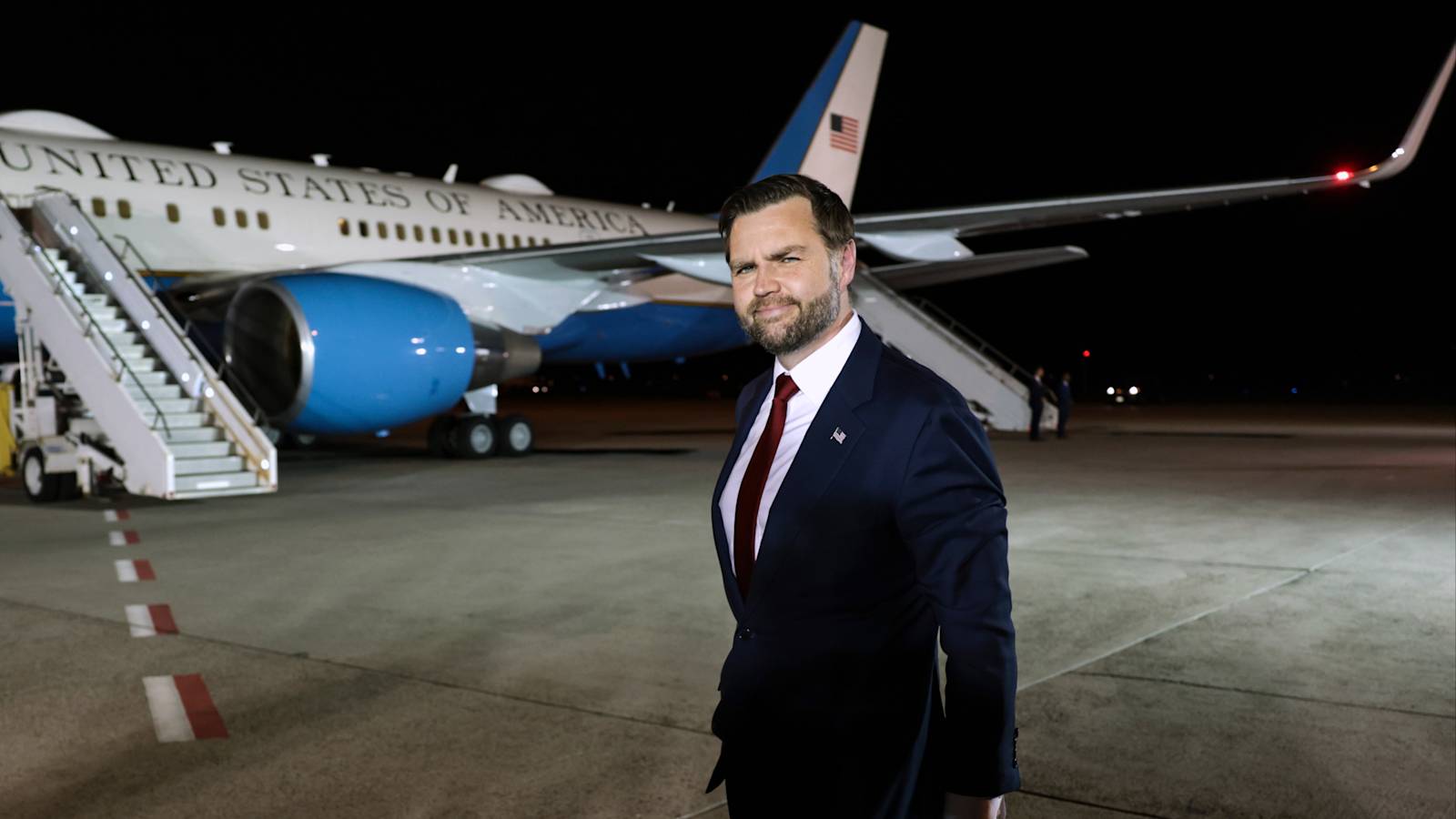
US Vice President JD Vance set off to the Pakistani capital of Islamabad on Friday to lead mediated talks with Iran amid a shaky ceasefire.
Vance, who has long been sceptical of foreign military interventions and outspoken about the prospect of sending troops into open-ended conflicts, will be attending the talks over the weekend.
He will be joined by Trump’s special envoy Steve Witkoff and son-in-law Jared Kushner.
The visit comes as a tenuous, temporary ceasefire appears to be on the precipice of collapsing.
The rift between Iran’s public demands and those from the US and its partner Israel seem irreconcilable as the IDF continues to strike Lebanon.
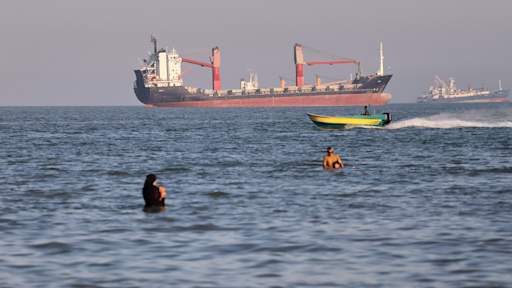
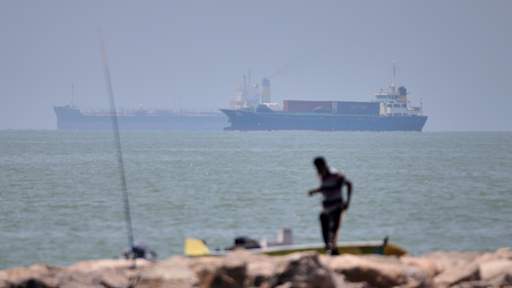
US President Donald Trump also accused Iran of doing a “a very poor job” of allowing vessels through the Strait of Hormuz, a vital waterway that is meant to reopen as part of the agreement.
“That is not the agreement we have”, the president wrote on Truth Social overnight.
Sir Keir Starmer said he spoke to Trump about the need for a “practical plan” to get shipping going through the Strait, having visited allies in the Gulf for talks over the last two days.
He said: “I had a discussion with President Trump last night and set out to him the views of the region here, these Gulf states are the neighbours of Iran, and therefore, if the ceasefire is to hold – and we hope it will – it has to involve them.
“They have very strong views on the Strait of Hormuz. We spent most of the time on the call talking about the practical plan that’s going to be needed to get navigation through the strait and the role that the UK is playing.”
Starmer told ITV News’ Talking Politics on Thursday there needs to be “toll-free navigation” as part of the ceasefire, amid reports that Iran wants to charge $1 per oil barrel passing through.
Iran’s deputy foreign minister said on Thursday that “the Strait of Hormuz is open”, but that any vessel wishing to pass through would need guidance from Iranian authorities to do so.
“Anybody who communicates with the Iranian authority has got permission to pass,” Dr Saeed Khatibzadeh told ITV News International Editor Emma Murphy.
In Iran, a top medical official said on Friday the death toll in the war with Israel and the United States had passed 3,000.
Israel to talk with Lebanon
Israeli Prime Minister Benjamin Netanyahu offered a potential boost to ceasefire efforts in the region when he said he had approved direct talks with Lebanon. The Lebanese government has not made any comments on the supposed talks.
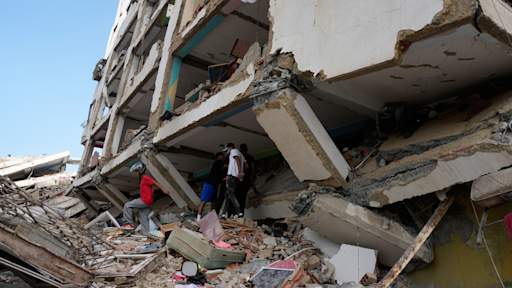
The announcement came after Israel’s deadly attacks on Beirut on Wednesday, which killed more than 300 people.
Talks between the two countries are set to take place on Wednesday, according to reports by the Associated Press.
On Thursday, Starmer said Israel is “wrong” to continue its strikes on Lebanon during the ceasefire, saying it “should stop” as a “matter of principle”.
When asked whether the strikes were a breach of the ceasefire, the prime minister said: “It’s hard to say that there is a breach when we haven’t all got access to all the details of the ceasefire.
“But let me be really clear about it. They’re wrong. That shouldn’t be happening. That should stop.”
Iran has repeatedly said the ceasefire covers attacks against its Lebanon-based proxy Hezbollah, but Israel has said the ceasefire does not include Lebanon.
Sources familiar with the last-minute ceasefire negotiations on Tuesday told ITV News that the United States believed the agreement did extend to Lebanon.
Their account appears to contradict claims by the White House on Wednesday that “Lebanon is not part of the ceasefire”.
Ceasefire as it stands
Trump and Iran agreed to , with talks to revolve around a ten-point plan proposed by Iran, which the president described as “a workable basis on which to negotiate”.
But there are issues on which both sides have previously disagreed, such as Iran’s right to uranium enrichment programmes and the presence of US military in the area.
Despite this, Pakistan has been heavily preparing to host peace negotiations due to start this weekend.
Islamabad has been locked down ahead of the high-stakes talks, with checkpoints set up at major arteries and many usually busy roads emptied.
US Vice President JD Vance is set to leave for Pakistan on Friday, while an Iranian delegation was also expected to be there.
Follow STV News on WhatsApp
Scan the QR code on your mobile device for all the latest news from around the country