It’s been over 50 years since a human flew to the Moon.
Now, with the help of a rocket taller than Big Ben and the first spacecraft of its kind to house humans, Nasa is preparing for the first moon mission since 1972.
After years of work and $93bn spent to date, the Artemis II mission will involve a 10-day voyage around the Moon, with Nasa hoping this could pave the way for an eventual lunar base on its surface.
A liquid hydrogen leak during the practice launch led to a delay in the operation, but Nasa is now aiming to launch in early April.
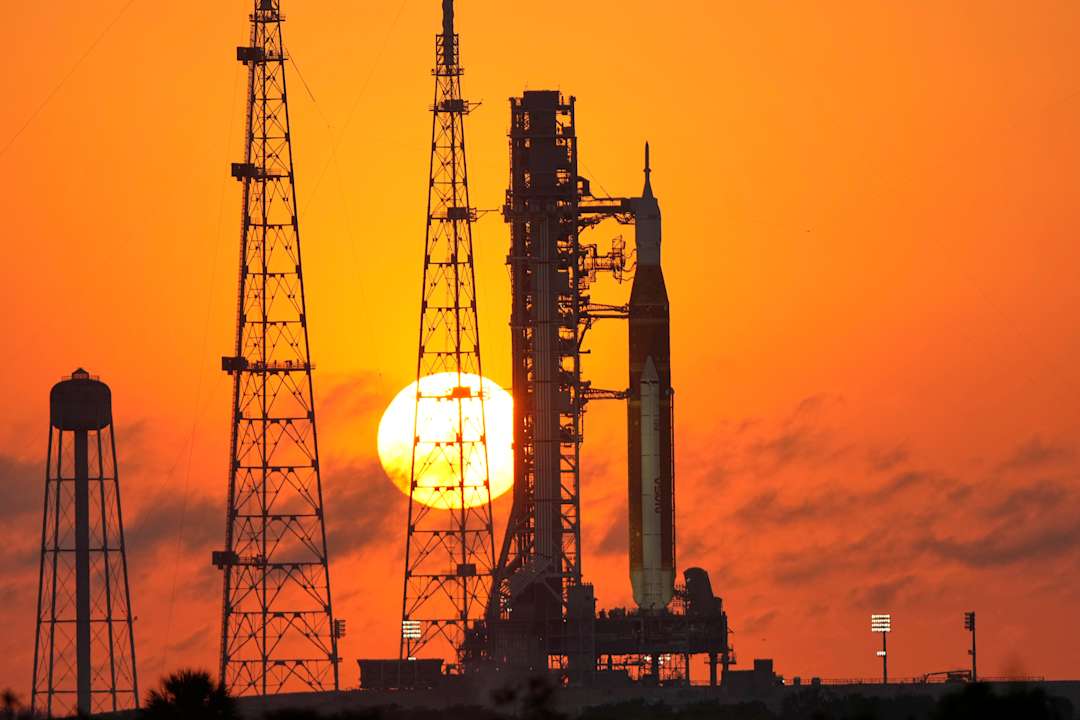
NASA’s countdown clocks started ticking on Monday afternoon at Florida’s Kennedy Space Center. The 32-storey Space Launch System rocket is poised to blast off on Wednesday evening with four astronauts.
ITV explains.
What is Artemis?
Artemis is Nasa’s lunar exploration programme, during which the space agency will send astronauts on “increasingly difficult missions”.
The program began with Artemis I, an uncrewed test flight which launched the Orion spacecraft towards the end of 2022.
The second mission builds on the first, testing the capabilities of the next Orion spacecraft, which is now fitted with the systems it needs to house a crew.
A rocket, which stands at 98m, will launch the vessel from the Kennedy Space Center in Florida.
The crew will then orbit the Earth multiple times, before flying around the Moon, and then splashing down in the Pacific Ocean as gravity pulls them back down.
During its course, Artemis II will test navigation, communication and life support systems.
Following Artemis II, there are two more Artemis missions.
Artemis III will launch next year, and will be designed test how the spacecraft could dock with the commercial spacecraft needed to land astronauts on the moon.
Artemis IV then plans to mark humanity’s return to the lunar surface, where two astronauts will spend approximately a week near the South Pole of the Moon.
Why is Nasa sending a crew back to the Moon?
The Artemis mission is part of Nasa’s longer-term plans.
“We’re going back to the Moon for scientific discovery, economic benefits, and inspiration for a new generation of explorers”, they say, as well as to build on their foundation for the “first crewed missions to Mars.”
Eventually, Nasa hope to build a lunar base on the surface of the moon, which would allow astronauts to live and work there.
With the support of such a base, the space agency would then be able to work on the technology required to protect a future Mars crew from lack of air, space radiation and extreme temperatures.
There is still significant work to be done before these ambitions become reality, but Nasa sees Artemis representing a crucial step in that direction.
Space travel is not just about exploration, but is also highly competitive, viewed by some countries as a mark of power, wealth, and global influence.
It has been over 50 years since the historic Apollo program, during which the United States became the first country to land astronauts on the Moon in the so-called Space Race against the Soviet Union.

Today, it is China who are rapidly advancing their space programme, having achieved a series of successful robotic and rover landings on the Moon. It has announced plans to send astronauts there by 2030.
The Moon is home to a wealth of valuable minerals, and the two countries are effectively in a race to access to the areas of the it with the best resources.
Who is the crew and how dangerous is the mission for them?
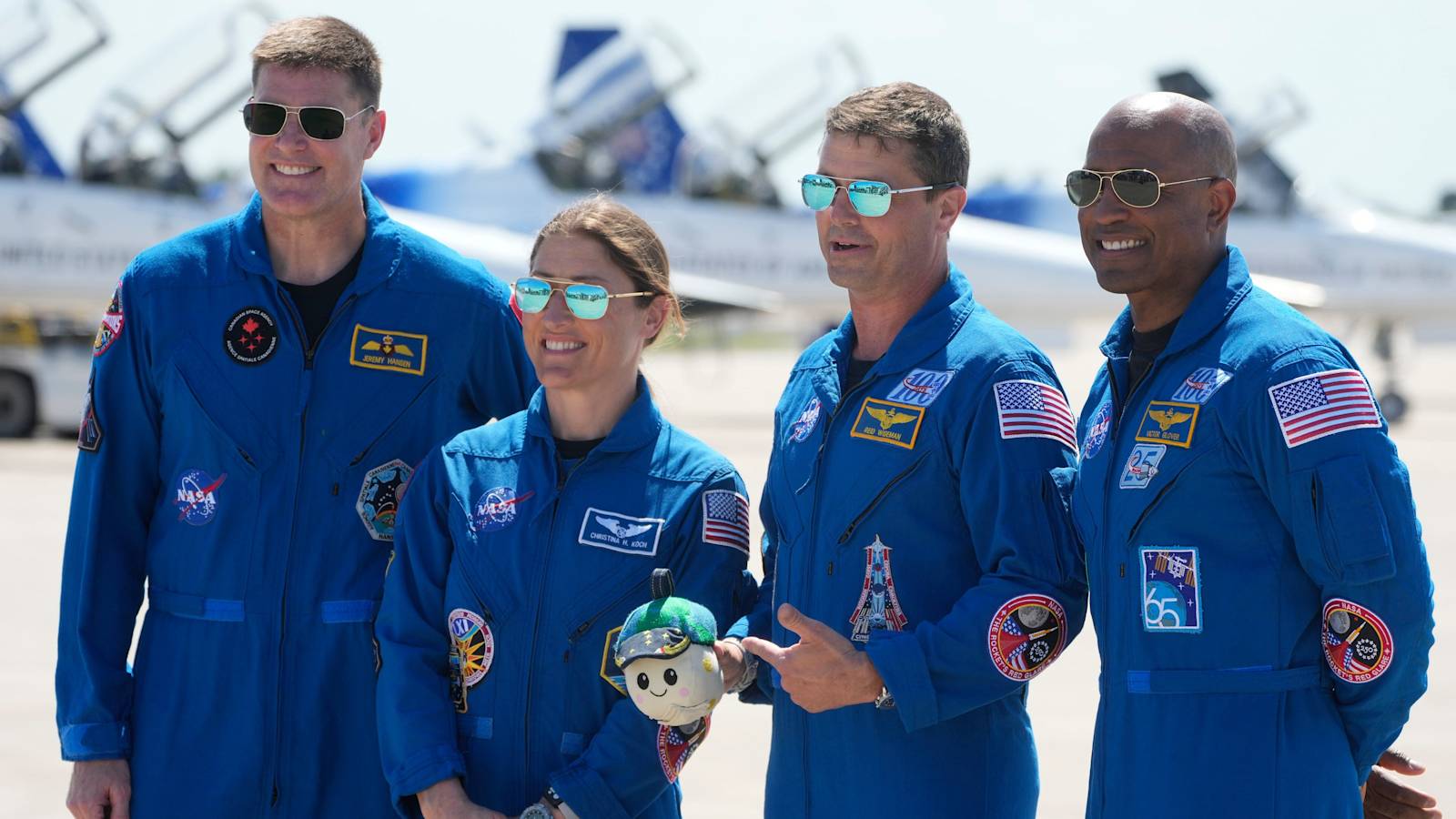
Four astronauts will make up the crew for Artemis II.
Three of the crew, Reid Wiseman (commander), Victor Glover (pilot) and Christina Koch (mission specialist) are Americans who have all been to space previously.
The fourth crew member, Mission Specialist Jeremy Hansen, has not been to space and will make history as the first Canadian to fly around the moon.

Artemis II is by no means a risk free mission, as the crew will be in a spacecraft that has never been used by humans before.
Many tests will be undertaken while they are in the Earth orbit, so there is less far to travel should they experience issues.
The Orion spacecraft crew capsule is only about 5m wide by 3m high, and all four crew members will work, eat and sleep there.
When is launch day and could it be delayed?
After being postponed once due to bad weather in February, and then again after the liquid hydrogen leak, there are always potential issues when planning a high-stake mission.
The weather is an important factor in whether the mission will be able to go ahead.
Lightning is a big safety risk, due to the Artemis II rocket containing vast amounts of propellant.
The space agency’s meteorologists will be the ones to decide if the conditions meet the criteria closer to the time.
Follow STV News on WhatsApp
Scan the QR code on your mobile device for all the latest news from around the country